AI in Drug Discovery

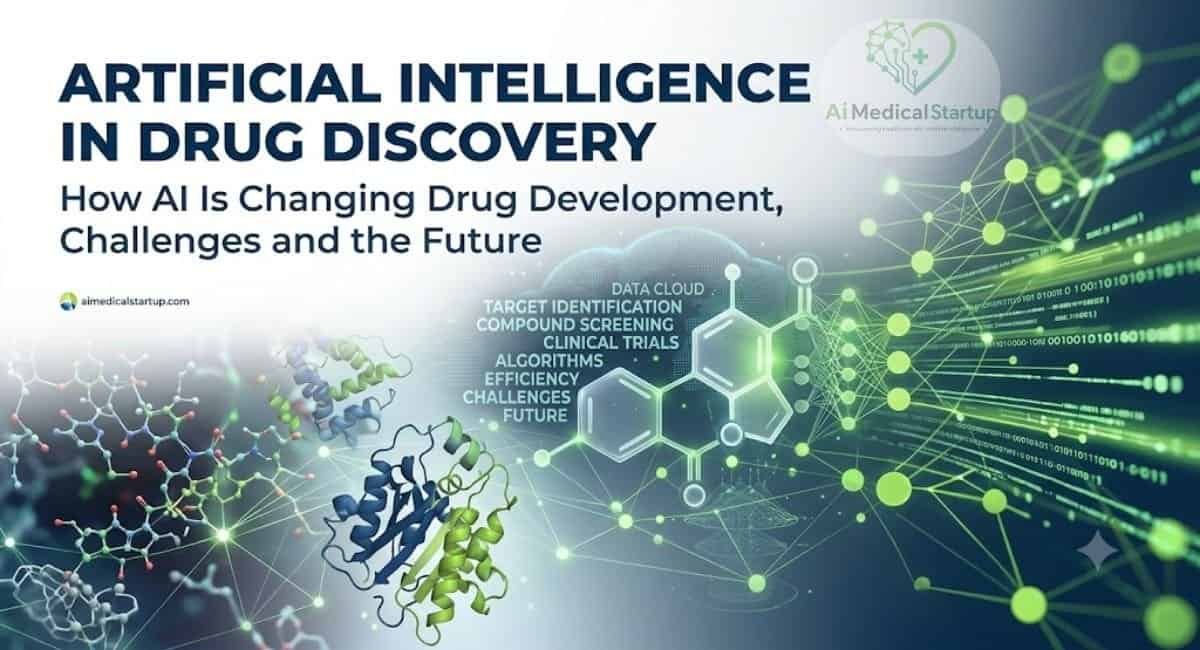
Artificial Intelligence in Drug Discovery: How AI Is Changing Drug Development, Challenges and the Future
Discover how machine learning, generative AI, and predictive analytics are drastically shortening pharmaceutical R&D timelines, cutting billions in costs, and bringing life-saving therapies to market faster.
Drug discovery has always been a long and expensive journey. Researchers may spend years studying diseases, testing molecules and eliminating candidates before one promising compound reaches clinical trials. Artificial Intelligence in Drug Discovery is changing this process by helping scientists analyze enormous datasets, identify potential targets and predict how molecules may behave before costly laboratory experiments begin. Modern machine learning models can uncover patterns across genomic, biological and chemical data that would be difficult to detect manually. Meanwhile, AI drug design and generative models can explore new molecular structures and suggest candidates with specific properties.
This does not mean AI can replace researchers or laboratory science. Instead, it acts as a powerful decision-support tool that can narrow the search and help teams focus their experimental resources. As pharmaceutical companies and research institutions adopt these technologies, AI is becoming increasingly connected to drug development, from target discovery and virtual screening to clinical research and candidate optimization.
What Is Artificial Intelligence in Drug Discovery?
At its simplest, artificial intelligence in drug discovery means using computational systems to analyse biological or chemical information and produce useful predictions, classifications or designs. These systems can examine biological data, molecular structures, disease-associated genes and experimental results far faster than a research team could manually. The goal is not merely to automate paperwork. It is to improve drug discovery decisions by helping scientists identify promising targets, compounds and experiments earlier.
The term covers several technologies rather than one magic algorithm. Machine learning can learn relationships from labelled experimental data. Deep learning can model complex biological and chemical patterns. Generative systems can propose new molecular structures. Other AI algorithms can analyse scientific literature or connect evidence from different datasets. Together, these methods form part of modern computational drug discovery, where computers narrow the search while laboratories provide the crucial biological reality check.
How AI Is Used in Drug Discovery and Development
The most effective way to understand AI in drug development is to follow the medicine rather than the algorithm. A project begins with disease biology and target identification, moves through virtual screening and hit discovery, and advances to hit-to-lead and lead optimization before preclinical testing and clinical trial design.
AI vs. Traditional Drug Discovery
Traditional research relies on sequential, trial-and-error experimentation. AI transforms this rhythm by predicting relationships across millions of molecules before laboratory resources are spent.
Traditional Approach
- Method: Sequential hypothesis, lab assay, analysis, and iteration.
- Scope: Limited physical chemical library screening.
- Bottleneck: High cost and time spent on dead-end compounds.
- Analogy: Searching for a destination without a map.
AI-Augmented Approach
- Method: In silico multi-property modeling prior to synthesis.
- Scope: Screening millions of virtual molecules per second.
- Advantage: Rapid compound prioritization and target ranking.
- Analogy: A sophisticated GPS directing scientists to high-value routes.
Key Insight: AI doesn’t replace scientists with robots—it provides a map. Computational confidence cannot replace empirical evidence for potency, selectivity, ADME, toxicity, or human efficacy.
From Drug Targets to Clinical Candidates
Modern drug discovery is a chain of connected decisions, where AI contributes specific predictive intelligence at every stage:
Target ID & Ranking
AI ranks disease genes & predicts 3D protein structures.
Hit Finding & Design
Generative AI screens & designs novel virtual molecules.
Lead Optimization
Models estimate ADME, toxicity & pharmacokinetic risks.
Preclinical & Clinical
Algorithms optimize trial design & patient selection.
Understanding the Pipeline: Terminology Matrix
In drug discovery, terms like compound, ligand, and drug describe specific stages of validation in a process akin to a multi-stage casting call.
| Term | Scientific Definition | Analogy (The Casting Call) | AI Contribution |
|---|---|---|---|
| Compound | Any chemical entity under preliminary investigation. | An actor walking into the audition building. | Virtual library generation & bioactivity filtering. |
| Ligand | A molecule that binds/interacts with a biological target. | An actor showing they can interact with the script. | Binding affinity and molecular docking prediction. |
| Lead Compound | A validated compound showing strong, selective assay activity. | An actor demonstrating promise for a serious callback. | Multi-objective optimization (potency + low toxicity). |
| Drug Candidate | A molecule with sufficient safety/efficacy data for human trials. | An actor selected and surviving intense rehearsals. | ADME, pharmacokinetic & off-target risk profiling. |
| Approved Drug | A market-ready medicine that has passed full regulatory review. | The star delivering a successful public premiere. | Real-world evidence & post-marketing surveillance. |
Why AI Accelerates Drug Discovery
The core advantage of AI is not just running an experiment faster, but dramatically reducing the number of failed experiments researchers must perform.
The Multi-Objective Challenge
Drug discovery is never a simple search for the strongest binder. A molecule must simultaneously satisfy multiple biological and chemical constraints:
AI excels at balancing all of these properties at once in virtual space before lab synthesis begins.
How AI Is Transforming the Drug Discovery Process
The most important change is happening at the intersection of biology and computation. Modern AI drug discovery systems can process genomic information, protein structures, chemical libraries and experimental measurements within the same research workflow. A recent Nature Reviews Drug Discovery review describes growing AI applications in target identification and assessment while also highlighting the continuing importance of validation.
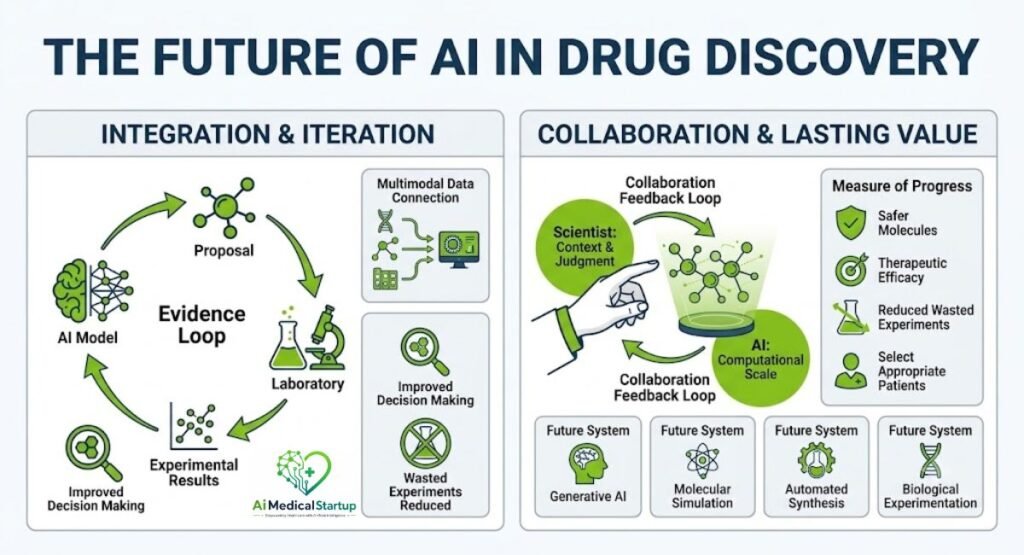
This creates a more iterative model of drug discovery and development. Instead of treating computational analysis as a separate preliminary exercise, researchers can place it inside repeated design–test–learn cycles. AI proposes a hypothesis or molecule. Scientists test it. The resulting experimental data then informs the next computational step. The process resembles a scientific feedback loop rather than a one-way pipeline.
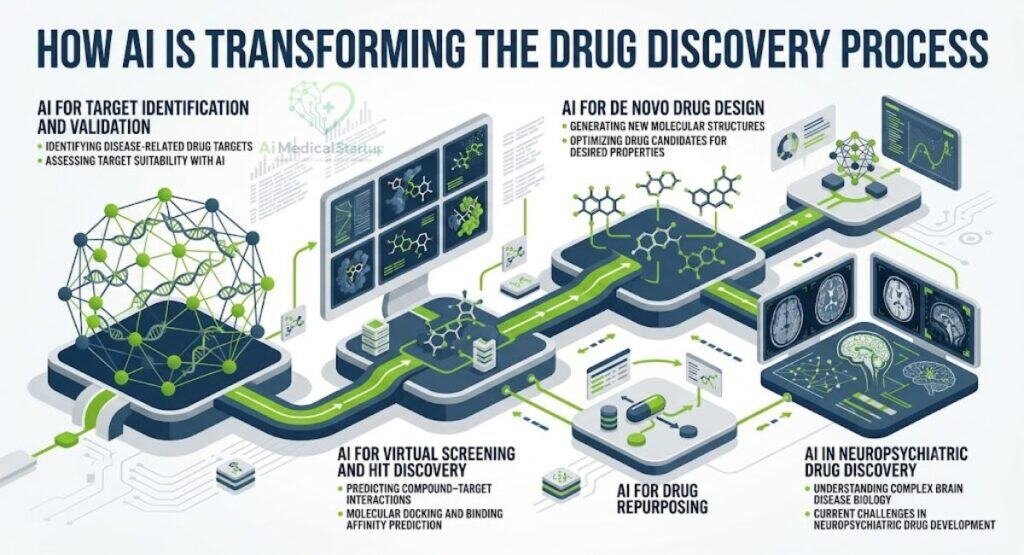
Lead Optimization, Drug Repurposing & Neuropsychiatric Discovery
From multi-variable molecular balancing to unraveling complex brain biology, AI provides hypothesis-generation engines across the most challenging fronts of drug development.
Multi-Variable Optimization Matrix
Lead optimization balances efficacy, exposure, and toxicity simultaneously rather than maximizing binding strength alone.
| Property Domain | Key Parameters (ADME-T) | AI Predictive Role | Optimization Goal |
|---|---|---|---|
| Efficacy & Binding | Target affinity, Selectivity, On/off rates | Docking score, 3D binding kinetics | High Selectivity |
| Absorption & Exposure | Solubility, Membrane permeability, Bioavailability | Physicochemical feature mapping | Optimal Bioavailability |
| Metabolism & ADME | Clearance, Half-life, CYP450 inhibition | Metabolic pathway prediction | Predictable Clearance |
| Safety & Toxicity | hERG channel, Mutagenicity, Off-target binding | Tox-endpoint estimation | Minimal Off-Target Risk |
| Manufacturability | Synthetic accessibility, Chemical stability | Retrosynthetic route design | Cost-Effective Scale |
AI for Drug Repurposing: Accelerating Known Molecules
Drug repurposing leverages existing human pharmacological and safety data to identify novel indications by analyzing drug-target pathways and disease gene-expression signatures.
AI in Neuropsychiatric Drug Discovery
Brain disorders present extreme complexity—distributed across genes, circuits, and environmental factors. Single diagnostic categories often mask distinct biological subtypes (endotypes).
Central Challenge: Biological Uncertainty & Subtype Stratification
Brain disorders do not behave like simple engineering systems. Statistical patterns detected by AI models do not guarantee true cause-and-effect disease mechanisms. Biological variability (age, comorbidities, medication history) requires rigorous external validation and combination with empirical neuroscience.
Data and Validation Challenges in AI Drug Discovery
Every AI model is ultimately limited by the information it receives. This sounds obvious but becomes surprisingly important in AI drug discovery because biological datasets are messy, fragmented and highly conditional. A molecular measurement may depend on the assay, cell type, laboratory protocol, concentration and time point. A clinical observation may depend on age, disease stage, treatment history and other factors.
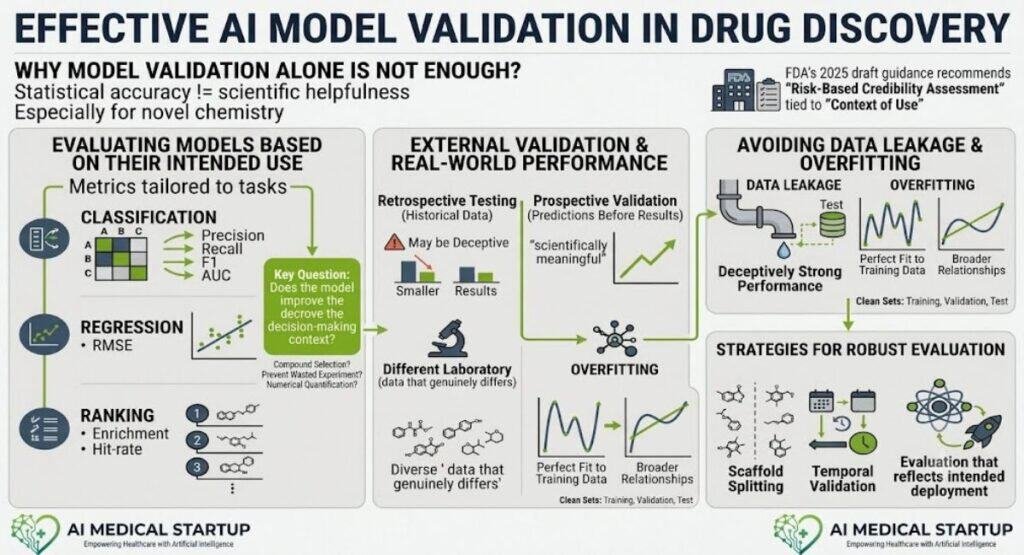
That means impressive benchmark results do not automatically guarantee useful real-world use cases. A model can achieve excellent performance on a carefully prepared dataset while failing when researchers apply it to a different chemical series or patient population. For drug R&D, the important question is not merely whether the model predicts accurately. Researchers must ask whether it predicts accurately for the decision they need to make.
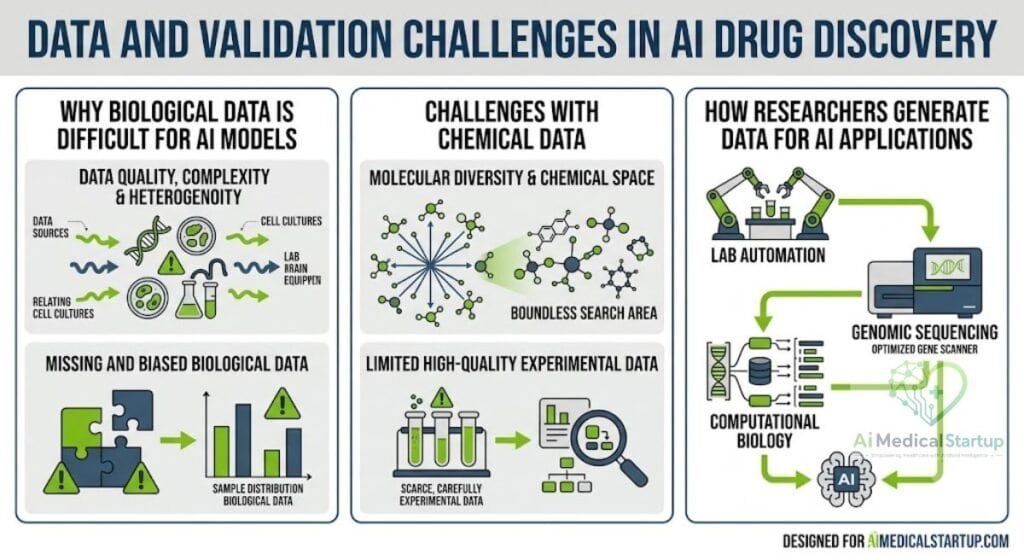
Biological, Chemical, and Clinical Data Layers in Drug Discovery
Drug discovery datasets answer fundamentally different questions across distinct domains. Confusing these layers can produce misleading conclusions because computational success at one level does not automatically translate to human biological efficacy.
| Data Layer | Typical Information | Main Question | Common AI Application |
|---|---|---|---|
| Chemical | Chemical structures, physical properties, assay measurements | What might this molecule do? | Virtual screening & hit discovery |
| Biological | Genomic, transcriptomic, and cellular measurements | What is happening in disease biology? | Target identification & ranking |
| Preclinical | In vivo animal, organoid, and translational experiments | Does the mechanism behave in living systems? | Toxicity & ADME prediction |
| Clinical | Patient demographics, biomarker trends, trial outcomes | Does the intervention help people safely? | Patient stratification & cohort selection |
| Real-World | Electronic health records (EHR), registries, claims data | How does treatment behave in practice? | Clinical outcome prediction & pharmacovigilance |
The Translational Gap
Building a bridge between these computational layers remains one of the greatest challenges in drug research. A model may perform exceptionally well on molecular datasets, yet offer limited insight into human biological outcomes. The further a prediction moves from its underlying dataset, the more carefully its biological assumptions must be scrutinized.
Where Does AI Drug Discovery Stand Today?
The field has moved beyond the stage where AI is merely a theoretical tool. Regulators now have dedicated frameworks and resources addressing AI use throughout the medicine lifecycle. The FDA says it has seen more than 500 submissions with AI components between 2016 and 2023, illustrating how broadly these technologies are entering development activities.
At the same time, current evidence does not justify treating AI as an autonomous replacement for conventional R&D. The practical picture is more nuanced. AI is being incorporated into target discovery, molecular design, screening, clinical development and other activities. The difficult question is how consistently these systems translate computational performance into meaningful clinical impact.
Where Does AI Drug Discovery Stand Today?
An overview of current AI adoption across key stages of pharmaceutical R&D, highlighting the balance between active deployment, predictive capability, and ongoing clinical validation.
Current Applications of AI Across Drug Discovery
Breakdown of AI deployment maturity and impact by functional R&D domain:
Target Discovery and Biomarker Identification
AI integrates genomic, transcriptomic, and proteomic data to prioritize disease targets faster and pinpoint actionable biomarkers for patient stratification early in the process.
Lead Optimization and Molecular Design
Generative models and virtual screening accelerate hit-to-lead transitions, optimizing binding affinity, solubility, and synthetic accessibility in parallel.
Preclinical Research and Toxicity Prediction
Machine learning models estimate ADME and off-target toxicity profile early, reducing costly downstream failures during live animal or cellular assays.
Clinical Trial Support
Algorithms streamline protocol design, select ideal patient cohorts using real-world data, and monitor patient dropouts or synthetic control arms.
Integrating Preclinical and Clinical Data
Connecting preclinical findings with clinical trial outcomes bridges the translational gap, enabling continuous feedback loops that refine future molecular models based on real human data.
What AI Can Do Well & Where Human Expertise Still Matters
AI excels at pattern recognition, large-scale ranking, and rapid comparison, while human scientists provide critical biological context, experimental design, and regulatory accountability.
Division of Capabilities in Modern R&D
A balanced view of algorithmic scale vs. human judgment in drug discovery:
AI & Computational Scale
Data & Pattern Processing-
01
Pattern Recognition
Detecting multi-parameter biological signals across vast datasets.
-
02
Large-Scale Screening
Virtual filtering of millions of candidate molecules in seconds.
-
03
Molecular Prediction
Simulating 3D structure, binding affinity, and chemical properties.
-
04
Data Integration
Harmonizing multi-omics, structural, and chemical data layers.
-
05
Candidate Ranking
Prioritizing compounds against multi-objective property targets.
-
06
In Silico Simulation
Modeling metabolic pathways and cellular responses digitally.
Human Expertise & Judgment
Context & Accountability-
01
Biological Interpretation
Evaluating disease pathways beyond pure statistical correlation.
-
02
Experimental Design
Creating rigorous wet-lab assays to validate predictions.
-
03
Medicinal Chemistry
Applying synthetic intuition to craft druggable lead molecules.
-
04
Clinical Judgment
Navigating patient heterogeneity, endpoints, and trial safety.
-
05
Risk Assessment
Balancing efficacy vs. toxicity trade-offs for human trials.
-
06
Regulatory Accountability
Ensuring transparency, safety, and compliance for submission.
The Future of AI in Drug Discovery: Where Do We Go From Here?
The future of AI drug discovery will probably depend less on increasingly impressive demonstrations and more on reliable integration with scientific workflows. Generating a molecule in seconds is interesting. Demonstrating that the molecule can be synthesized, behaves as predicted and eventually improves patient outcomes is far more valuable.
The next generation of AI in drug development is therefore likely to focus on evidence loops. AI will propose ideas. Laboratories will test them. Experimental results will update models. Researchers will decide what to test next. This cycle could make drug R&D more adaptive while preserving the experimental foundation on which medicine depends.
FAQs About AI in Drug Discovery
The rapid growth of artificial intelligence in drug discovery has created understandable questions about what these systems can actually accomplish. Below, we address key questions on molecular design, clinical development, safety, and the future of pharmaceutical R&D.
Artificial intelligence in drug discovery refers to computational methods that analyse biological and chemical information to support decisions throughout the discovery process. These methods can assist with target identification, virtual screening, molecular design, lead optimization, toxicity prediction and other research tasks. AI does not replace experimental validation. Instead, it helps researchers process complex information and prioritise promising scientific opportunities.
AI can help identify disease-associated targets, rank molecules for testing and generate new chemical structures. Researchers can also use models to estimate molecular properties such as potency, solubility, permeability and pharmacokinetics. The resulting predictions guide experiments. Laboratory results then determine whether the predicted activity actually occurs. This combination of computation and experimentation forms the practical basis of modern AI drug discovery.
AI cannot currently replace the complete drug development pipeline. Drug discovery still requires chemistry, biological experiments, pharmacology, toxicology and clinical research. A model can predict that a molecule may interact with a target but cannot by itself demonstrate human safety or therapeutic benefit. The more realistic model is augmentation, where computational systems help researchers make better-informed decisions while experiments provide the necessary evidence.
AI can analyse genetic associations, gene-expression patterns, protein interactions, literature and other forms of biological evidence to identify potential drug targets. Modern approaches can also combine single-cell measurements and other high-dimensional datasets. However, target identification is only the beginning. Researchers must still establish biological relevance, target engagement and therapeutic feasibility through appropriate experiments.
The biggest challenges include data quality, limited experimental measurements, dataset bias, information leakage, overfitting and weak generalisation to unfamiliar biology or chemistry. Researchers also face interpretability, reproducibility and regulatory challenges. Perhaps the deepest problem is translation. A model can perform well on molecular or cellular data without necessarily predicting what will happen in humans.
There is no single accuracy number for AI drug discovery. Performance depends on the prediction task, dataset, model and intended use. A classification model may report precision, recall or area under the curve while a molecular property model may use root mean squared error. More importantly, researchers need external validation and prospective evidence to determine whether model performance remains useful outside the original dataset.
AI can potentially reduce computational workload, prioritise compounds and help researchers avoid some unnecessary experiments. It may also improve patient recruitment, trial planning and other aspects of clinical development. However, these efficiencies do not guarantee a shorter overall development timeline. Regulatory requirements, manufacturing, toxicology and clinical trials still require substantial evidence. The measurable benefit depends on the specific use case.
The future of AI drug discovery is likely to involve multimodal models that connect genomic, biological, chemical, preclinical and clinical information. Generative systems may become more tightly connected to molecular simulation and automated experimentation. At the same time, regulators are developing principles for responsible AI use across the medicine lifecycle. The most meaningful progress will come when computational predictions repeatedly translate into useful experimental and clinical outcomes.
Final Thoughts: Where AI Fits in the Future of Drug Development
The most important lesson is simple: AI is not a shortcut around biology. It is a powerful way to explore biology and chemistry at a scale that humans cannot manage manually.
AI can search enormous datasets, prioritise compounds, suggest molecular structures, and connect evidence across research domains. These capabilities make drug discovery and development far more efficient when researchers apply them to well-defined problems.
However, the harder challenge begins after the prediction. Scientists must still determine whether the target matters, whether the molecule works, whether the body can tolerate it, and whether the treatment provides true therapeutic benefit to real patients. This is why clinical translation, prospective validation, and human expertise remain fundamentally indispensable.

Dr. Kanza Sarfraz, M.B.B.S., is a medical doctor and graduate of Allama Iqbal Medical College, Lahore. She brings nearly seven years of clinical experience across tertiary-care hospitals, medical headquarters, and healthcare facilities in both the public and private sectors. Her clinical experience provides a practical perspective on healthcare delivery, emerging medical technologies, and the evolving role of artificial intelligence in medicine.