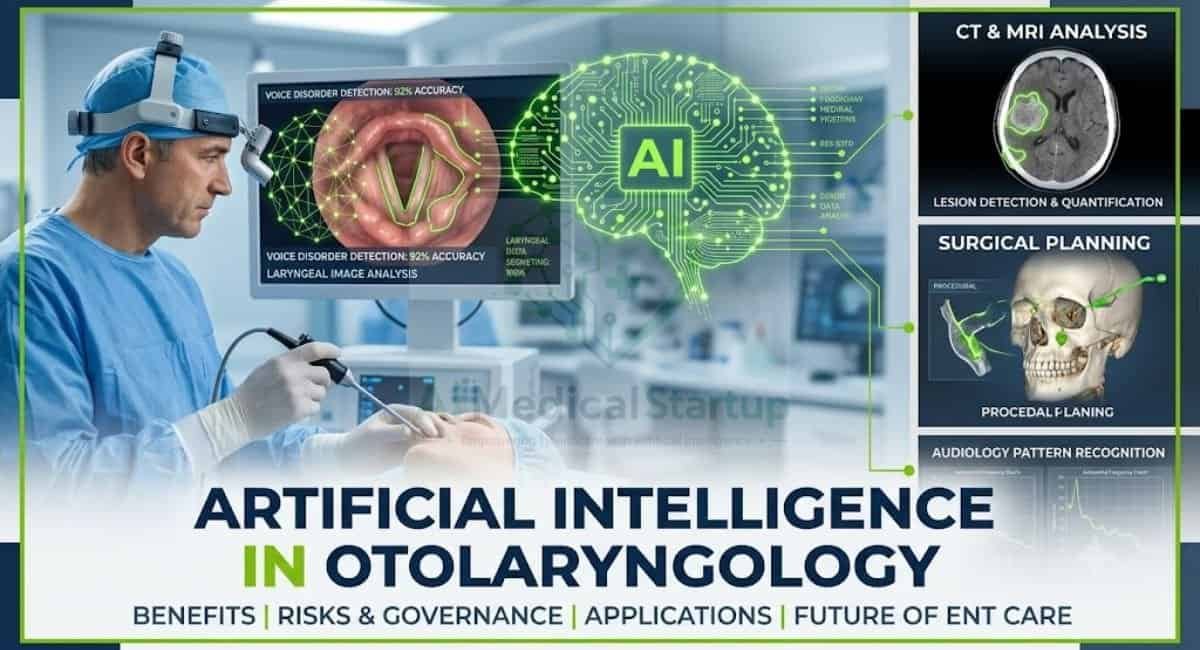
AI in Otolaryngology

Artificial Intelligence in Otolaryngology: Benefits, Risks, Applications, and Future of ENT Care
From automated otoscopic diagnostic algorithms to precision head and neck surgical navigation, explore how machine learning models are transforming clinical ENT decision-making while navigating ethical and diagnostic challenges.
AI Audio Executive Summary
Click play to listen to browser voice narration
Otoscopic Neural Classification
Tympanic membrane segmentation & Automated sinus pathology detection powered by deep learning models.
Artificial intelligence is rapidly changing how healthcare professionals diagnose, treat and monitor patients, and AI in otolaryngology is becoming an important part of this transformation. From analyzing medical images to supporting clinical decisions, AI can help ENT specialists manage complex information with greater speed and consistency. Modern artificial intelligence in otolaryngology uses machine learning, deep learning and natural language processing to support areas such as hearing assessment, endoscopy, surgical planning and head and neck cancer care. It can also assist with clinical documentation, patient education and remote monitoring, creating new possibilities for more efficient ENT care.
However, these advances also bring important questions about accuracy, privacy, algorithmic bias and physician oversight. AI can make mistakes, generate misleading information and perform differently across patient populations. Understanding both its potential and limitations is therefore essential. This guide explores the major AI applications, benefits, risks and future opportunities shaping modern otolaryngology.
The opportunity is significant, but so are the responsibilities. AI in otolaryngology can identify patterns across large amounts of clinical data, support differential diagnosis, analyze medical images and reduce repetitive administrative work. At the same time, AI can produce inaccurate information, amplify bias or create a false sense of certainty. The safest path is therefore not to treat AI as a replacement for clinicians. It is to use it as a carefully evaluated tool that strengthens physician judgment, improves efficiency and keeps patient safety at the center of ENT care.
| Clinical Area | Potential Role of AI | Human Clinical Role |
|---|---|---|
| Diagnosis | Pattern recognition and decision support | Clinical assessment and final diagnosis |
| Imaging | Image analysis and segmentation | Interpretation and clinical correlation |
| Surgery | Surgical planning and navigation | Surgical judgment and procedural control |
| Documentation | Automated clinical notes | Verification and accountability |
| Oncology | Detection, classification and prediction | Multidisciplinary treatment decisions |
| Patient Education | Information and communication support | Counseling and individualized advice |
| Research | Literature analysis and data processing | Scientific interpretation and validation |
What Is Artificial Intelligence in Otolaryngology?
Artificial intelligence in otolaryngology refers to the use of computational systems that can analyze information, recognize patterns, generate content or support clinical decisions within the field of ear, nose and throat medicine. These systems can work with images, audio recordings, clinical notes, laboratory information, patient histories and other forms of healthcare data.
Modern AI in healthcare includes several technologies. Machine learning allows systems to learn patterns from data. Deep learning uses layered computational networks to recognize complex patterns. Natural language processing allows computers to process human language. More recently, generative AI and large language models have expanded the possibilities for clinical communication, documentation, research and education.
How AI Is Changing ENT and Head and Neck Care
Traditional ENT practice depends heavily on history-taking, physical examination, endoscopy, imaging, audiology and clinical experience. AI does not remove these foundations. Instead, it can add another analytical layer. An AI system may process thousands of images or records and identify patterns that deserve closer human attention.
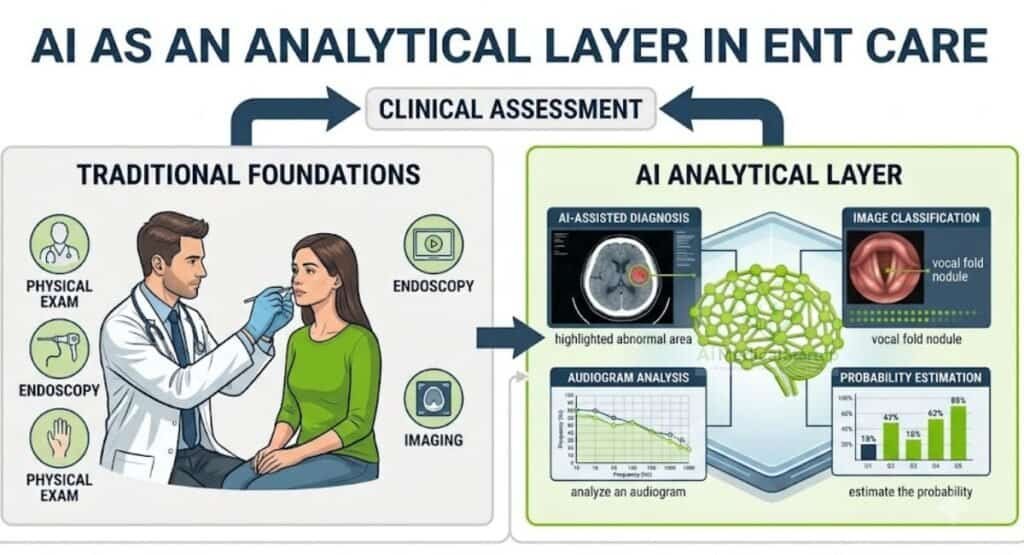
This makes AI-assisted diagnosis particularly interesting in otolaryngology head and neck surgery. A clinician may use an AI system to highlight an abnormal area on a scan, classify an endoscopic image, analyze an audiogram or estimate the probability of a particular condition. The output can then become part of a wider clinical assessment rather than an automatic medical conclusion.
How Generative AI Works in Otolaryngology
Generative artificial intelligence differs from conventional predictive models because it can create new content. In ENT settings, that content may include summaries, explanations, draft documentation, educational material or responses to clinical questions. AI language models learn statistical relationships within large datasets and use those relationships to generate responses.
The important distinction is that fluent language does not guarantee medical accuracy. A system can produce an answer that sounds professional while containing an incorrect recommendation or a fabricated citation. For that reason, generative AI requires human feedback, verification and appropriate physician oversight when used around patient care.
Large Language Models in Clinical Practice
Large language models can support several areas of clinical practice. They can summarize notes, convert information into patient-friendly language, assist with documentation and help clinicians organize information. They can also be used for educational exercises involving clinical cases and clinical vignettes.
Tools such as ChatGPT, ChatGPT-3.5 and ChatGPT-4 have demonstrated how rapidly conversational AI has entered medical education and public discussion. However, their usefulness in healthcare depends on the specific task, model, data and safeguards. They should not be treated as automatically reliable sources of treatment recommendations or definitive diagnoses.
Computer Vision for ENT Imaging
Computer vision allows AI systems to analyze visual information. This is highly relevant to ENT because the specialty relies heavily on imaging and visual examination. CT scans, MRI studies, endoscopy, pathology images and other visual data can potentially be analyzed using deep learning systems and neural networks.
A computer vision model may identify an anatomical structure, classify an abnormality or perform image segmentation. In some applications, automated image segmentation can help create a detailed representation of anatomy before treatment. Such systems can support clinicians but still require appropriate validation in the populations and clinical settings where they will be used.
Machine Learning for Diagnosis and Prediction
Machine learning algorithms can identify relationships within large datasets and use those relationships to make predictions. In ENT medicine, this may involve predicting disease risk, classifying images, estimating treatment response or identifying patterns associated with particular conditions.
The quality of a predictive model depends heavily on its training data. A model trained on a narrow patient population may not perform equally well elsewhere. Therefore, clinical validation, external testing and evaluation across diverse patient populations are essential before AI becomes part of routine care.
AI vs. Traditional Clinical Decision-Making in ENT
Traditional clinical decision-making combines patient history, examination findings, diagnostic tests, clinical guidelines and professional experience. AI introduces another source of information. It can process data quickly and recognize patterns, but it does not experience the patient encounter in the same way a clinician does.
A useful approach is to view AI as an additional instrument rather than a digital replacement for the ENT specialist. The clinician remains responsible for understanding the context, questioning unusual results, communicating with the patient and selecting appropriate treatment plans. This distinction becomes especially important when AI confidence does not match clinical reality.
How AI Is Used in Otolaryngology Today
Today, AI tools are being explored and deployed across multiple areas of ENT medicine. These include diagnostic support, imaging, endoscopy, audiology, documentation, research and patient communication. Some applications are mature enough for specific clinical environments, while others remain experimental or require further validation.
The FDA describes AI/ML medical-device applications that can support image processing, early disease detection, diagnosis, prognosis and risk assessment. The key issue is not simply whether an AI system exists. It is whether that particular system has been appropriately evaluated for its intended use.
AI for Diagnosis and Clinical Decision Support
One of the most discussed applications is clinical decision support. An AI system can combine symptoms, medical history, imaging or other information and identify patterns that may help a clinician consider possible diagnoses.
The goal is not to create a machine that replaces the ENT specialist. Instead, AI-assisted care can help clinicians manage complex information and focus attention on findings that may otherwise be overlooked. The value of such systems depends on diagnostic accuracy, workflow integration and appropriate clinical oversight.
Medical History and Symptom Analysis
Natural language processing can convert unstructured clinical information into usable data. For example, an AI system may identify references to nasal obstruction, recurrent infections, hearing difficulties, dizziness or voice changes within a large clinical record.
This can help organize information before the consultation or support documentation after the consultation. However, symptoms rarely exist in isolation. Their meaning depends on duration, severity, associated findings, previous diagnoses and physical examination. AI therefore provides context rather than replacing clinical reasoning.
Diagnostic Support for Common ENT Conditions
AI can potentially support assessment across conditions such as otitis media, hearing loss, chronic rhinosinusitis, nasal polyps, voice disorders and obstructive sleep apnea. Some systems analyze images while others process questionnaires, clinical notes or physiological signals.
The important distinction is between screening and diagnosis. A model may flag a finding that deserves attention without establishing the final diagnosis. That difference protects against the dangerous assumption that an algorithmic prediction is equivalent to a complete medical evaluation.
AI for Medical Imaging and Endoscopy
ENT medicine generates substantial visual information. Medical imaging, including CT and MRI, can contain thousands of data points that require careful interpretation. AI can assist with image classification, segmentation, measurement and pattern recognition.
The same principle applies to endoscopic images. Nasal endoscopy and laryngoscopy provide direct visual information about anatomy and pathology. Computer vision can potentially identify suspicious patterns or help standardize image assessment, although performance can vary with image quality, equipment and clinical context.
CT and MRI Analysis
AI-assisted analysis of CT and MRI can support anatomical mapping, lesion detection and quantitative measurements. In surgical settings, this information may contribute to surgical planning and three-dimensional visualization.
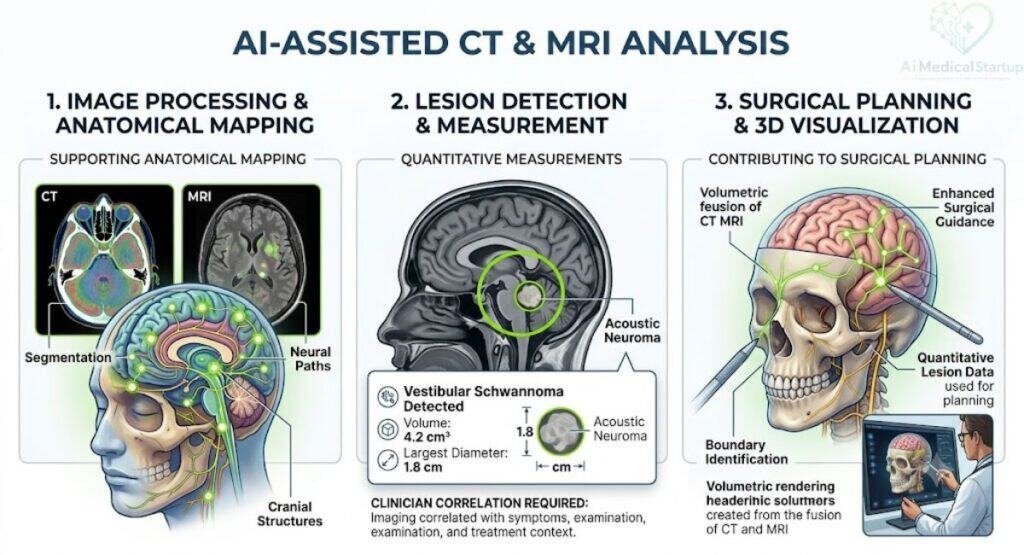
For example, an algorithm may help identify anatomical boundaries or quantify a lesion. In neurotology, imaging analysis may be relevant to conditions such as vestibular schwannoma, sometimes called acoustic neuroma. The clinician still needs to correlate imaging with symptoms, examination findings and the broader treatment context.
Nasal Endoscopy and Laryngoscopy
AI can analyze images captured during nasal endoscopy and laryngoscopy. A trained computer vision model may classify visual patterns associated with inflammation, lesions or other abnormalities.
In laryngology, this could eventually support assessment of laryngeal pathology. In rhinology, image analysis could assist with evaluating nasal and sinus disease. Yet the technology must account for lighting, camera angle, image quality and anatomical variation before its output can be considered dependable.
AI for Patient Monitoring and Risk Prediction
AI can analyze longitudinal information to identify changes over time. This creates opportunities for postoperative monitoring, chronic disease management and risk prediction. Predictive models may estimate which patients require closer follow-up or which patterns are associated with complications.
These systems may become particularly useful when combined with wearable devices, remote questionnaires or digital health platforms. However, prediction is not certainty. A high-risk prediction should prompt appropriate clinical assessment rather than automatically determine a patient’s treatment.
AI-Powered Clinical Documentation and Medical Scribes
Documentation is one of the most practical areas for AI adoption. AI-generated clinical documentation can transform conversations or structured information into draft clinical notes. This may reduce administrative burden and allow clinicians to spend more attention on patients.
The draft still needs review. Incorrect medication information, missing symptoms or inaccurate summaries could create clinical and legal problems. A human review step is therefore essential. The most useful systems are likely to reduce repetitive documentation while preserving clinician accountability.
Benefits of AI for Otolaryngologists and ENT Clinicians
The potential benefits of AI in ENT practice extend beyond faster data processing. AI can help clinicians handle complex information, support repetitive workflows and create new forms of clinical analysis. The greatest value may come when AI performs computational tasks while clinicians focus on interpretation, communication and decision-making.
However, claims about improved outcomes should be based on evidence rather than enthusiasm. A system that performs well in a laboratory study may behave differently in everyday practice. This is why clinical validation, monitoring and quality control matter as much as technical performance.
Benefits of AI for Otolaryngologists and ENT Clinicians
Estimated operational and analytical efficiency gains across specialized ENT domains (Click/Tap any bar to view details):
Enhanced Diagnostic Accuracy & Screening
Deep learning algorithms assist in identifying complex mucosal, endoscopic, and otoscopic abnormalities, supporting early detection while ensuring final clinical validation remains with the ENT specialist.
Faster and More Accurate Clinical Decision Support
AI can process large datasets quickly. This may help clinicians identify patterns within imaging, clinical histories or other records. In the right setting, clinical decision support can make information easier to organize and may reduce certain forms of repetitive cognitive work.
Speed alone does not guarantee accuracy. An AI recommendation must still be assessed against the patient’s history, examination and clinical guidelines. The safest model is therefore one in which technology supports professional reasoning rather than replacing it.
AI-Assisted Surgical Planning
Surgery requires detailed knowledge of anatomy. AI can potentially combine imaging data with three-dimensional models to support preparation before an operation. This is particularly relevant in complex ENT and skull-base procedures.
Preoperative Imaging Analysis
AI can assist with the interpretation of radiographic studies and create detailed anatomical representations. Three-dimensional anatomical reconstruction may help clinicians visualize structures before surgery.
The practical benefit is not simply a better picture. It is the ability to organize relevant anatomical information around a specific patient. That can contribute to safer preparation, clearer communication and more precise procedural planning.
Personalized Surgical Planning
Every patient has different anatomy. AI-assisted systems may eventually help create patient-specific surgical plans based on imaging, previous procedures and other relevant data.
Such systems may also contribute to image-guided surgery, navigation and simulation. Still, anatomy can differ from imaging during an operation. Surgeons must therefore remain prepared to adapt their plan based on real-time findings.
AI for Head and Neck Cancer Detection
AI in head and neck cancer is an important research area because cancer diagnosis often involves imaging, pathology, endoscopy and clinical information. AI can potentially help identify suspicious patterns and classify tumors.
In head and neck oncology, researchers are studying models for cancer detection, prognosis and treatment planning. AI may also help integrate information from pathology, imaging and genomics. The ultimate diagnosis, however, remains a clinical and pathological process rather than a single algorithmic output.
AI for Medical Research and Literature Review
AI is changing scientific research as well. Researchers can use language models to summarize papers, organize research ideas and assist with manuscript support. AI can also help researchers identify themes across large collections of literature.
However, researchers must verify scientific references carefully. Generative systems can produce plausible but nonexistent sources. This problem makes independent reference checking essential, particularly when preparing manuscripts for peer-reviewed journals.
AI for Resident Education and Board Examination Preparation
Medical education is another important area. AI can generate clinical vignettes, explain concepts and simulate question-and-answer sessions. It can support resident education, revision and board examination preparation.
For otolaryngology trainees, the technology can provide an interactive learning environment. It may help with self-directed learning, clinical reasoning exercises and preparation for licensing examinations. Yet residents should compare AI-generated information with trusted educational resources and current clinical guidelines.
Generative AI for Clinical Documentation and Workflow Automation
Generative AI can automate portions of documentation, communication and administrative work. Draft referral letters, discharge instructions, consultation summaries and patient messages are examples of tasks that may be assisted by AI.
This does not mean every workflow should be automated. The best use cases are those where the task is repetitive, the output can be checked and the consequences of an error are manageable. High-risk clinical decisions require a much stronger level of review.
AI Applications Across Otolaryngology Subspecialties
ENT is not a single clinical environment. It contains multiple subspecialties with different diseases, diagnostic methods and workflows. Consequently, AI technologies will not have one universal role across the field.
The following table illustrates how different subspecialties may use AI.
| ENT Subspecialty | Potential AI Application | Example Data |
|---|---|---|
| Rhinology | Sinus imaging and disease classification |
CT
Endoscopy
Symptoms
|
| Otology | Hearing assessment |
Audiograms
Speech Data
|
| Neurotology | Imaging and vestibular assessment |
MRI
CT
Clinical Data
|
| Laryngology | Voice and endoscopic analysis |
Audio
Laryngoscopy
|
| Pediatric ENT | Screening and risk prediction |
Clinical Data
Developmental Data
|
| Sleep Medicine | OSA prediction and monitoring |
Sleep Studies
Wearable Data
|
| Head and Neck Surgery | Imaging and surgical planning |
CT
MRI
Pathology
|
| Oncology | Detection and prognosis |
Imaging
Pathology
Genomics
|
AI in Rhinology and Sinus Disease
AI in rhinology is being explored for imaging analysis, disease classification and treatment planning. Sinus disease provides a useful application because CT imaging contains detailed anatomical information that can be analyzed computationally.
AI may eventually help clinicians quantify disease severity, identify anatomical variations and support surgical planning. Its role should still be interpreted within the wider clinical picture.
Chronic Rhinosinusitis
Chronic rhinosinusitis involves symptoms, examination findings and often imaging. AI can analyze these different information sources and potentially identify patterns associated with disease severity or treatment response.
The challenge is that chronic disease is highly variable. A model must distinguish clinically meaningful disease from incidental imaging findings. Patient symptoms and quality of life remain essential parts of assessment.
Nasal Polyps and Sinus Imaging
AI-based image analysis may help identify nasal polyps on endoscopic images or CT scans. Automated measurements could also support assessment of sinus involvement.
Such tools may become useful in treatment planning and monitoring. However, image classification should not be confused with complete disease management. Treatment decisions still depend on symptoms, medical history, examination and response to previous therapy.
AI in Otology and Neurotology
AI in otology has strong potential because the field generates structured and measurable data. Hearing tests, imaging and audio recordings can all provide information suitable for computational analysis.
In neurotology, AI may assist with complex imaging and neurological or vestibular information. These applications are particularly interesting because subtle patterns can be difficult to quantify manually.
Hearing Loss Detection
AI can support hearing screening by analyzing audiological information and speech responses. Automated tools may help identify people who should receive further assessment.
This could be valuable in large screening programs and remote settings. A screening result is not the same as a complete audiological diagnosis, however. Confirmatory assessment remains important.
Audiology and Hearing Assessment
AI can analyze audiograms, speech recordings and other hearing data. Automated audiometry may make some assessments more scalable, particularly where specialist resources are limited.
The challenge is ensuring that automated testing performs consistently across ages, devices, languages and patient populations. Technical convenience should never come at the expense of diagnostic reliability.
Cochlear Implant Planning
AI could assist with cochlear implant planning by analyzing imaging and patient characteristics. It may help clinicians evaluate anatomy and identify relevant structures before surgery.
The future could involve systems that combine imaging, audiology and clinical history into a more complete patient profile. Such multimodal AI would require careful validation before being integrated into routine decision-making.
AI in Laryngology and Voice Disorders
AI in laryngology is especially interesting because voice contains measurable acoustic information. Computer models can analyze frequency, intensity, timing and other characteristics that may provide digital biomarkers.
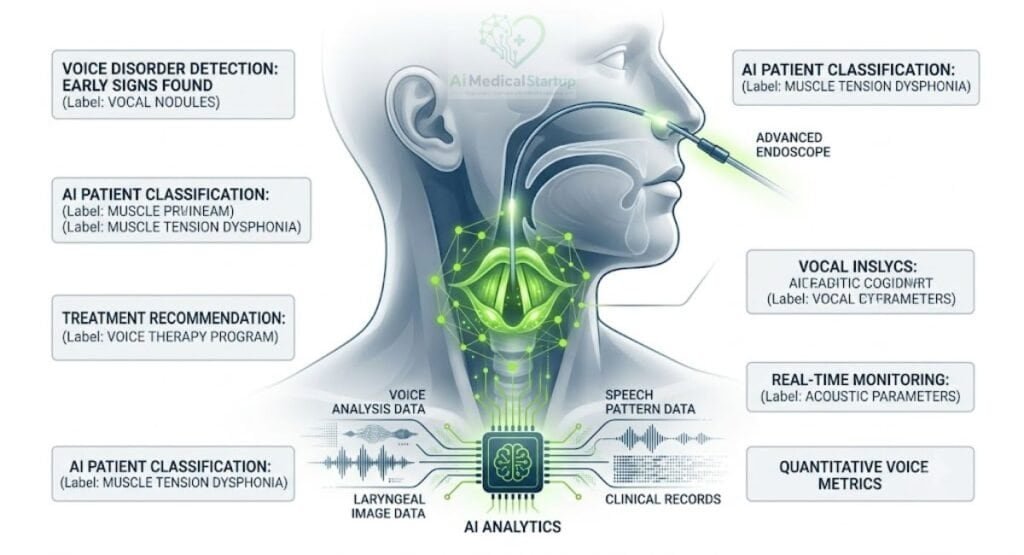
AI can also analyze laryngoscopic images. Together, these technologies could support more consistent assessment of voice disorders while giving clinicians additional information.
Voice Analysis and Speech Recognition
Voice analysis can examine patterns associated with changes in voice quality. Machine learning may detect subtle differences that correlate with particular conditions.
Speech recognition can also support documentation and accessibility. However, language, accent, age and recording quality can influence performance. Diverse training data are therefore essential.
Vocal Cord Abnormality Detection
Computer vision can analyze laryngoscopic images for abnormal patterns. AI may assist in identifying suspicious vocal-cord findings or classifying images for further review.
The purpose is to support the clinician rather than eliminate direct examination. A visual model can recognize patterns but does not independently understand the full patient story.
AI in Pediatric Otolaryngology
Pediatric ENT presents special challenges because anatomy, symptoms and disease patterns change with age. AI applications may include hearing screening, airway assessment and analysis of pediatric imaging.
The use of AI with children also raises important questions about consent, privacy and data protection. Systems must be evaluated specifically in pediatric populations rather than assuming adult performance automatically applies to children.
AI in Sleep Medicine and Obstructive Sleep Apnea
Sleep medicine generates large amounts of physiological data. AI can analyze sleep studies, identify patterns and estimate the probability of obstructive sleep apnea.
Predictive models may also support screening and remote monitoring. Yet a screening prediction should not replace formal assessment when diagnostic confirmation is required. The clinical consequences of false reassurance can be significant.
AI in Head and Neck Surgery
AI in head and neck surgery can support imaging analysis, surgical planning, navigation and postoperative monitoring. In complex cases, AI may help clinicians visualize anatomy or identify structures within medical images.
The future may also include AI-assisted robotic surgery, although the role of AI varies widely between systems. Robotic technology can improve instrument control and visualization, while autonomous clinical decision-making raises substantially greater safety and regulatory questions.
Benefits of Artificial Intelligence for ENT Patients
Patients may experience the benefits of AI without ever interacting directly with an algorithm. AI can operate behind the scenes by helping clinicians analyze images, organize records, draft documentation or monitor disease.
The most meaningful patient benefit is not simply faster technology. It is better care when AI is accurate, clinically appropriate and responsibly integrated. WHO emphasizes that AI for health should protect autonomy, promote safety, support transparency and advance equity.
Earlier Detection and Diagnosis
AI may help identify subtle patterns that deserve clinical attention. In imaging and screening, this could potentially support earlier recognition of abnormalities.
However, earlier detection is useful only when the system has acceptable performance and when appropriate follow-up is available. False positives can create anxiety and unnecessary testing, while false negatives can create false reassurance.
Personalized Treatment Recommendations
AI can combine multiple types of clinical data to identify patterns associated with treatment response. In the future, this may support more individualized treatment recommendations.
Personalized medicine must still account for patient preferences, contraindications, clinical guidelines and practical circumstances. AI can process information, but the treatment decision belongs within a broader clinician-patient relationship.
Improved Patient Education and Health Information
AI-powered patient education can translate complex medical information into simpler language. A patient preparing for sinus surgery, for example, may want to understand what happens before and after the procedure.
Generative systems can produce educational drafts quickly. Yet medical content should be reviewed because an apparently clear explanation can still contain an important error. Good patient education combines clarity with accuracy.
Better Communication Between Patients and Clinicians
AI can support AI-powered patient communication by summarizing questions, translating information or preparing understandable explanations. This may help patients participate more actively in consultations.
Good patient-centered communication should remain interactive. Patients need opportunities to ask questions, express concerns and clarify information with a qualified clinician.
Remote Monitoring and Telehealth Support
AI can support remote evaluation by analyzing patient-reported information, hearing data, photographs or other digital signals. Tele-otoscopy is one example of how remote ENT assessment can combine imaging with specialist review.
Remote tools could expand access to care, especially where specialist services are geographically limited. They should still include appropriate pathways for in-person assessment when symptoms or findings require it.
Improving Access to Otolaryngology Care
AI may help extend services to underserved populations, rural communities and regions with limited specialist access. Screening and triage tools could potentially help determine which patients require specialist evaluation.
However, technology can also worsen health inequity if high-quality systems are available only to well-resourced healthcare systems. AI should therefore be evaluated not only for performance but also for accessibility and equitable deployment.
AI and Shared Decision-Making
Shared decision-making requires patients and clinicians to discuss treatment options, risks, benefits and preferences. AI may help organize information for these conversations.
It should not dictate the patient's choice. A responsible system should support understanding while preserving autonomy, informed discussion and individual preferences.
AI in Head and Neck Cancer Care
Cancer care is one of the most promising and complex areas for AI. AI in head and neck cancer may involve imaging, pathology, endoscopy, molecular data and clinical records.
The potential value comes from combining information that is difficult to process manually at scale. At the same time, cancer decisions are high stakes. AI must therefore undergo rigorous validation and remain part of multidisciplinary care.
AI for Early Cancer Detection
AI can analyze images and other clinical information to identify suspicious patterns. In head and neck cancer, this could involve endoscopic images, radiographic studies or pathology.
Early detection models may eventually support screening and clinical triage. They should not create a false impression that a negative algorithmic result excludes cancer. Clinical evaluation remains essential.
AI-Assisted Tumor Classification and Diagnosis
Machine learning can classify patterns within imaging or pathology. This may help distinguish different tumor characteristics and support head and neck cancer diagnosis.
Pathology and imaging should ideally be interpreted alongside clinical information. A model that analyzes one data source in isolation may miss important context.
AI for Cancer Staging and Prognosis
AI may assist with cancer staging and prognosis by combining tumor characteristics with imaging and clinical information. Models may also support analysis of cTNM staging information.
Prognostic predictions should be interpreted carefully. A prediction describes a statistical pattern within a dataset. It does not determine what will happen to an individual patient with certainty.
AI for Treatment Planning
AI may contribute to treatment planning by analyzing tumor location, anatomy and other patient-specific information. Its role could expand as multimodal systems become more capable.
Surgery and Surgical Navigation
AI can support surgical navigation by processing imaging and identifying anatomical structures. In complex head and neck procedures, this could improve visualization and preparation.
The surgeon remains responsible for intraoperative decisions. Anatomy can differ from preoperative imaging, and unexpected findings may require immediate adaptation.
Radiation Therapy Planning
AI may assist with tumor segmentation and radiation planning. Automated contouring could reduce repetitive work and potentially improve consistency.
Any automated output must be reviewed before clinical use. Errors in tumor or normal-tissue segmentation can have serious consequences.
Treatment Response Prediction
AI may analyze imaging and other information to estimate treatment response. Such models could contribute to more personalized cancer management.
The usefulness of these predictions depends on external validation and clinical integration. A model trained in one cancer center may not perform identically in another.
AI for Cancer Recurrence and Patient Monitoring
Long-term cancer care produces repeated clinical data. AI could analyze changes across imaging, symptoms and other records to support surveillance.
The potential benefit is earlier identification of concerning patterns. However, recurrence surveillance must still follow established clinical pathways and specialist assessment.
Limitations of AI in Head and Neck Oncology
Cancer datasets can be difficult to obtain and standardize. Rare tumors may have limited training examples. Imaging protocols can differ between institutions. Patient populations can also vary.
These limitations make diverse datasets, external validation and ongoing monitoring particularly important. AI should complement oncology expertise rather than become an isolated source of treatment decisions.
Risks and Challenges of AI in Otolaryngology
The same technology that creates opportunities can introduce new risks. AI in otolaryngology may process medical information quickly, but speed does not guarantee truth.
Risks and Challenges of AI in Otolaryngology
Key technical, ethical, and clinical challenges impacting AI adoption in ENT care (Click a card to view detailed clinical implications and governance safeguards):
AI Hallucinations & Errors
AI systems may produce confident yet inaccurate outputs or misinterpret visual and audio clinical artifacts (e.g., misclassifying benign mucosal changes as malignancies).
The major challenges include inaccurate outputs, limited transparency, bias, privacy risks and excessive reliance on automated recommendations. WHO specifically warns that health-related large language models can produce plausible but incorrect responses and recommends rigorous evaluation and expert supervision.
The Black Box Problem in ENT Decision-Making
The black box problem refers to situations where clinicians can see an AI output but cannot easily understand how the system reached its conclusion.
This matters when an AI recommendation conflicts with clinical judgment. Explainable AI seeks to make model reasoning or contributing factors more understandable. Complete transparency is not always technically possible, but clinicians need enough information to use a system responsibly.
Algorithmic Bias and Health Inequities
Algorithmic bias can occur when training data do not adequately represent the population in which a system is deployed. The result may be unequal performance across groups.
This can contribute to health inequity and existing healthcare disparities. WHO emphasizes inclusiveness and equity as core principles for AI in health and warns that systems trained primarily on high-income-country data may not perform equally well in other settings.
Patient Privacy and Data Security
ENT records may contain highly sensitive information. AI systems can process clinical notes, images, voice recordings and other protected health information.
Strong data privacy, security controls and appropriate governance are therefore essential. Healthcare organizations must understand where data are stored, who can access them and how they are processed.
HIPAA and Protected Health Information
In the United States, healthcare organizations must consider HIPAA requirements when handling protected health information. AI deployment should be assessed within the organization's broader privacy and security framework.
The precise legal requirements depend on the system, organization and use case. Similar concerns exist under privacy frameworks in the UK and EU, where healthcare data receive strong protection.
Risks of Using Patient Data With Generative AI
A clinician should not assume that every public AI platform is suitable for patient information. Uploading identifiable clinical details into an unapproved system can create privacy and security risks.
Organizations should establish clear rules covering approved tools, data handling, access controls, retention and review. HIPAA compliance is only one part of responsible AI deployment.
Automation Bias Among Healthcare Professionals
Automation bias occurs when people place excessive trust in automated recommendations. In medicine, this can become dangerous when clinicians accept an AI output without independently assessing the evidence.
Good AI design should encourage appropriate verification. Clinicians need to know when an algorithm is uncertain and when independent assessment is necessary.
Liability and Accountability for AI-Assisted Decisions
AI liability is a complex issue because healthcare decisions involve multiple actors. Developers, healthcare organizations and clinicians may each have different responsibilities.
The underlying principle is accountability. AI should not become a way to obscure legal responsibility. A clinician using an AI system must understand its intended purpose, limitations and appropriate level of oversight.
Overreliance on AI in Clinical Practice
Overreliance may gradually weaken independent reasoning if clinicians stop questioning automated outputs. This creates a risk of deskilling and reduced vigilance.
Technology should therefore support rather than replace clinical judgment. The best systems encourage clinicians to investigate unexpected results rather than simply accepting them.
Ethical and Responsible Use of AI in ENT Care
Responsible AI requires more than technical performance. It requires medical ethics, appropriate governance and attention to patient rights.
WHO's framework identifies autonomy, human well-being and safety, transparency, accountability, inclusiveness and equity among the core principles for AI in health.
Maintaining Human Oversight
Physician oversight should remain central when AI influences clinical care. The clinician must be able to question the output and consider whether it fits the patient's actual circumstances.
Human oversight becomes especially important when AI affects diagnosis, cancer treatment, surgery or other high-risk decisions. Technology should assist professional expertise rather than silently replace it.
Informed Consent and Patient Autonomy
Informed consent and autonomy are fundamental principles of medical care. Patients should understand relevant aspects of AI involvement when it materially affects their care.
Patients should also retain the ability to ask questions and discuss alternatives. AI should support patient choice rather than narrow it.
Transparency and Explainable AI
Transparency means that users should understand what an AI system is intended to do, what data it uses and what limitations apply.
Explainable AI can improve trust by helping clinicians understand why a system produced a particular result. Transparency should also include appropriate documentation of validation and performance.
Protecting Patient Confidentiality
Patient confidentiality remains important regardless of whether information is processed by a person or an algorithm.
Responsible systems should minimize unnecessary data collection and apply appropriate access controls. Privacy should be designed into the workflow rather than treated as an afterthought.
Addressing Bias and Health Equity
AI developers should test systems across diverse patient populations. Healthcare institutions should also monitor whether performance differs between demographic or clinical groups.
This is an important part of fairness and justice. An AI system that works well for one group but poorly for another may unintentionally reinforce existing healthcare disparities.
Establishing Clinical AI Governance
AI governance provides the organizational framework for selecting, implementing and monitoring AI systems. It can define who approves tools, who reviews performance and what happens when problems occur.
Responsible deployment also requires interdisciplinary collaboration. Clinicians, data scientists, administrators, cybersecurity professionals, ethicists and patients may all have important perspectives.
Role of Otolaryngologists in AI Oversight
Otolaryngologists should have a meaningful role in evaluating AI tools intended for ENT practice. They understand the clinical workflow, disease patterns and consequences of errors.
Clinical professionals can help determine whether an AI system solves a real problem or simply adds another layer of complexity to the workflow.
Professional Standards and Clinical Guidelines
Professional organizations and institutions can help establish standards for safe AI use. The AAO-HNS and other professional societies have an important role in education, policy development and clinical guidance.
Standards should evolve as evidence changes. AI governance cannot be a one-time approval process.
Balancing Innovation with Patient Safety
Innovation is valuable when it addresses a real clinical need. But healthcare cannot evaluate new AI technologies in the same way it evaluates ordinary consumer software.
The central principle should be proportionality. Low-risk administrative applications may require different safeguards from systems that influence cancer treatment or surgery. Patient safety must remain the foundation.
How AI Is Changing the Future of Otolaryngology
The AI future in healthcare will probably involve deeper integration between clinical systems, imaging platforms, medical records and patient-facing technologies. ENT is well positioned for this change because it combines visual, auditory, textual and physiological information.
The future will not be defined by one universal AI system. Instead, specialized tools may work together within clinical workflows. The rise of multimodal AI could be especially important because ENT care naturally generates multiple forms of data.
Generative AI and the Future ENT Workflow
Generative AI may become an invisible layer within clinical workflows. It could draft notes, summarize records, prepare patient information and organize research material.
The key change may be reduced administrative friction. Clinicians could spend less time performing repetitive documentation and more time communicating with patients.
AI-Powered Personalized Otolaryngology
Future systems may combine imaging, symptoms, genetics, treatment history and other information to produce more individualized assessments.
This could support personalized treatment and risk prediction. However, personalized does not mean automatically correct. Models still need validation and clinical interpretation.
Real-Time AI During ENT Procedures
Real-time AI could analyze images during procedures and provide immediate information. A system might identify anatomical structures, track instruments or highlight areas that require attention.
This would represent a major evolution from preoperative AI. It also introduces greater safety requirements because errors would occur during active procedures.
AI-Assisted Robotic and Image-Guided Surgery
Robotic systems already assist surgeons with visualization and instrument control in several fields. Future AI-assisted robotic surgery may incorporate more sophisticated image analysis and intraoperative guidance.
The distinction between assistance and autonomy is critical. A robot helping a surgeon perform a movement is very different from a system independently deciding what surgical action should occur.
Multimodal AI for ENT Diagnosis
Multimodal AI can process more than one type of information. This could be highly valuable in ENT because patients generate imaging, audio, text and physiological data.
Combining Medical Images, Clinical Notes, and Patient Data
A future AI system might combine CT images, clinical notes, endoscopic images and audiological information. This could provide a more comprehensive representation of the patient.
WHO's guidance on large multimodal models notes that these systems can accept multiple types of input and generate varied outputs, while also emphasizing the need for appropriate ethical governance and evaluation.
AI-Powered Patient Education and Virtual Health Assistants
Virtual assistants may answer general questions, explain procedures and help patients prepare for appointments. AI-powered patient education could make complex information easier to understand.
These systems should have clear boundaries. They should distinguish general information from personalized medical advice and encourage appropriate professional assessment when necessary.
AI for Predictive and Preventive ENT Care
Predictive models may eventually identify patients at increased risk of certain ENT conditions or complications. This could shift some care from reactive treatment toward earlier intervention.
The value will depend on whether predictions actually improve outcomes. A prediction that does not change useful clinical action may add complexity without providing meaningful benefit.
Emerging AI Applications Across ENT Subspecialties
Emerging applications may include automated hearing assessment, advanced sinus imaging, voice biomarkers, sleep monitoring, cancer surveillance and AI-assisted surgery.
The future of otolaryngology is therefore likely to be highly interconnected. Instead of one AI replacing the ENT specialist, multiple specialized AI systems may assist different parts of the patient journey.
How Otolaryngologists and Patients Can Prepare for an AI-Driven Future
Preparing for AI does not require every clinician to become a computer scientist. It does require basic AI literacy, critical thinking and an understanding of how these systems can fail.
Patients also need AI literacy. As consumer health tools become more common, people should understand the difference between general health information and personalized medical care.
AI Preparedness Trends in Otolaryngology (2020–2030)
Tracking the evolution of clinician training, patient engagement, safety governance, and clinical integration over time (Tap a year to view progress metrics):
Formal AI education enters ENT residency programs; ambient scribes and automated audiogram screening gain initial widespread adoption while ethical AI guidelines (e.g., WHO) are formalized.
What ENT Clinicians Need to Know About AI
Clinicians should understand basic concepts such as machine learning, training data, validation, model performance and uncertainty. They should also recognize common failure modes such as hallucinations and automation bias.
The goal is not to turn every ENT specialist into a programmer. It is to create clinicians who can ask the right questions before trusting an AI output.
Developing AI Literacy Among Medical Residents
AI education should become part of modern medical education. Residents will increasingly encounter AI during documentation, research, imaging and clinical decision-making.
Resident training can include practical exercises involving model verification, clinical cases, data privacy and appropriate use. This can help future specialists develop a balanced understanding of both AI's strengths and limitations.
Choosing and Evaluating AI Tools
Healthcare institutions should evaluate AI tools according to their intended use. Important considerations include evidence, validation, security, usability, interoperability, transparency and performance across patient populations.
A tool should not be adopted simply because it is impressive in a demonstration. Clinical usefulness depends on whether it improves a real workflow without introducing unacceptable risks.
When Clinicians Should Trust OR Question AI Recommendations
AI recommendations deserve greater scrutiny when they conflict with clinical findings, involve high-risk decisions or appear unusually confident despite limited evidence.
Clinicians should question unexpected outputs rather than assuming the machine must be correct. Good physician expertise includes knowing when technology should be ignored.
What Patients Should Know Before Using AI Health Tools
Patients should understand what an AI tool is designed to do and whether a healthcare professional reviews its output. They should also be cautious about entering sensitive information into public platforms.
AI can be useful for learning and preparing questions. It should not replace an examination when symptoms require professional assessment.
Why Human Clinical Expertise Still Matters
Medicine is more than pattern recognition. It involves communication, physical examination, uncertainty, ethics, patient preferences and responsibility.
AI can process information quickly, but clinicians understand the patient within a human context. The strongest model for future ENT care is therefore likely to combine computational capability with physician expertise, empathy and accountability.
Frequently Asked Questions About AI in Otolaryngology
Artificial intelligence in otolaryngology is used or investigated for medical imaging, endoscopy, hearing assessment, clinical decision support, documentation, surgical planning, research, patient education and predictive analysis. Some applications are clinically established for specific uses while others remain under research and require further clinical validation.
AI can support diagnosis by analyzing clinical information, images, sounds and other data. However, an AI output is not automatically a definitive diagnosis. A qualified clinician must consider the patient's history, examination and appropriate diagnostic tests before reaching a clinical conclusion.
AI can assist with cancer detection and classification using imaging, pathology and other clinical information. Research is also exploring AI for prognosis, cancer staging and treatment planning. Because cancer diagnosis is high stakes, AI findings require appropriate clinical and pathological confirmation.
AI can support surgeons through imaging analysis, surgical planning, anatomical reconstruction, navigation and potentially robotic assistance. It may help clinicians understand complex anatomy before and during procedures. The surgeon remains responsible for interpreting findings and making procedural decisions.
Yes. Computer vision and deep learning can analyze CT, MRI and other medical images. Applications include segmentation, classification, measurement and detection of abnormal patterns. Performance depends on the model, data quality, imaging protocol and population in which it was validated.
Major concerns include AI hallucinations, inaccurate information, algorithmic bias, privacy breaches, security vulnerabilities, automation bias and the black box problem. There are also questions around accountability and AI liability. These risks make validation, governance and human oversight essential.
AI is better understood as a technology that can augment parts of clinical work. Diagnosis and treatment involve physical examination, patient communication, contextual reasoning, ethical judgment and accountability. These functions cannot be reduced to pattern recognition alone.
AI may support earlier detection, imaging analysis, personalized care, remote monitoring, documentation, patient education and access to specialist services. The benefits depend on whether the technology is accurate, clinically appropriate, secure and integrated into a safe workflow.
AI safety depends on the specific system, clinical task, evidence, validation, data quality and level of human oversight. A tool that is appropriate for administrative documentation may not be appropriate for autonomous clinical diagnosis. Safe use requires matching safeguards to the potential consequences of error.


Dr. Kanza Sarfraz, M.B.B.S., is a medical doctor and graduate of Allama Iqbal Medical College, Lahore. She brings nearly seven years of clinical experience across tertiary-care hospitals, medical headquarters, and healthcare facilities in both the public and private sectors. Her clinical experience provides a practical perspective on healthcare delivery, emerging medical technologies, and the evolving role of artificial intelligence in medicine.