artificial-intelligence-for-doctors

AI for Doctors

AI-Driven Healthcare Transformation

AI for Doctors: How AI Transforming Modern Medical Practice

Medicine is changing faster than ever, and AI for doctors is becoming part of that transformation. From clinical documentation and medical imaging to research and patient communication, artificial intelligence is helping physicians handle tasks that once consumed valuable time.

Modern healthcare AI can analyze large amounts of information, identify patterns, summarize medical records, and support certain clinical decisions. At the same time, AI in medical practice raises important questions about accuracy, privacy, bias, and professional responsibility.

Doctors cannot simply accept an algorithm’s answer because it sounds convincing. They need to understand its limitations and maintain human oversight throughout the process. As clinical AI continues to develop, the real opportunity is not replacing physicians, but helping them work more efficiently while keeping patient safety, clinical judgment, and compassionate care at the center.
⚡

Smart Medical Practice

Enhancing clinical workflow with secure, real-time healthcare AI insights.

  • âś“ Automated clinical documentation
  • âś“ Advanced medical imaging analysis
  • âś“ Guaranteed human oversight

What Is AI for Doctors?

AI for doctors refers to the use of artificial intelligence technologies to support clinical, research, communication, and administrative work performed by physicians. These systems can analyze data, recognize patterns, summarize information, generate text, classify images, predict risks, or automate repetitive processes using machine learning, natural language processing, computer vision, and generative AI. The WHO describes AI as algorithms integrated into systems that perform automated tasks based on data.

The term is broad because medical artificial intelligence is not a single product. An AI medical imaging system is vastly different from a general-purpose language model or a clinical prediction model. Some systems are regulated AI-enabled medical devices with a specific purpose (authorized by regulatory bodies like the FDA and UK’s MHRA), while others serve as general administrative productivity tools.

AI Category Typical Role Example in Practice
Generative AI Creates or summarizes information Drafting a clinical note
Natural Language Processing Understands medical language Extracting data from medical records
Computer Vision Analyzes images Supporting medical imaging
Predictive AI Estimates future risk Risk prediction modeling
Clinical AI Supports defined clinical tasks Clinical decision support
Workflow AI Automates repetitive processes Administrative workflows
AI-Enabled Medical Devices Performs regulated medical functions Imaging or diagnostic support

How Are Doctors Using AI in Everyday Practice?

The reality of doctors using AI is practical and workflow-focused. According to recent AMA data, physicians primarily use healthcare technology and healthcare AI for medical research summaries, communication, and clinical documentation.

This highlights how doctors leverage AI without relinquishing responsibility: AI acts as an assistant to save time, while the clinician verifies original evidence, maintains human oversight, and retains full medical accountability.

AI for Clinical Documentation

One of the most practical applications is clinical documentation. An AI medical scribe listens to patient consultations via approved platforms, converts speech to text, extracts key findings, and auto-formats notes directly for the electronic health record (EHR). The primary objective is clear: reduce administrative typing burdens and prevent physician burnout.

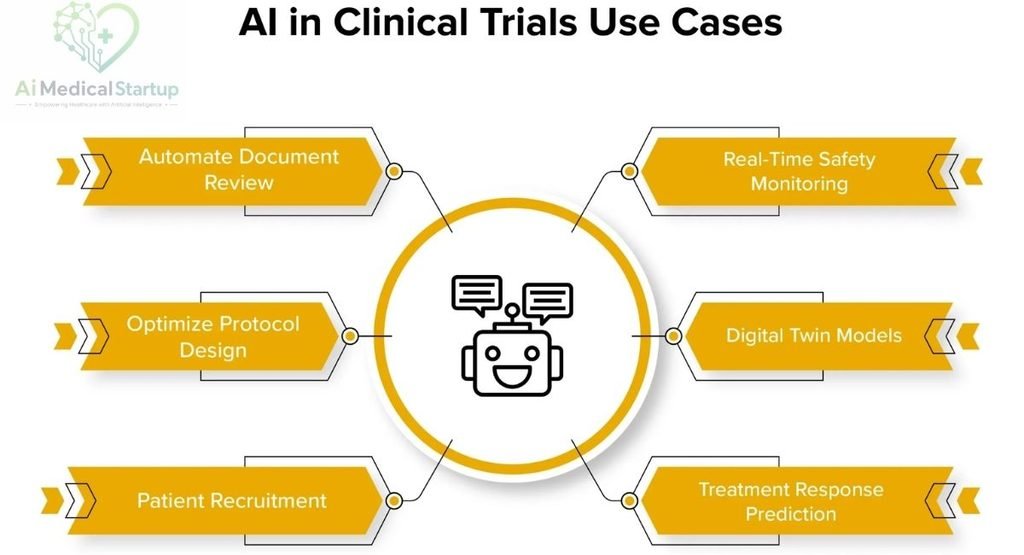
ai-in-clinical-trails-use-cases

📚

AI for Medical Research & Information

AI for medical research helps doctors instantly summarize, organize, and analyze complex medical records, trial results, and clinical guidelines. Because generative AI can produce misleading outputs or inaccurate citations, clinicians treat healthcare AI as an information assistant—always maintaining human oversight and validating primary clinical sources.

đź’¬

AI for Patient Communication

Physicians utilize approved AI tools to draft portal messages, simplify medical jargon, and provide instant translations. According to recent AMA data, automated portal drafts significantly streamline clinical communication. However, doctors carefully review all AI-generated content to match individual literacy levels, emotional nuances, and unique care plans.

🔬

AI in Medical Imaging & Diagnostics

Medical imaging relies heavily on computer vision to analyze tissue images, detect visual abnormalities, and assist in radiology, pathology, and cardiology. While FDA-authorized AI-enabled medical devices provide high-scale pattern recognition, they support specialist interpretation rather than replacing a true clinical diagnosis.

⚖️

AI for Clinical Decision Support

Clinical AI evaluates real-time vital signs, lab results, and patient history to calculate risk prediction scores and suggest differential diagnoses. By integrating seamlessly into the electronic health record (EHR), these tools reduce cognitive load while placing ultimate accountability on physician expertise.

“AI should enhance—not replace—physicians.”
— American Medical Association (AMA)
🧬

AI for Medical Research & Drug Discovery

Medical research generates massive volumes of data, from genomic information to trial results. AI for medical research helps process this complexity through pattern recognition and computational analytics. Furthermore, artificial intelligence models are transforming drug discovery by screening compounds and identifying biological targets, though computational promise requires rigorous clinical proof.

đź“‘

Literature Reviews & Medical Evidence

Conducting literature reviews can be time-consuming. Healthcare AI accelerates initial workloads by extracting key concepts and summarizing studies. However, researchers must never confuse summaries with verified medical evidence. Maintaining human oversight ensures that study methodologies, limitations, and original data are accurately checked before academic or clinical application.

đź§Ş

AI in Drug Discovery & Clinical Research

In clinical research, clinical AI facilitates patient identification, cohort selection, and trial data analysis. While AI accelerates computational workloads, the path from molecular prediction to regulatory approval still requires traditional laboratory validation, clinical trials, and strict FDA safety assessments.

🎯

AI for Predictive & Personalized Medicine

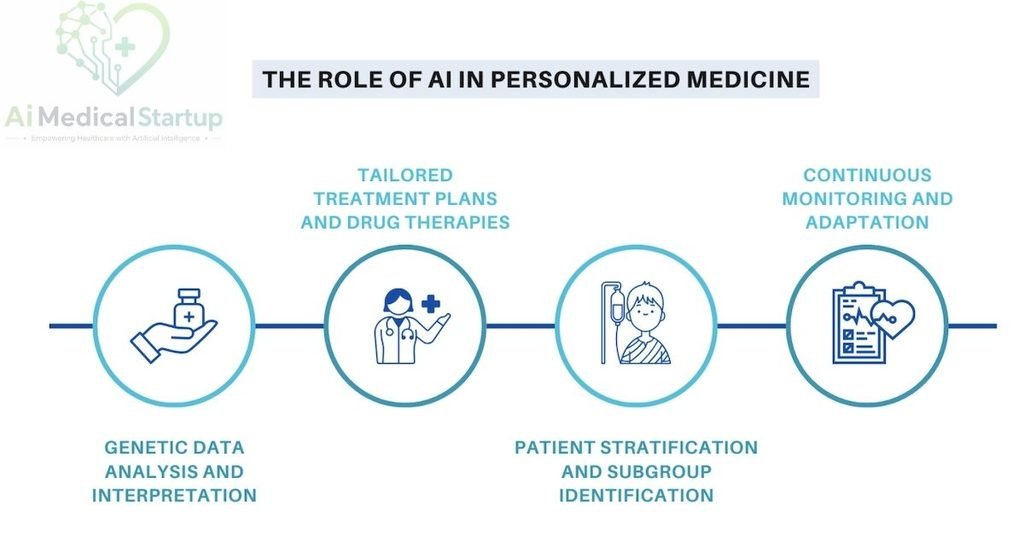
Predictive medicine uses data algorithms to evaluate future health risks, while personalized medicine combines genetic, molecular, and environmental profiles for precision medicine. Although healthcare AI enhances risk stratification, robust data quality and clinical judgment remain essential because statistical prediction is never absolute certainty.

ai-for-predictive-and-personalized-medicine

📊

Predicting Patient Risks & Precision Medicine

Predictive AI models estimate patient deterioration, readmissions, and complication risks to optimize monitoring. By combining genomic data and complex biological metrics, AI drives personalized medicine and advances drug discovery. However, model calibration, equity, and human oversight are crucial to ensure statistical accuracy across diverse populations.

⚡

Administrative Tasks & Workflow Automation

Administrative overhead is a primary cause of clinician burnout. Recent AMA data reveals that 70% of physicians view healthcare AI as a solution to automate repetitive task workflows—including coding support, scheduling, and referral processing—allowing clinicians to focus on direct care.

🎙️

AI Medical Scribes & Clinical Documentation

Ambient AI medical scribes capture patient consultations in real-time to generate structured notes directly within the electronic health record (EHR). This technology drastically reduces keyboard time, eliminates administrative fatigue, and preserves doctor-patient interaction.

🛠️

Automating Repetitive Healthcare Technology

Effective healthcare technology automates document organization and message triage without causing alert fatigue. Successful AI integration fits existing clinical workflows while ensuring full physician control and safety.

Benefits of AI for Doctors

The benefits of AI for doctors become clearer when viewed as an assistant rather than an autonomous clinician. It reduces documentation burdens, organizes information, supports research, and automates administrative workflows.

Potential Benefit How AI Can Contribute Important Condition
Documentation efficiency Drafts clinical notes Doctor reviews the final note
Research support Finds and summarizes information Original evidence is verified
Imaging support Highlights defined findings Specialist interprets the result
Workflow efficiency Automates repetitive tasks Automation is monitored
Patient communication Drafts messages and education Doctor checks accuracy and tone
Risk assessment Estimates patient risk Model is clinically validated
Physician well-being Reduces repetitive workload Workflow actually improves

Risks and Challenges of Using AI in Medicine

The risks of AI in healthcare deserve equal attention. Issues stem from inaccurate outputs, algorithmic bias, cybersecurity threats, and data privacy failures. The WHO stresses that safety, ethics, and accountability must govern healthcare AI development.

What Skills Will Doctors Need in the AI Era?

Working alongside clinical AI requires robust AI literacy, critical evaluation, data privacy awareness, and strong clinical reasoning to maintain patient safety.

Skill Why It Matters
AI literacy Helps doctors understand AI capabilities
Critical evaluation Helps identify unreliable outputs
Data awareness Helps recognize data-quality problems
Privacy awareness Protects sensitive information
Bias awareness Supports equitable care
Clinical reasoning Prevents inappropriate automation
Communication Helps explain AI use to patients
Workflow design Makes implementation practical
Continuous learning Keeps skills current as AI changes

The Future of AI for Doctors: From Workflows to Augmented Care

The future of AI for doctors lies in seamless, multimodal workflow integration rather than isolated tools—combining medical records, medical imaging, laboratory data, and real-time clinical signals directly within the electronic health record (EHR). As regulatory bodies such as the FDA, WHO, and the EUROPEAN COMMISSION establish risk-based governance and security frameworks, healthcare AI will evolve into intelligent clinical assistants that automate clinical documentation and reduce administrative fatigue. Ultimately, this next generation of clinical AI enhances precision medicine and patient outcomes while keeping human oversight, clinical judgment, and doctor-patient trust firmly at the center of modern practice.

FAQs About AI for Doctors

Exploring practical questions and trusted insights regarding AI for doctors, clinical efficiency, and patient safety in modern medical practice.

AI for doctors means using artificial intelligence technologies to support medical and professional tasks. These include clinical documentation, research summaries, medical imaging analysis, patient communication, administrative automation, and clinical decision support. These systems are designed to assist physicians rather than replace professional judgment.

Physicians use healthcare AI for document organization, research reviews, portal communication drafting, translation, and workflow streamlining. According to recent AMA data, professional adoption has expanded significantly, with research summaries and documentation assistance leading adoption.

AI replacing doctors is not a realistic framework. While generative AI and machine learning can automate repetitive information tasks, human doctors provide indispensable physical examination, emotional connection, ethical reasoning, and legal accountability. Modern practice relies on collaborative augmentation rather than replacement.

AI tools can be safe and effective when rigorously validated, securely implemented, and governed properly. As outlined by the WHO and FDA compliance standards, clinicians must maintain strict human oversight, protect patient data, and verify outputs against trusted evidence.

Key benefits include reduced documentation overhead, faster evidence retrieval, and streamlined administrative workflows. Recent AMA surveys indicate that 70% of physicians view healthcare AI as an effective tool to combat clinician burnout while enhancing patient care capabilities.

Nutrigenomics

AI-Powered Nutrition & Genomics Is Nutrigenomics the Future of Healthcare or Just a Wellness…

Osteosarcoma Treatment

AI Healthcare Insights Osteosarcoma Treatment: Current Options, Approved Drugs and Emerging…

siRNA vs. Antisense Oligonucleotides: Commercial Potential & Market Outlook 2026

NEXT-GEN RNA THERAPEUTICS siRNA vs. Antisense Oligonucleotides: Which RNA Technology Has Greater…

Dr. Kanza Sarfraz

Dr. Kanza Sarfraz, M.B.B.S., is a medical doctor and graduate of Allama Iqbal Medical College, Lahore. She brings nearly seven years of clinical experience across tertiary-care hospitals, medical headquarters, and healthcare facilities in both the public and private sectors. Her clinical experience provides a practical perspective on healthcare delivery, emerging medical technologies, and the evolving role of artificial intelligence in medicine.

View All Post

Leave a Reply

Your email address will not be published. Required fields are marked *