AI Tools in Medical

Top 10 AI Platforms in Healthcare 2026
Healthcare is entering a new era where AI platforms in healthcare can turn complex information into practical insights. From medical imaging and clinical documentation to precision medicine and healthcare analytics, these technologies are changing how clinicians and health systems work.
In 2026, leading healthcare AI platforms are moving beyond experimentation and becoming part of everyday clinical and research workflows. Their growing role reflects a broader shift toward faster, more personalized, and data-driven care. This guide explores the Top 10 AI Platforms in Healthcare 2026, highlighting the technologies, capabilities, and real-world applications shaping modern healthcare across the USA, UK, and EU.
What Are AI Platforms in Healthcare?
At their core, AI platforms in healthcare bring artificial intelligence, data infrastructure, analytics, and clinical applications into one environment. Instead of offering one isolated function, a platform may support clinical data, medical images, research datasets, machine learning models, and healthcare applications. This makes it easier for organizations to build, deploy, and manage multiple AI capabilities.
The difference becomes clearer with an example. A single diagnostic application might analyze an X-ray, while a broader platform can connect imaging with records, workflows, alerts, and analytics. In other words, healthcare AI platforms act more like an operating layer for AI in healthcare, helping providers turn raw information into useful clinical or operational insights.
How AI Platforms Are Transforming Healthcare
The biggest change is happening inside everyday clinical work. Artificial intelligence in healthcare can assist with medical imaging, documentation, disease detection, research, and decision support. FDA research recognizes applications ranging from image processing and early disease detection to diagnosis, prognosis, risk assessment, and personalized diagnostics.
Meanwhile, clinical AI is moving beyond isolated demonstrations. Systems can support radiology triage, pathology analysis, genomic interpretation, population health, and documentation. For example, NHS England has issued specific guidance for AI-enabled ambient scribing, showing how generative AI in healthcare is entering practical documentation workflows rather than remaining a laboratory curiosity.
What to Look for in a Healthcare AI Platform
Choosing an AI healthcare solution requires more than comparing impressive demonstrations. You should examine clinical validation, data quality, security, interoperability, scalability, usability, governance, and integration with existing systems. A technically sophisticated platform can still fail if clinicians cannot use it naturally or if it creates another disconnected workflow.
For organizations across the USA, UK, and EU, regulation also deserves serious attention. HIPAA, GDPR, medical-device requirements, and emerging AI rules can influence deployment. FDA guidance increasingly emphasizes lifecycle management, transparency, bias, monitoring, and safety for AI-enabled devices.
Top 10 AI Platforms in Healthcare
The following ranking looks at platforms with meaningful healthcare applications and different roles across the ecosystem. Some focus on clinical workflows, while others provide data infrastructure, imaging intelligence, precision medicine, or research capabilities. Therefore, “best” depends heavily on what problem your organization needs to solve.
A hospital looking for workflow automation may choose differently from a pharmaceutical company studying real-world data. Likewise, a radiology department needs a different technology stack from a health system building a large healthcare data platform. The ranking therefore considers breadth, practical value, maturity, innovation, and healthcare relevance.
10. Butterfly Network
Portable imaging becomes especially powerful when AI can travel with the clinician. Butterfly Network combines handheld ultrasound hardware with software and AI features that support image capture, anatomy identification, and clinical workflows. Its approach makes ultrasound AI useful in settings where conventional imaging equipment may be impractical or unavailable.
Its value extends into point-of-care healthcare, where speed and portability can influence clinical decisions. Butterfly has also continued expanding AI capabilities, including a 2026 FDA clearance related to a gestational-age ultrasound tool. This combination of semiconductor imaging and software makes Butterfly particularly interesting for decentralized care.
Headquarters: Massachusetts, USA
Founder: Jonathan Rothberg Ph.D.
Year founded: 2011

Jonathan Rothberg, Ph.D., is Butterfly Network’s Founder, and serves as an Independent Director on Butterfly’s Board of Directors, and as Chair of the Board’s Nominating & Corporate Governance Committee and a member of the Technology Committee. He served as Interim Chief Executive Officer from December 2022-April 2023 and Chairman of Butterfly’s Board of Directors from February 2021-April 2023. Before that, he served as legacy Butterfly’s Chairman from March 2014 to February 2021; Chief Executive Officer from March 2014 to April 2020; and as President from March 2014 to April 2014.
9. Caption AI
Caption AI focuses on making ultrasound easier to perform consistently, particularly for clinicians who may not have extensive imaging expertise. Its technology uses real-time guidance to help users acquire diagnostic-quality images, bringing AI diagnostics closer to the point of care and potentially widening access to ultrasound-based assessment.
Its importance lies in reducing the technical barrier around ultrasound acquisition. Rather than asking every clinician to become an expert sonographer, AI can provide guidance during the examination. Through Caption Health and the broader GE HealthCare ecosystem, this technology illustrates how specialized AI can fit into a larger medical-imaging strategy.
8. PathAI
Pathology generates information that can be difficult to interpret at scale, particularly as digital slides become increasingly detailed. PathAI applies AI to digital pathology, supporting image analysis, diagnostic workflows, and research. Its technology is especially relevant to oncology, where subtle cellular patterns can influence diagnosis, treatment, and research.
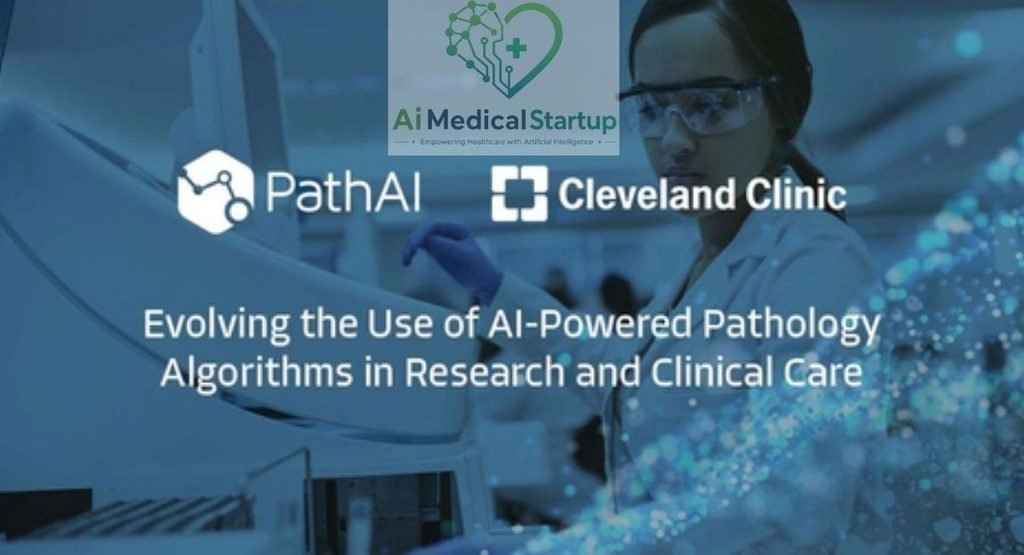
The platform also reaches beyond diagnosis. PathAI supports life-sciences applications where pathology data can contribute to biomarker development and drug research. Its AISight Dx platform continues to evolve, with a 2026 update focused on workflow efficiency, usability, storage, and reliability. This shows why digital pathology is becoming an important branch of medical AI.
7. Merative
Healthcare organizations often struggle with the sheer volume of information surrounding patients and populations. Merative addresses that problem through healthcare data, analytics, and decision-support capabilities. Its heritage includes assets from IBM Watson Health, giving it a strong connection to enterprise healthcare analytics and large-scale information management.
Unlike a platform designed mainly for one frontline task, Merative can support broader organizational needs. Its relevance includes population health, clinical decision support, research, and healthcare intelligence. That makes it particularly useful for organizations trying to connect analytics with operational decisions rather than treating AI as a standalone clinical gadget.
6. Truveta
The value of AI depends heavily on the quality of the information behind it. Truveta focuses on real-world clinical data, giving researchers and organizations a way to study healthcare as it actually happens. Its data environment includes de-identified electronic health records and other information that can support research and real-world evidence.
That approach creates opportunities across medical research, population health, and therapy development. In August 2026, Truveta described work using large language models to extract outcomes from unstructured clinical notes, showing how AI can unlock information buried inside ordinary documentation. The platform’s strength is therefore data depth rather than bedside automation.
5. Tempus
Precision medicine becomes more useful when clinical information and molecular information can be examined together. Tempus has built its platform around this idea, combining AI with genomic, clinical, and other multimodal information. Its strongest area remains precision medicine, particularly cancer care, where treatment decisions can depend heavily on molecular characteristics.
Tempus has continued expanding its AI capabilities in 2026. Its PRISM2 multimodal pathology foundation model demonstrated applications involving cancer diagnosis, biomarkers, and patient-outcome prediction. Its platform also supports clinical trial matching and oncology workflows, making Tempus a strong example of data-driven medicine moving closer to everyday care.
4. Aidoc
Radiology illustrates one of AI’s clearest healthcare applications because medical images contain patterns that algorithms can analyze at tremendous speed. Aidoc provides an enterprise clinical AI platform that can orchestrate multiple algorithms and integrate their insights into clinical workflows. Its aiOS platform uses scan information, metadata, and image analysis to determine which studies should receive AI processing.
That orchestration matters because hospitals rarely need just one algorithm. They need technology that works across departments, connects with existing systems, and presents useful information at the right moment. Aidoc therefore represents a broader radiology AI model, where AI-powered diagnostics become part of the health system rather than another disconnected application.
3. Google Cloud Healthcare
Large healthcare organizations need more than individual AI models. They need infrastructure capable of storing, integrating, and processing complex information. Google Cloud Healthcare addresses this layer through services such as the Google Healthcare API, which supports healthcare data storage, access, integration, and machine-learning applications.
Its strength lies in scale and flexibility. The platform supports standards including FHIR and DICOM, helping connect existing healthcare systems with cloud applications. Google Cloud can therefore serve developers, researchers, health systems, and life-sciences organizations building AI applications on top of large datasets.
2. AWS HealthLake
Healthcare data is often fragmented across departments, applications, and older systems. AWS HealthLake tackles this problem by providing a managed environment for storing, analyzing, and sharing healthcare information using FHIR. AWS describes HealthLake as an AI-ready FHIR persistence layer that can support advanced analytics, machine learning, and generative AI.
Its 2026 development also shows how quickly healthcare data infrastructure is evolving. AWS introduced resource matching in preview to identify and link duplicate patient, provider, and organization records, helping create cleaner longitudinal records. For organizations building healthcare AI infrastructure, that data foundation can be as important as the AI model itself.
1. Microsoft Dragon Copilot
Clinical documentation remains one of healthcare’s most persistent administrative headaches. Microsoft Dragon Copilot targets that problem through conversational and ambient AI capabilities designed to support clinicians with documentation and workflow tasks. Its significance comes from bringing generative AI closer to the daily interaction between healthcare professionals and patients.
The wider shift is already visible in healthcare policy. NHS England has issued implementation guidance for ambient AI scribing products used for documentation and workflow support. Dragon Copilot therefore represents an important direction for AI-powered clinical workflows, where technology handles repetitive documentation while clinicians remain responsible for patient-facing decisions.
Comparison of the Top 10 Healthcare AI Platforms
A useful comparison shows that these platforms do not compete in exactly the same category. Butterfly Network, Caption AI, and Aidoc concentrate heavily on clinical imaging, while Truveta and Tempus emphasize data-driven research and precision medicine. Google Cloud and AWS provide broader infrastructure, whereas Microsoft Dragon Copilot targets the clinician’s daily workflow.
The comparison also reveals an important point: there is no universal winner. Healthcare providers need different capabilities from pharmaceutical companies or researchers. A hospital may prioritize workflow integration and imaging, while a biotechnology company may value molecular data and drug-development tools. The right choice depends on the organization’s clinical, technical, and regulatory priorities.
| Platform | Primary Focus | Major AI Use | Strongest Fit |
| Butterfly Network | Ultrasound | Image guidance | Point-of-care care |
| Caption AI | Ultrasound | Image acquisition | Clinical imaging |
| PathAI | Pathology | Image analysis | Oncology and research |
| Merative | Healthcare analytics | Decision support | Enterprise healthcare |
| Truveta | Real-world data | Research analytics | Population health |
| Tempus | Precision medicine | Genomics and AI | Oncology |
| Aidoc | Medical imaging | Triage and analysis | Health systems |
| Google Cloud Healthcare | Data infrastructure | AI and analytics | Large-scale platforms |
| AWS HealthLake | Healthcare data | FHIR and AI | Data infrastructure |
| Microsoft Dragon Copilot | Documentation | Generative AI | Clinicians |
Benefits of Using AI Platforms in Healthcare
The strongest benefit is not simply automation. Well-designed AI-powered healthcare systems can help professionals find information faster, reduce repetitive work, identify patterns, and coordinate care. When AI fits naturally into existing systems, it can improve clinical efficiency without forcing clinicians to learn an entirely separate digital environment.
The second benefit is scale. A single expert can only review so much information, but software can analyze enormous datasets consistently. This can support faster clinical insights, medical research, population health, and personalized treatment. The FDA notes that AI can contribute to diagnosis, prognosis, risk assessment, and personalized diagnostics, although performance and safety still require careful evaluation.
Challenges and Risks of Healthcare AI Platforms
Every powerful technology creates a new set of questions. AI algorithms can inherit bias from their training data, struggle with unusual cases, or perform differently when deployed in a new hospital. Poor data quality can also produce confident but misleading results. These problems become especially serious when an algorithm influences diagnosis, treatment, or patient prioritization.
Implementation creates another challenge. Hospitals must connect AI with existing healthcare technology, EHR systems, imaging systems, identity controls, and security processes. They also need staff training, governance, monitoring, and clear accountability. NHS England stresses robust clinical validation and warns that poorly designed algorithms can worsen inequality or discrimination.
Are Healthcare AI Platforms Safe and Reliable?
Safety cannot be determined by a marketing label. A platform becomes trustworthy through evidence, appropriate validation, transparent performance information, monitoring, and responsible human oversight. The FDA’s current AI work emphasizes lifecycle evaluation because performance can change after deployment, especially when data, clinical environments, or models evolve.
A useful principle is simple: AI should strengthen the human-AI team, not remove professional responsibility. For US organizations, FDA authorization may apply to particular AI-enabled medical devices rather than an entire company’s product portfolio. The FDA maintains a public AI-enabled medical-device list, which is useful when checking specific products.
The Future of AI Platforms in Healthcare
The next stage will be less about isolated chatbots and more about connected intelligence. Generative AI in healthcare, multimodal models, ambient documentation, agentic systems, predictive analytics, and AI-assisted research are likely to become increasingly intertwined. Instead of one model performing one task, platforms may coordinate several AI capabilities around a patient’s clinical journey.
Regulation will evolve alongside that technology. In August 2026, the FDA opened discussion around regulatory approaches for generative-AI-enabled medical devices, including risk assessment, premarket evaluation, postmarket monitoring, foundation models, and agentic AI. The future, therefore, will reward platforms that combine innovation with safety, transparency, interoperability, and measurable clinical value.
Frequently Asked Questions About Healthcare AI Platforms
What is the best AI platform in healthcare?
There is no single best platform for every organization. Microsoft Dragon Copilot is particularly relevant to clinical documentation, while AWS HealthLake and Google Cloud Healthcare focus strongly on infrastructure. Aidoc is more specialized in clinical imaging, and Tempus has a major position in precision medicine. The best option depends on your use case.
What are AI platforms used for in healthcare?
Healthcare platforms support clinical decision support, medical imaging, documentation, research, population health, data analytics, precision medicine, and workflow automation. Some systems analyze images, while others organize healthcare data or generate clinical documentation. Their common purpose is to help healthcare organizations turn complex information into useful actions.
What is the most advanced healthcare AI platform?
“Advanced” depends on what you measure. Some platforms lead in imaging, others in data infrastructure or generative AI. Healthcare AI platforms such as Aidoc, Google Cloud Healthcare, AWS HealthLake, Tempus, and Microsoft Dragon Copilot demonstrate different forms of technical maturity, making direct comparisons difficult without defining the intended use.
Which companies are leading healthcare AI?
The market includes technology companies, specialist medical-AI companies, cloud providers, and data companies. The organizations covered here include Butterfly Network, PathAI, Tempus, Aidoc, Google Cloud, AWS, and Microsoft. Their approaches differ considerably, ranging from imaging and pathology to cloud infrastructure and clinical documentation.
How does AI improve patient care?
AI can help clinicians identify patterns, prioritize urgent cases, organize information, and reduce repetitive administrative work. In medical imaging, for example, AI can support image analysis and triage. In documentation, ambient systems can reduce manual typing. The goal is better patient care, not simply more technology.
How is generative AI being used in healthcare?
Generative AI can summarize information, support documentation, interact with clinical data, assist research, and automate parts of administrative work. However, healthcare requires stronger safeguards than ordinary consumer applications. Outputs need appropriate review because fluent language does not automatically mean clinical accuracy.
Are healthcare AI platforms safe?
Some can be used safely when appropriately validated, monitored, integrated, and governed. Safety depends on the particular product and intended use. The FDA continues developing regulatory approaches for AI-enabled medical devices, while NHS England emphasizes clinical validation before implementation.
Are healthcare AI platforms FDA approved?
Not necessarily as complete platforms. FDA authorization usually applies to specific medical devices or software functions and their intended uses. The FDA maintains an AI-enabled medical-device list, but it states that the list is not comprehensive. Organizations should therefore verify the regulatory status of the specific product they plan to deploy.
How do healthcare AI platforms protect patient data?
Protection depends on architecture, access controls, encryption, governance, contractual arrangements, and applicable privacy laws. US organizations must consider requirements such as HIPAA, while European organizations must consider GDPR and other applicable rules. Technical compliance alone is not enough; organizations also need strong operational controls and responsible data practices.
What is the difference between healthcare AI and generative AI?
Healthcare AI is the broader category. It includes predictive models, imaging algorithms, clinical decision support, analytics, and machine learning. Generative AI is a particular type of AI that creates new content, such as text or other outputs. Therefore, generative AI is part of the wider healthcare AI landscape.
What should hospitals consider before adopting an AI platform?
Hospitals should examine clinical evidence, regulatory requirements, security, interoperability, workflow fit, cost, scalability, bias, monitoring, and staff training. They should also ask what happens when the AI is wrong. A platform that performs well in a demonstration may still create problems if it does not fit real clinical workflows.
What is the future of AI in healthcare?
The future will likely combine AI-powered workflows, multimodal models, clinical agents, predictive analytics, precision medicine, ambient documentation, and increasingly connected healthcare data. The winning systems will not necessarily be the flashiest. They will be the ones that deliver measurable value while remaining safe, understandable, interoperable, and useful to healthcare professionals.
Final Thoughts
The Top 10 AI Platforms in Healthcare 2026 show how quickly the industry is broadening beyond experimental algorithms. Today, AI can sit inside an ultrasound probe, examine pathology slides, analyze clinical datasets, support oncology decisions, manage FHIR data, prioritize medical images, or help clinicians document a consultation.
Yet the real opportunity is not to replace healthcare professionals with software. It is to remove friction from healthcare. When AI in healthcare is properly validated and thoughtfully integrated, it can give clinicians better information, reduce repetitive tasks, and create more time for patients. The next generation of healthcare AI will succeed when innovation and responsibility move together.
For readers in the USA, UK, and EU, that distinction matters. Regulatory expectations are becoming more sophisticated, and organizations increasingly need evidence rather than promises. FDA guidance and NHS recommendations both reinforce the importance of validation, transparency, monitoring, and human oversight. As healthcare enters a more AI-native era, the strongest platforms will be those that make advanced technology feel simple, dependable, and genuinely useful at the point of care.


Dr. Kanza Sarfraz, M.B.B.S., is a medical doctor and graduate of Allama Iqbal Medical College, Lahore. She brings nearly seven years of clinical experience across tertiary-care hospitals, medical headquarters, and healthcare facilities in both the public and private sectors. Her clinical experience provides a practical perspective on healthcare delivery, emerging medical technologies, and the evolving role of artificial intelligence in medicine.