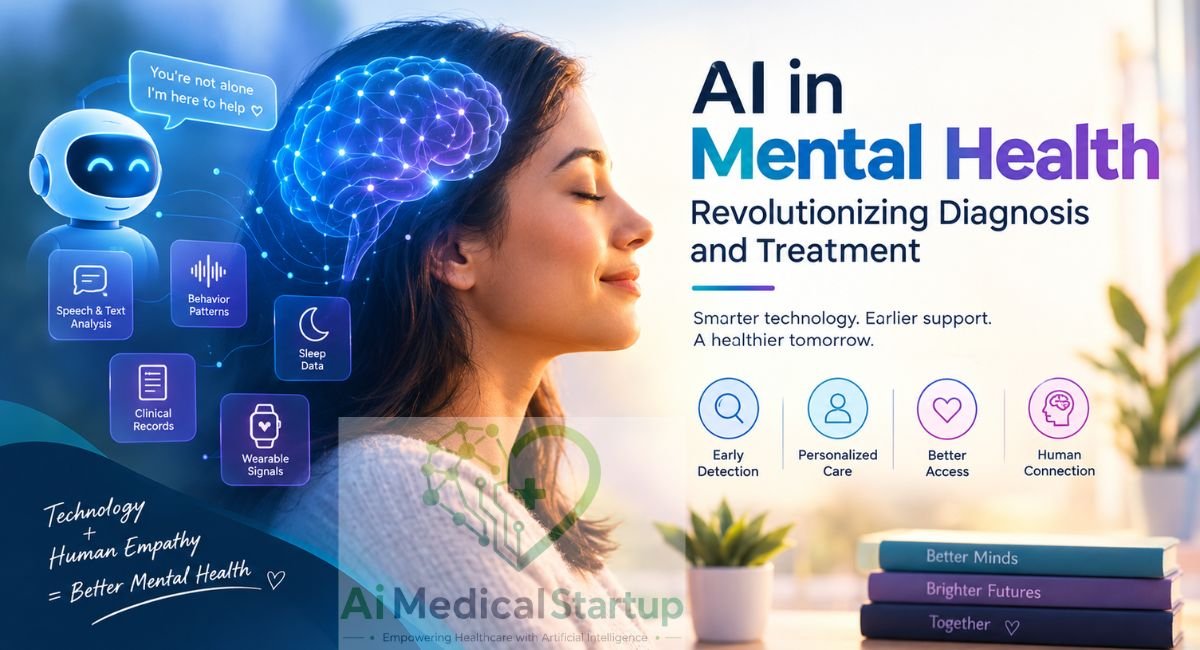
AI in Mental Health

AI in Mental Health: Revolutionizing Diagnosis and Treatment
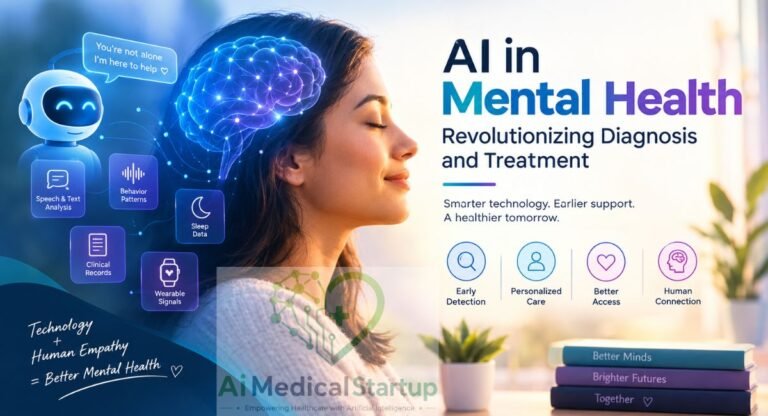
Mental healthcare is changing rapidly, and AI in mental health is becoming an important part of that transformation. From identifying subtle behavioral patterns to supporting personalized care, artificial intelligence can help clinicians understand patients in new ways. Modern systems can analyze speech, text, clinical records, sleep patterns, and other digital signals to support mental health screening, risk assessment, and treatment planning. AI-powered chatbots and digital tools may also provide accessible support between professional appointments, while advanced technologies can assist with remote monitoring and early detection. However, AI is not a replacement for psychiatrists, psychologists, or therapists.
Mental health involves emotions, relationships, personal history, and cultural context that require human judgment and empathy. As AI in mental healthcare continues to evolve, its greatest value may come from combining technology with professional expertise. When developed responsibly, AI can improve accessibility, support earlier intervention, and help create more personalized mental health treatment without losing the human connection at the heart of care.
Why AI in Mental Health Is Becoming So Important
The demand for mental health care continues to expose weaknesses in traditional systems. Many people experience long waits, limited specialist availability, cost barriers, or geographic restrictions. A person may also notice symptoms long before they receive professional support. This gap creates an opportunity for carefully designed mental health technology.
AI can potentially help fill parts of that gap. It can analyze language, speech, questionnaires, electronic health records, wearable signals, and other information. However, responsible implementation matters more than technological novelty. WHO reported in 2026 that generative AI is increasingly being used for emotional support, even though many general-purpose systems were not designed or tested specifically for mental health.
The Growing Role of AI in Mental Health Care
What Is AI in Mental Health?
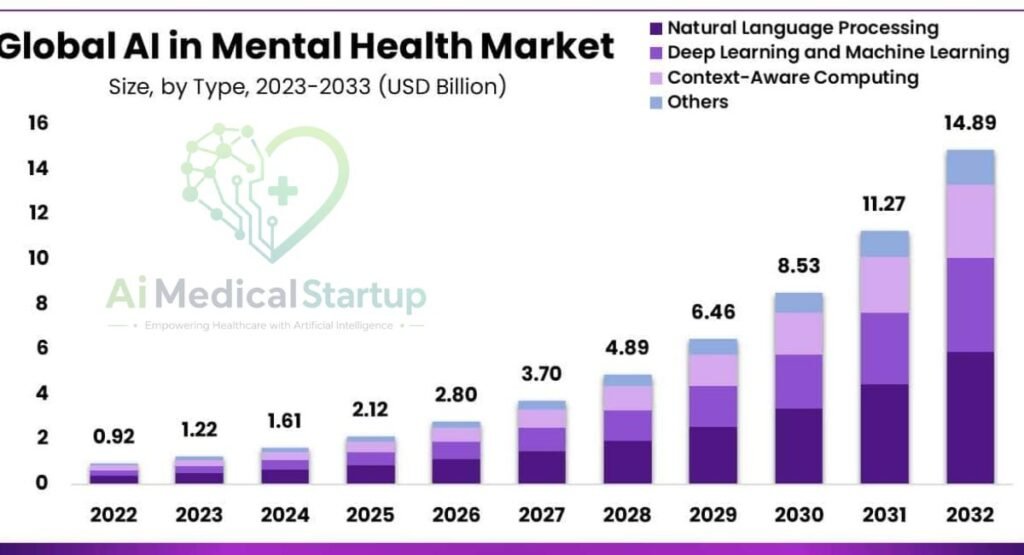
AI in mental health refers to the use of artificial intelligence technologies to support the prevention, screening, assessment, treatment, monitoring, and research of mental health conditions. These systems may use machine learning, deep learning, natural language processing, speech analysis, computer vision, or generative AI. Some systems look for patterns in patient information, while others interact directly with users. The distinction between a wellness application and a clinically validated system is important. An AI app that suggests breathing exercises is very different from a regulated technology designed to support psychiatric care.
Why Artificial Intelligence Matters in Psychiatry and Psychology
Artificial intelligence in psychiatry and artificial intelligence in psychology are attracting attention because mental health assessment often involves complex and sometimes subtle patterns. A psychiatrist may consider symptoms, behavior, history, medication, sleep, family circumstances, and responses over time. AI cannot reproduce the complete human assessment, but it can help organize large datasets and identify patterns for further review. This makes clinical decision support one of the more practical uses of AI. It also explains why AI should be viewed as a clinical assistant rather than an autonomous clinician.
How AI Is Changing Traditional Mental Healthcare
Traditional mental healthcare often depends heavily on information gathered during scheduled appointments. AI can introduce a more continuous model. A patient might complete digital assessments between appointments, use an app for mood tracking, or provide passive data through a wearable. AI can then identify changes that may deserve attention. This does not make the data automatically meaningful. Sleep changes, for example, may result from travel, work, illness, parenting, medication, or ordinary lifestyle changes. Context remains essential.
Where AI Fits Into the Patient Care Journey
AI can potentially support several stages of the care journey. Prevention could include education and prompts for healthy behaviors. In mental health screening, it can help identify patterns requiring further assessment. During treatment, AI may support CBT, reminders, progress monitoring, or documentation. During follow-up, it can analyze longitudinal information and flag meaningful changes. The safest model keeps a clinician or qualified professional responsible for diagnosis, treatment decisions, and crisis management.
How AI Is Used to Diagnose and Detect Mental Health Conditions
AI-Powered Mental Health Screening Tools
AI-powered screening tools can analyze information from questionnaires, speech, text, video, physiological measurements, or combinations of these sources. The goal is usually to identify patterns associated with a possible condition rather than establish a final diagnosis. This distinction matters. Screening asks whether someone may need further evaluation. Diagnosis requires a much broader clinical assessment. A 2025 meta-analysis of AI-assisted depression screening found promising pooled performance from multimodal approaches, but the authors also identified important limitations involving data standardization and research design.
Predictive Analysis for Mental Disorders
Mental disorder predictive analysis uses historical and current information to estimate the likelihood of an outcome. Models may examine electronic health records, previous diagnoses, medication history, symptom measurements, hospitalizations, or behavioral information. Researchers are also investigating physiological and digital signals. The important point is that predictive probability is not certainty. A model may identify elevated risk without explaining why that risk exists. A clinician still needs to interpret the result in the context of the individual.
Identifying Early Warning Signs Through AI
One of the most interesting possibilities is early detection. AI may identify changes in speech, sleep, activity, communication, or behavior that develop gradually. A person’s baseline can be particularly useful. Instead of comparing someone with a generic population, a system may examine how their current behavior differs from their usual pattern. However, unusual behavior is not automatically a symptom. The system must account for context before generating a meaningful alert.
AI-Assisted Clinical Decision Support
AI-assisted clinical decision support can help clinicians organize information, summarize records, identify potentially relevant patterns, and monitor treatment response. This can be valuable when professionals manage large amounts of information. A psychiatrist may spend less time searching through records and more time speaking with the patient. Still, AI output requires review. Clinical responsibility cannot simply be transferred to software because a model produced a confident-looking recommendation.
Can AI Accurately Diagnose Mental Health Disorders?
The short answer is that AI can show impressive performance in controlled research, but that does not mean it can independently diagnose every psychiatric disorder. Performance depends on the condition, dataset, population, model, clinical setting, and quality of validation. False positives can create unnecessary concern, while false negatives can delay care. AI models may also perform differently across languages, cultures, age groups, and healthcare systems. For these reasons, AI diagnosis should generally be understood as an emerging area of clinical support rather than a universal replacement for professional diagnosis.
Applications of AI in Mental Health Treatment and Therapy.
AI Chatbots and Virtual Therapists
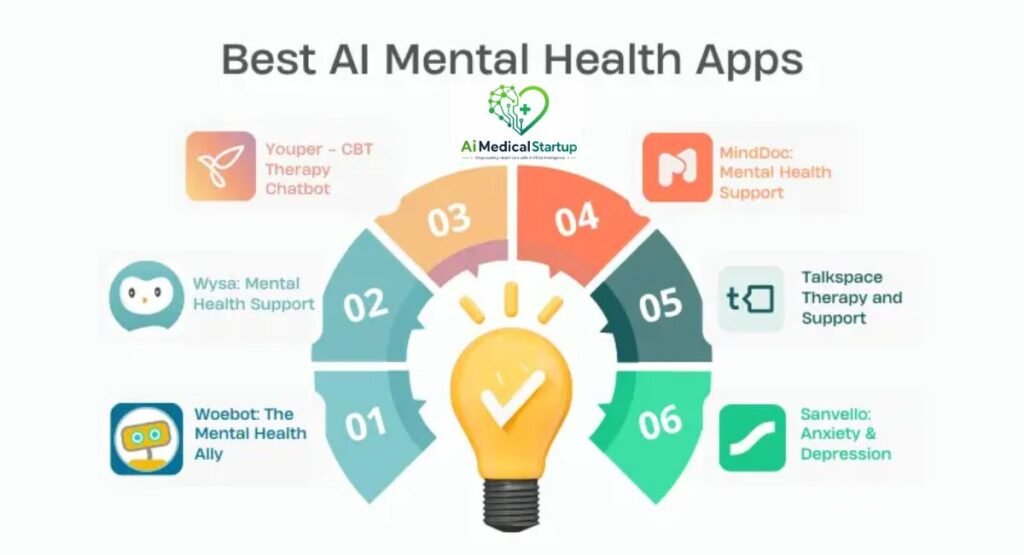
AI chatbots can provide conversational support, psychoeducation, reminders, journaling prompts, and structured exercises. Some systems are designed around cognitive behavioral therapy, while others provide broader wellness support. The appeal is obvious. A digital assistant can be available outside normal appointment hours. However, availability does not equal clinical competence. A chatbot may misunderstand sarcasm, cultural context, crisis language, or complex symptoms. Users should therefore understand whether they are using a wellness tool, an AI therapist, or a clinically evaluated intervention.
AI-Powered Virtual Counseling
Virtual counseling supported by AI can extend certain forms of digital care between professional appointments. An AI system may help users reflect on thoughts, practice coping strategies, or complete structured exercises. It can also remind users to complete activities recommended by a clinician. However, an automated conversation should not be confused with licensed counseling. Human therapists can respond to context, build therapeutic relationships, recognize nonverbal cues, and take responsibility during complicated situations.
Personalized Treatment Recommendations
Personalized treatment is another major area of AI research. Instead of giving every patient the same intervention, AI may eventually help identify which approaches are more likely to work for a particular person. Researchers can analyze symptom patterns, treatment history, behavioral information, and responses over time. The goal is personalized mental healthcare, not automated prescribing. Medication choices, diagnosis, and major treatment decisions still require appropriate clinical judgment and regulatory safeguards.
AI-Assisted Cognitive Behavioral Therapy
Cognitive behavioral therapy remains one of the best-known evidence-based psychological approaches, and researchers are exploring how AI can help deliver or support CBT. AI systems may guide thought records, behavioral activation, structured exercises, and symptom monitoring. Yet the evidence is not uniformly positive. A 2026 systematic review of AI-delivered CBT found limited evidence of efficacy for anxiety and depressive symptoms and highlighted concerns about study quality and the need for further user-centered research.
Supporting Therapists and Mental Health Professionals
AI may provide its greatest practical value by helping professionals rather than attempting to replace them. A system can summarize lengthy records, organize information, assist with documentation, track patient-reported outcomes, or identify changes that deserve review. This could reduce administrative pressure and give therapists, psychiatrists, and other mental health professionals more time for human interaction. The goal should be simple: automate repetitive work while preserving the parts of care that require empathy, judgment, and accountability.
AI for Mood Tracking, Behavioral Analysis, and Remote Monitoring
Mood and Sentiment Analysis
Mood tracking has traditionally depended on questionnaires and personal journaling. AI can extend this approach through sentiment tracking and language analysis. Systems may examine changes in word choice, writing style, emotional vocabulary, or communication patterns. These signals can contribute to mood analysis, but they should never be treated as direct measurements of a person’s emotional state. Someone can write positively while struggling privately, just as someone can write negatively during an ordinary stressful day.
Monitoring Speech, Text, and Behavioral Patterns
AI can analyze speech patterns, pauses, speaking rate, vocal characteristics, and linguistic features. Researchers also examine text, facial expressions, movement, and other behavioral signals. These features may become useful vocal biomarkers or broader digital markers of change. However, speech and behavior are influenced by culture, personality, language, environment, medication, and physical health. A reliable system therefore needs more than a single signal. It needs careful validation across diverse populations.
Wearables and Apps for Mental Health Monitoring
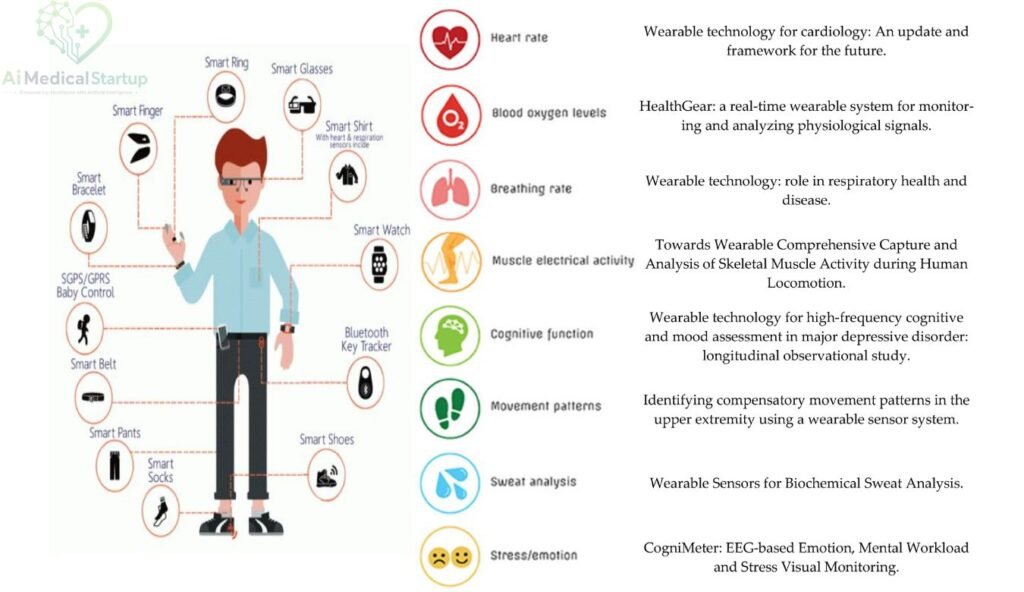
Wearable technology creates another potential source of information. Smartwatches, smart rings, fitness trackers, and other wearable devices can record sleep, movement, heart-related measurements, and activity patterns. Mental health apps can add questionnaires, journaling, and symptom tracking. Together, these sources may support longitudinal monitoring. Yet physiological data is not synonymous with mental health data. Poor sleep could indicate stress, illness, shift work, travel, or hundreds of other factors.
AI-Based Remote Patient Monitoring
Remote monitoring can help clinicians understand what happens between appointments. A patient might complete digital assessments while an app records selected behavioral or physiological information. AI can analyze changes over time and present relevant patterns to a healthcare provider. This model could be useful for telepsychiatry, follow-up care, and patients who live far from specialist services. Its success depends on consent, data quality, privacy, clinical workflow, and reliable communication between the technology and the care team.
Real-Time Risk Detection and Crisis Alerts
Real-time risk detection is one of the most sensitive applications of AI. Systems may look for combinations of language, behavioral changes, clinical history, or other signals associated with elevated risk. In theory, this could support crisis alerts, faster clinical review, and suicide prevention. In practice, errors can be dangerous. A false alarm may cause distress, while a missed signal may create a false sense of safety. Any crisis system therefore needs clear escalation procedures and human review rather than blind dependence on an algorithm.
AI for Early Detection of Depression, Anxiety, and Other Disorders
Detecting Depression With AI
AI-based depression detection often combines several signals. Researchers have investigated speech, facial behavior, language, gait, EEG, and other physiological measurements. A 2025 systematic review and meta-analysis reported a pooled AUC of 0.95 for multimodal approaches in the studies it analyzed, compared with lower pooled performance for several single-modal approaches. These results are promising, but the authors noted that all included studies were retrospective and called for standardized datasets and better study designs.
AI and Anxiety Detection
Anxiety can influence speech, sleep, activity, attention, and physiological responses. AI systems may analyze combinations of these signals to identify patterns associated with anxiety symptoms. The challenge is that these features are not unique to anxiety. Stress, caffeine, physical illness, poor sleep, medication, and environmental pressure can produce similar changes. Therefore, AI may be useful for identifying a pattern that deserves attention, but a clinician must determine what that pattern actually means.
Suicide Risk and Self-Harm Prediction
AI researchers are exploring suicide risk, self-harm, and crisis prediction using clinical records, language, behavioral patterns, and other information. The potential benefit is significant because earlier identification could create an opportunity for crisis intervention. The risks are equally serious. Prediction models can make errors, and inappropriate alerts can damage trust or create unnecessary interventions. Responsible systems require transparent thresholds, human review, strong privacy protections, and clear pathways for urgent care.
Detecting Bipolar Disorder and Psychosis
AI research also examines bipolar disorder and psychosis. Changes in sleep, activity, speech, communication, and behavior may provide useful longitudinal information. In bipolar disorder, for example, changes in activity and sleep may sometimes accompany shifts in mood. In psychosis research, language and speech patterns have attracted attention. These signals are not diagnostic by themselves. Complex conditions require professional evaluation, history, clinical observation, and consideration of alternative explanations.
Early Intervention Through Predictive Analytics
The promise of predictive analytics is not simply to predict disease. Its greater value may be helping clinicians act earlier. The basic pathway is straightforward: data produces a pattern, the pattern generates a risk signal, a professional reviews the signal, and appropriate care follows. If validated properly, such systems could support early intervention before symptoms become more severe. The challenge is ensuring that predictions are accurate enough, clinically useful, and equitable across different patient groups.
Benefits of Using AI in Mental Healthcare
Earlier Detection and Intervention
AI can continuously analyze selected information instead of relying entirely on occasional appointments. This may help identify meaningful changes earlier. For example, a combination of worsening sleep, reduced activity, and changing questionnaire responses might prompt a clinician to review a patient sooner. Earlier attention does not guarantee better outcomes, but it can create an opportunity for intervention before a problem escalates.
More Personalized Mental Health Care
AI can help move mental healthcare toward personalized care by examining individual patterns over time. A person’s baseline may be more informative than a population average. AI could help clinicians understand how symptoms change, which interventions appear helpful, and when a patient may need additional support. This is particularly relevant to personalized treatment, where the goal is to match care more closely with individual needs rather than rely on one-size-fits-all approaches.
Improving Access to Mental Health Services
AI may improve healthcare access by offering low-intensity digital support, screening assistance, and remote services. This could matter in rural regions and underserved communities where specialist availability is limited. Digital systems can also support multilingual and geographically distributed services. Yet technology cannot solve every access problem. Internet connectivity, device costs, digital literacy, language, disability access, and trust still influence whether someone can benefit from digital care.
24/7 Support Through AI-Powered Tools
One advantage of AI-powered mental health tools is availability. A digital system does not need to follow office hours. It can provide educational information, journaling prompts, structured exercises, and reminders at convenient times. This can be useful for people who need support between appointments. However, 24/7 availability should never be presented as 24/7 clinical supervision. An AI tool may not be able to respond safely to a serious crisis.
Reducing the Workload on Mental Health Professionals
Healthcare professionals spend substantial time documenting, reviewing information, scheduling, and managing administrative tasks. AI can potentially reduce some of this burden. A system may summarize records, organize questionnaires, or highlight changes in patient-reported outcomes. If implemented carefully, this can create more time for direct clinical care. The key is to reduce administrative friction without creating a new burden of checking unreliable AI-generated information.
Supporting Remote and Underserved Communities
Digital mental health tools may extend certain services beyond major medical centers. This is particularly important for people who face transportation barriers, limited specialist availability, or long travel distances. Telepsychiatry can connect patients with professionals remotely, while AI can support selected parts of the surrounding workflow. However, responsible deployment must account for cultural context, language, accessibility, privacy, and local clinical resources.
| Potential benefit | How AI may contribute | Important limitation |
| Earlier detection | Identifies changes across multiple data sources | Signals can be nonspecific |
| Personalized care | Finds individual patterns | Recommendations need validation |
| Better access | Provides scalable digital support | Digital exclusion remains |
| Continuous monitoring | Tracks selected changes over time | Privacy becomes more complex |
| Clinician support | Organizes information and documentation | Human review remains necessary |
| Remote care | Supports digital workflows | Technology cannot replace clinical infrastructure |
Leading AI Mental Health Tools, Platforms, and Companies
Prominent AI-Driven Mental Health Platforms
The market contains many AI-driven mental health platforms, but they should not all be placed in the same category. Some are wellness products. Others provide conversational support. Some are connected to clinical services, while others are regulated medical technologies. The most important question is not whether a platform advertises AI. It is whether the technology has appropriate evidence, a clearly defined purpose, suitable safeguards, and transparent limitations.
AI Chatbots and Digital Mental Health Assistants
Digital assistants range from general-purpose conversational AI systems to dedicated mental health applications. Their functions may include psychoeducation, mood check-ins, journaling, structured CBT exercises, or communication support. The distinction between an AI therapist and an automated wellness assistant should be clear. A polished conversation can feel human, but conversational fluency does not prove clinical competence.
AI Tools for Clinicians and Psychologists
Clinician-facing AI may ultimately become one of the most practical parts of AI mental health adoption. Tools can support documentation, information retrieval, assessment organization, patient monitoring, and research. Psychologists may use AI to organize patient-reported information, while psychiatrists may use systems that help summarize longitudinal records. These tools can save time, but clinicians must remain responsible for interpreting information and making clinical decisions.
AI-Powered Wearables and Mental Health Apps
Wearables and health apps can create longitudinal data that traditional appointments often cannot capture. Smartwatches may provide activity and sleep measurements. Smart rings may provide additional physiological information. Mobile applications can collect mood ratings and questionnaires. AI can then combine these signals into patterns. The opportunity is significant, but so is the risk of collecting more information than necessary.
How to Evaluate an AI Mental Health Tool
Before trusting an AI mental health product, examine its evidence and purpose. A useful evaluation begins with the question of whether the technology has been independently studied. Then consider privacy, security, regulatory status, accuracy, transparency, human oversight, and crisis procedures. Users should also understand whether the tool provides general wellness support or operates within a regulated clinical pathway. Marketing language should never substitute for evidence.
| Evaluation area | What to ask |
| Clinical evidence | Has the tool been tested in appropriate studies? |
| Accuracy | What are its false-positive and false-negative rates? |
| Privacy | What patient data does it collect and retain? |
| Security | How is sensitive information protected? |
| Regulation | Does the product have a relevant regulatory status? |
| Transparency | Does the provider explain how the system works and its limits? |
| Human oversight | Can a qualified professional review important decisions? |
| Crisis response | What happens when serious risk is detected? |
Challenges and Ethical Concerns of AI in Mental Healthcare
Patient Data Privacy and Security
Data privacy is especially important in mental healthcare because conversations and records can contain deeply personal information. AI systems may process symptoms, diagnoses, medication information, therapy conversations, behavioral patterns, or physiological measurements. Strong patient data security therefore requires appropriate technical controls, governance, consent practices, and clear data-use policies. In the United States, healthcare organizations may also need to consider HIPAA obligations where applicable. European deployments must consider GDPR and other relevant rules.
Bias and Algorithmic Fairness
Algorithmic bias can appear when training data does not adequately represent the people who will use a system. Language, culture, age, gender, socioeconomic circumstances, and other factors can influence mental health expression. A model trained mostly on one population may perform differently elsewhere. This is particularly concerning when AI is used for risk assessment. A system should be evaluated across relevant populations rather than assuming that performance in one dataset will transfer automatically.
Accuracy, Reliability, and False Predictions
AI systems can produce false positives and false negatives. Generative models can also produce convincing but incorrect information. A model may perform well in a research dataset yet fail in a different clinical environment. This problem is sometimes described as a gap between technical performance and real-world usefulness. Mental health systems need external validation, monitoring, clear limitations, and mechanisms for correcting errors.
Can AI Replace Human Therapists?
AI is unlikely to replace the core human role of a skilled therapist in any responsible near-term model of care. Human empathy, therapeutic relationships, contextual understanding, and clinical responsibility cannot be reduced to pattern recognition. A therapist can notice contradictions, understand family dynamics, respond to nonverbal behavior, and adapt to an evolving relationship. AI can support some parts of therapy, but human interaction remains central to many forms of mental healthcare.
Human Oversight and Clinical Responsibility
Human oversight is a foundational principle for high-stakes AI. If an algorithm flags a patient as high risk, someone qualified must determine what the result means and what should happen next. The same principle applies to treatment recommendations and diagnostic support. WHO’s 2026 work on responsible AI for mental health emphasizes safety, accountability, evidence, cultural context, and co-design with mental health experts and people with lived experience.
Informed Consent and Transparency
Patients should understand when they are interacting with AI and what information the system uses. Informed consent becomes especially important when sensitive behavioral or emotional information is collected continuously. Users should also know whether information is stored, shared, or used to improve models. Transparency does not require exposing every technical detail. It means explaining the system’s purpose, limitations, risks, and human oversight in language people can understand.
Regulatory and Legal Challenges
AI regulation is developing across the United States, United Kingdom, and European Union. Mental health technologies may also fall under medical-device rules depending on their intended purpose and functionality. In the United States, FDA clearance is not synonymous with FDA approval, and neither term should be used casually. Some digital therapeutic technologies have specific regulatory pathways, while general wellness apps may not. European and UK systems have their own evolving regulatory requirements. This makes regulatory verification essential before making claims about a product.
Latest AI Mental Health Research and Breakthroughs
Emerging AI Models for Mental Health
Modern generative AI and multimodal systems are expanding what researchers can investigate. Instead of processing one type of information, multimodal models can potentially combine language, audio, images, physiological information, and clinical records. This could make AI more context-aware. It also creates greater governance challenges because more data means more opportunities for privacy risks, hidden bias, and inappropriate inference.
AI Research in Psychiatry and Psychology
Current AI research in psychiatry and psychology covers diagnosis support, treatment response, risk prediction, digital biomarkers, clinical documentation, and therapeutic interventions. Researchers are increasingly interested in real-world validation rather than impressive laboratory results alone. This distinction matters because a model must work reliably in the environment where clinicians and patients actually use it. A system that performs perfectly on a curated dataset may not perform similarly in ordinary clinical care.
Advances in Digital Biomarkers
Digital biomarkers are measurable data points collected through digital technologies that may provide information about health or behavior. In mental healthcare, researchers are studying speech, movement, sleep, activity, smartphone behavior, and physiological measurements. The appeal is continuous observation. Instead of relying only on what a patient remembers during an appointment, clinicians could potentially observe patterns over weeks or months. Yet more data does not automatically mean better care.
AI and Emotional Response Analysis
AI can analyze language, facial expressions, speech characteristics, and other signals associated with emotion. These technologies are sometimes described as emotion recognition or emotional-response analysis. However, interpreting someone’s internal emotional state from an external signal is extremely difficult. Facial expressions vary across cultures and individuals. Voice tone changes with context. Text can be sarcastic or ambiguous. Therefore, emotional AI should be treated cautiously rather than as a direct window into someone’s mind.
FDA-Cleared AI and Digital Mental Health Technologies
The regulatory landscape includes digital technologies that support psychiatric or neurological conditions, but terminology must be handled carefully. FDA clearance generally refers to a particular regulatory pathway and does not mean that the FDA has endorsed every claim made in marketing. FDA-approved digital therapeutics are also not interchangeable with every mental health application available in an app store. For example, the FDA’s device classification database includes prescription digital therapy devices designed to reduce sleep disturbance associated with psychiatric conditions such as PTSD or nightmare disorder.
Notable Research and Clinical Developments in 2026
The year 2026 has brought greater attention to responsible implementation, not just technological capability. WHO reported that international experts are increasingly concerned about general-purpose generative AI being used for emotional support despite insufficient mental-health-specific testing. The organization called for mental health to be integrated into AI impact assessments and recommended co-design involving mental health experts and people with lived experience.
Research has also become more nuanced. The 2026 systematic review of AI-delivered CBT found that evidence for anxiety and depressive symptoms remains limited and called for better-quality research. This is an important reminder that rapid AI development does not automatically translate into proven clinical effectiveness.
The Future of AI in Mental Health: What Comes Next?
Will AI Replace Psychiatrists and Therapists?
The more realistic future is human-AI collaboration. AI may handle repetitive analysis, documentation, monitoring, and some low-intensity interventions. Psychiatrists and therapists can then focus more heavily on clinical reasoning, relationships, complex cases, and treatment decisions. This model could change how professionals work without removing the human foundation of care. In mental healthcare, technological efficiency is valuable only when it improves the patient’s experience and outcomes.
AI-Powered Personalized Mental Healthcare
Future systems may build a more detailed picture of each person’s changing needs. AI could combine symptom questionnaires, treatment history, sleep, activity, speech, and other appropriate information to support personalized mental healthcare. Instead of treating every measurement as equally important, models could learn individual baselines. The challenge will be ensuring that personalization does not become excessive surveillance.
Combining AI With Wearables and Digital Biomarkers
The combination of AI with wearable devices and digital biomarkers could create a new layer of continuous mental health observation. A wearable might detect changes in sleep or activity, while an application records mood. AI could analyze these signals together. Such a system might identify patterns earlier than occasional appointments. However, it must distinguish clinically meaningful changes from ordinary fluctuations.
AI for Continuous Mental Health Monitoring
Continuous monitoring could change the question from “How are you feeling today?” to “How has your pattern changed over several weeks?” That shift could be valuable for relapse prevention and treatment monitoring. It also raises a difficult ethical question: how much monitoring is too much? Patients should not have to surrender constant access to their emotional lives simply to receive personalized care. Consent, data minimization, and patient control will therefore become increasingly important.
The Role of Generative AI in Mental Health
Generative AI may become useful for psychoeducation, structured journaling, communication assistance, clinician documentation, and selected therapeutic exercises. It can explain complicated information in accessible language and adapt responses to a user’s questions. But fluent language can create misplaced trust. WHO’s 2026 guidance specifically highlighted concern about general-purpose generative AI being used for emotional support without adequate mental-health-specific testing.
What Patients and Healthcare Providers Can Expect
Patients can expect more digital screening, remote monitoring, personalized support, and AI-assisted services. Providers can expect more automated documentation, data summaries, clinical decision support, and longitudinal patient information. Neither group should expect AI to remove the need for professional judgment. The strongest future model will likely combine artificial intelligence, qualified clinicians, digital tools, and patient preferences within a carefully governed healthcare system.
FAQs About AI in Mental Health
How is AI being used in mental health?
AI in mental health is being explored for screening, risk assessment, diagnosis support, therapy assistance, mood tracking, behavioral analysis, remote monitoring, documentation, and clinical research. AI chatbots can provide certain forms of structured digital support, while machine learning models can analyze speech, text, physiological signals, or clinical records. The exact role depends on the technology and its level of clinical validation.
Can AI diagnose mental health disorders?
AI can assist with screening, pattern recognition, and clinical decision support, but that is different from independently diagnosing a mental health disorder. Diagnosis requires clinical context, professional judgment, history, and appropriate assessment. Research results can be promising, especially for conditions such as depression, but performance varies across datasets and populations. AI should therefore support qualified professionals rather than automatically replace them.
Can AI replace a therapist?
AI cannot currently reproduce all the functions of a qualified therapist. A therapist provides human empathy, relationship-building, contextual interpretation, ethical responsibility, and clinical judgment. AI can assist with exercises, education, monitoring, and administrative tasks. It may become an increasingly useful therapeutic support technology, but virtual therapy should not be treated as identical to human-led therapy.
Is AI therapy safe?
The safety of AI therapy depends on the specific product, evidence, privacy practices, design, and level of human oversight. Some systems may provide useful low-intensity support, while others may have limited clinical evidence. Users should understand what data is collected, whether the system has been clinically evaluated, and what happens during a crisis. AI should not be the only source of support during an urgent mental health emergency.
How does AI detect depression and anxiety?
AI can analyze combinations of speech, text, questionnaires, behavioral patterns, sleep, activity, and physiological information. Researchers are particularly interested in multimodal approaches because different signals may provide complementary information. However, these signals are not unique to depression or anxiety. AI can identify a pattern associated with risk or symptoms, but professional assessment is needed to determine the underlying cause.
What are the risks of AI in mental healthcare?
The major risks include data privacy, cybersecurity, algorithmic bias, inaccurate predictions, hallucinated information, overreliance, emotional dependency, inadequate crisis responses, and unclear accountability. There is also a risk that AI could widen healthcare inequalities if systems perform poorly for underrepresented populations. Responsible development requires evidence, transparency, human oversight, appropriate regulation, and meaningful patient involvement.
What is the future of AI in mental health?
The future of AI in mental health will likely involve closer integration between AI, clinicians, digital therapeutics, wearables, telepsychiatry, and digital biomarkers. Generative AI may provide more personalized interactions, while predictive systems may support earlier intervention. The most credible future is not AI replacing human care. It is AI helping professionals deliver more informed, accessible, continuous, and personalized care while keeping human responsibility at the center.
Conclusion: AI Can Transform Mental Healthcare, But Humans Still Matter Most
AI in mental health has the potential to reshape how people are screened, treated, monitored, and supported. Machine learning can identify patterns across large datasets. Natural language processing can analyze speech and text. Wearable technology can provide longitudinal information. Generative AI can offer new forms of digital interaction. Together, these technologies could make parts of mental healthcare more accessible and personalized.
But technology alone does not make mental healthcare better. A sophisticated model can still be biased. A fluent chatbot can still provide harmful advice. A highly accurate screening system can still produce false positives. More data can also create more privacy risks. That is why the future should focus on evidence-based AI, human oversight, patient autonomy, strong data protection, and transparent regulation.
Recent WHO guidance reinforces this direction. Experts have called for AI mental health tools to be grounded in evidence, developed with mental health professionals and people with lived experience, and designed around safety, accountability, cultural context, and human well-being.
The most useful way to think about AI is therefore not as a replacement for psychiatry or psychology. Think of it as a powerful new instrument. In the right hands, with the right safeguards, it can help clinicians see patterns earlier, personalize support, reduce administrative work, and extend access to care. The human relationship remains the heart of mental healthcare. AI can make that relationship more informed, responsive, and connected—but it should never make it less human.









Dr. Kanza Sarfraz, M.B.B.S., is a medical doctor and graduate of Allama Iqbal Medical College, Lahore. She brings nearly seven years of clinical experience across tertiary-care hospitals, medical headquarters, and healthcare facilities in both the public and private sectors. Her clinical experience provides a practical perspective on healthcare delivery, emerging medical technologies, and the evolving role of artificial intelligence in medicine.