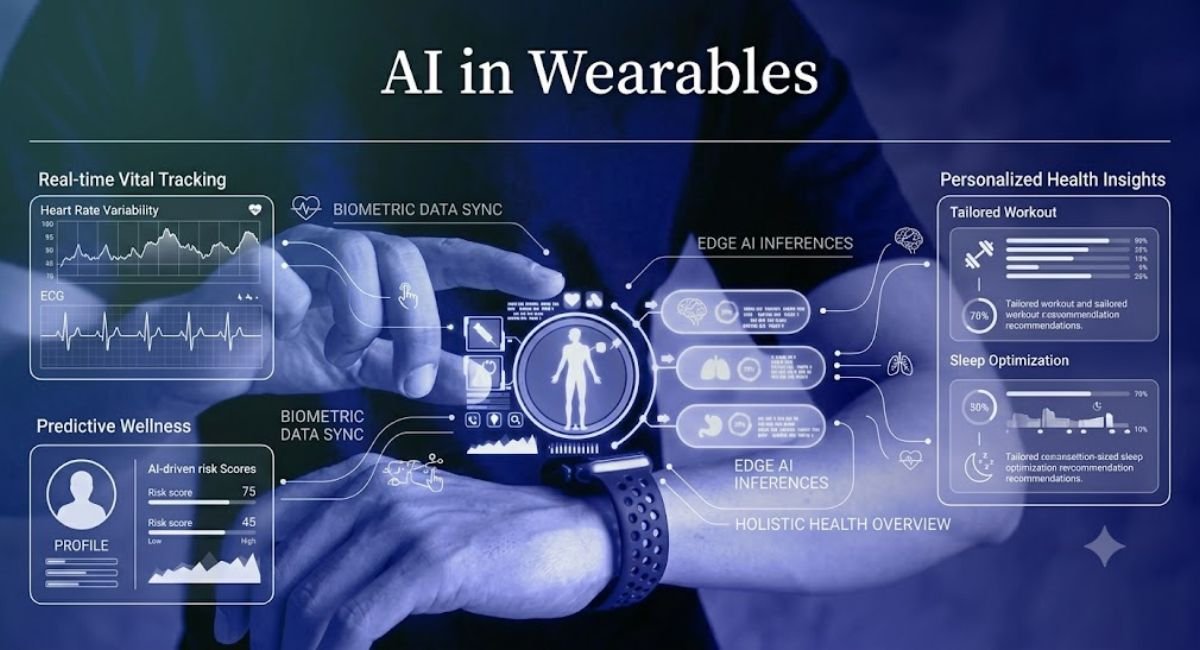
What Happens When AI Connects your Wearables

What Happens When AI Connects Your Wearables, Blood Tests, and Health Data?
For years, health information has been stored in separate places. Your fitness watch tracks your steps. Your doctor keeps your blood test results. Your phone stores your sleep patterns. These pieces of information often stay disconnected.
ARTIFICIAL INTELLIGENCE is changing this. By connecting wearables, lab results, medical records, and daily health data, AI can create a more complete picture of your health. Instead of looking at one small part of your body, it can help doctors and individuals understand how different factors work together.
This does not mean AI replaces doctors. Instead, it acts as a tool that helps find patterns, identify risks earlier, and support better health decisions.
A Complete View of Your Health
When AI connects different health sources, it can combine information that was previously separated. A smartwatch may show changes in your heart rate. A blood test may reveal changes in cholesterol or vitamin levels. Sleep tracking may show poor rest patterns.
Individually, these details may not seem important. But when AI analyzes them together, it may notice connections.
For example, a person may have:
- Higher resting heart rate than usual
- Poor sleep quality for several weeks
- Increased stress levels
- Changes in blood pressure
A doctor looking at all this information may get a clearer understanding of possible health concerns.
AI can help organize this information and highlight changes that may need attention.
Early Detection of Health Problems
One of the biggest benefits of AI-POWERED HEALTH DATA is early detection.
Many health conditions develop slowly. Small changes can happen months or years before symptoms become serious. AI can review large amounts of data and notice unusual patterns faster than traditional methods.
For example, changes in heart rhythm from a wearable device may help identify possible heart issues. Blood test may show changes in inflammation, blood sugar, or other important markers.
Early warnings give people more time to speak with healthcare professionals and take action.
Personalized Health Recommendations
Everyone’s body works differently. The same diet, exercise routine, or sleep schedule may not work equally for everyone.
When AI studies personal health data, it can help create more personalized suggestions.
For example, AI may analyze:
- Daily activity levels
- Food choices
- Sleep habits
- Exercise performance
- Blood markers
- Stress patterns
Based on this information, it may suggest small lifestyle changes. Someone who struggles with poor sleep may receive recommendations about bedtime habits. Someone with low activity levels may get reminders to move more.
The goal is not to provide one solution for everyone. It is to understand individual needs better.
Better Support for Doctors
Doctors often have limited time with each patient. Reviewing years of health records can be difficult, especially when information comes from different sources.
AI can help by organizing health information into a simpler format.
Instead of checking multiple reports manually, doctors may receive a summary showing important changes, possible risks, and health trends.
For example, AI could highlight:
- A gradual increase in blood sugar levels
- Changes in medication response
- Repeated health patterns
- Important lifestyle changes
This allows healthcare providers to spend more time discussing care instead of searching through information.
Continuous Health Monitoring
Traditional healthcare often focuses on visits to the doctor. You may have a checkup once or twice a year, but your health changes every day.
Wearables allow continuous monitoring.
Devices such as smartwatches and fitness trackers can collect information about:
- Heart rate
- Physical activity
- Sleep
- Body temperature
- Oxygen levels
When AI reviews this ongoing information, it can identify changes that may otherwise go unnoticed.
For people managing long-term conditions, continuous monitoring can provide valuable support between medical appointments.
The Role of Blood Tests in AI HEALTH SYSTEMS
According to AI BLOOD TEST ANALYSIS APP, blood tests provide important information about what is happening inside the body.
They can measure things like:
- Blood sugar levels
- Cholesterol
- Vitamins
- Hormones
- Inflammation markers
When combined with wearable data, blood tests provide a deeper understanding of health.
For example, a person may notice low energy through daily tracking. AI could compare this with blood test results and identify possible connections, such as nutrient levels or changes in body functions.
This combination creates a more complete health picture than using either source alone.
Privacy and Data Security Concerns
Connecting personal health information also creates important privacy questions.
Health data is extremely sensitive. People need to know how their information is collected, stored, and used.
Companies that handle health data must focus on:
- Strong security systems
- Clear privacy policies
- User control over information sharing
- Safe data storage
People should understand what information they are sharing and who can access it.
The future of AI in healthcare depends not only on better technology but also on trust.
Can AI Replace Human Doctors?
AI can process information quickly, but it cannot replace human judgment.
Doctors understand personal situations, emotions, medical history, and complex conditions in ways that technology cannot fully copy.
AI works best as a support system. It can help doctors make better decisions, but healthcare still requires human experience and communication.
A machine can identify patterns, but a doctor decides what those patterns mean for a real person.
The Future of Connected Health
The future of healthcare may become more personal, preventive, and data-driven.
Instead of waiting until people become seriously ill, healthcare may focus more on preventing problems before they happen.
AI connected with wearables and health records could help people understand their bodies better. It may encourage healthier habits and provide earlier warnings about possible concerns.
As technology improves, health tracking may become a normal part of everyday life. People may have better tools to manage their health, while doctors may have better information to provide care.
The connection between AI, wearables, blood tests, and health data is not about replacing traditional healthcare. It is about making healthcare smarter, faster, and more focused on each individual.
FAQs About AI CONNECTING WEARABLES BLOOD TESTS AND HEALTH DATA
AI analyzes information collected from devices, blood tests, and medical records to find patterns and changes in your health. It can help identify trends related to sleep, activity, heart health, and other important areas.
AI can help identify unusual patterns that may suggest possible health risks. However, it cannot confirm a medical condition. A doctor is still needed to review the information and provide proper advice.
AI can analyze many types of health information, including heart rate, sleep patterns, exercise levels, blood pressure, blood test results, glucose levels, and other health measurements.
No. AI is designed to support doctors, not replace them. It can help healthcare professionals review information faster, but human experience and medical judgment are still essential.
Health data requires strong privacy protection. Users should check how companies collect, store, and share their information before using AI health tools. Secure systems and clear privacy rules are important for protecting personal health information.


Vidaya is a longitudinal health intelligence platform designed to help people make sense of their health data over time.
Vidaya addresses this by organizing health data into a structured system of record and applying artificial intelligence to surface meaningful trends, changes, and patterns across weeks, months, and years.
