
Ventricular Assist Devices (VADs): Types, Benefits, Risks, and the Future of Heart Failure Care

Ventricular Assist Devices: The Future of Heart Failure Care
When the heart cannot pump enough blood to meet the body’s needs, advanced heart failure can become life-threatening. Ventricular assist devices (VADs) are mechanical pumps that support blood circulation when medicines and other treatments no longer provide sufficient relief. They can help selected patients with end-stage heart failure improve their symptoms and maintain organ function.
A ventricular assist device (VAD) may support someone awaiting a heart transplant or provide long-term treatment when transplantation is unsuitable. However, VAD therapy involves surgery, continuous device management and possible complications. Understanding the available devices, benefits, risks and emerging technologies helps patients make informed decisions with their healthcare team.
Understanding Ventricular Assist Devices & Mechanics
Advanced circulatory support technology offers life-saving alternatives and bridges for patients experiencing severe cardiac compromise.
What Is a Ventricular Assist Device (VAD) and How Does It Work?
A ventricular assist device (VAD) is a mechanical pump for a weakened heart. It moves blood when the heart cannot maintain adequate cardiac output despite optimized medical therapy. Doctors may consider VAD’s for patients with severe symptoms, repeated hospitalizations or poor organ perfusion caused by advanced heart failure.
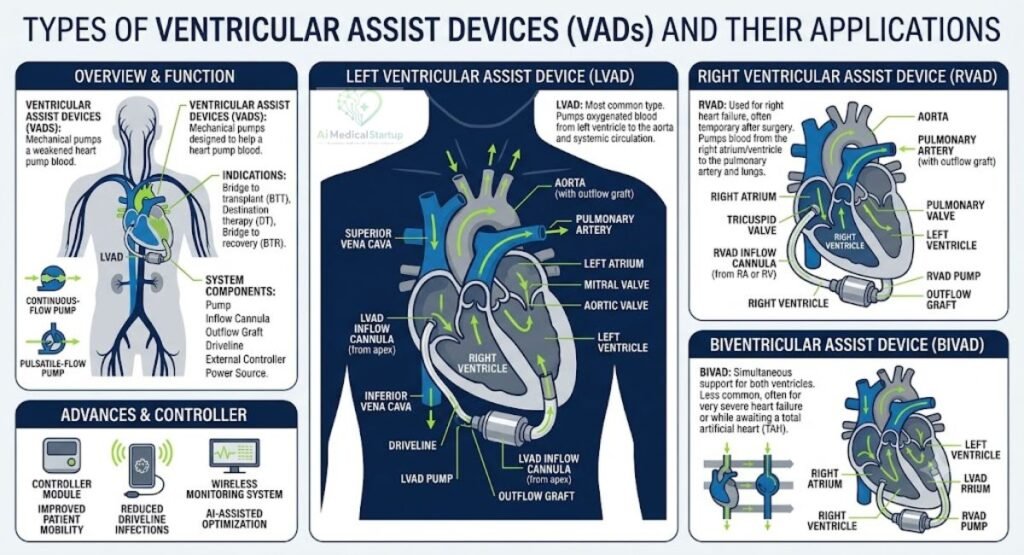
During ventricular assist device implantation, surgeons connect an implanted pump to the heart and major blood vessels. An inflow cannula carries blood into the pump, while an outflow graft directs it into an artery. Durable systems usually include an external controller and power source to maintain support. For external clinical guidelines, refer to authoritative medical resources like American Heart Association.
Understanding the Role of VAD’s in Advanced Heart Failure
In Stage D heart failure, symptoms may persist despite specialist treatment. A VAD can improve blood flow, reduce the workload of the supported ventricle and potentially help patients regain daily function. However, suitability depends on heart function, other illnesses, surgical risk and treatment goals.
How a Ventricular Assist Device Pumps Blood Through the Body
A left ventricular assist device (LVAD) draws blood from the left ventricle and sends it into the aorta. This left ventricular pumping support helps deliver oxygen to the body. Many modern devices use centrifugal-flow pumps that move blood continuously while clinicians monitor performance and adjust support.
The Main Components of a VAD System
The main ventricular assist device components include the implanted pump, inflow cannula, outflow graft, controller and power supply. Many durable devices also have a driveline that passes through the skin. Patients must learn battery management, alarm responses and equipment care before leaving hospital.
LVAD vs. RVAD vs. BiVAD
An LVAD supports the left ventricle, while a right ventricular assist device (RVAD) supports the right ventricle. A biventricular assist device (BiVAD) supports both sides when severe dysfunction affects both ventricles. The choice depends on which part of the heart needs mechanical support.
Temporary vs. Durable Ventricular Assist Devices
Temporary systems support circulation during acute illness, surgery or further evaluation. Durable LVAD’s provide longer-term treatment for suitable patients awaiting transplantation or receiving destination therapy. Clinicians consider recovery potential, disease severity and the patient’s overall condition when choosing a device.
When Is a Ventricular Assist Device Needed? Four Major Clinical Indications
Advanced heart failure requires targeted interventions when standard therapies are no longer effective. Understanding the pathways of mechanical circulatory support ensures optimal patient alignment.
Navigating VAD Therapy Pathways
Doctors consider VAD therapy when severe heart failure continues despite appropriate medication and specialist care. Recurrent hospitalizations, poor circulation and declining organ function may indicate that standard treatment is no longer sufficient. A multidisciplinary team evaluates risks and potential benefits before recommending implantation. For comprehensive clinical guidelines, consult authoritative resources such as the National Center for Biotechnology Information (NCBI).
VAD therapy can serve several purposes: supporting recovery, maintaining circulation while awaiting transplantation, allowing time for treatment decisions or providing long-term assistance. These goals are called bridge to recovery, bridge to transplantation, bridge to decision and destination therapy.
Bridge to Transplant
Bridge-to-transplant LVAD therapy supports eligible patients while they remain on the heart transplant waiting list. It can help maintain organ function while they await a suitable donor. However, transplantation depends on eligibility, donor availability and the patient’s changing medical condition.
Destination Therapy
Destination therapy for advanced heart failure provides long-term support for selected patients who are ineligible for heart transplantation. It may improve symptoms and extend survival, but requires continued follow-up, anticoagulation and device care.
Bridge to Recovery
Bridge to recovery provides circulation support while the heart heals from potentially reversible damage. Some patients with conditions such as acute myocarditis may regain adequate heart function. Device removal is considered only after careful testing confirms that the heart can support circulation independently.
Bridge to Decision
Bridge-to-decision mechanical support stabilizes critically ill patients while doctors assess organ recovery, neurological function and future treatment options. The team may later recommend a durable VAD, transplantation, recovery-focused treatment or another approach.
Which Patients Qualify for VAD Implantation?
Candidates commonly have advanced symptoms despite appropriate treatment. Doctors assess heart function, kidney and liver health, infection risk, frailty and the patient’s ability to manage the device. Multidisciplinary heart failure programs help determine whether the likely benefits outweigh the risks.
When Is a VAD Not Recommended?
Severe irreversible organ damage, uncontrolled infection or certain neurological conditions may make VAD therapy unsuitable. Bleeding risk and limited ability to manage the equipment may also affect the decision. Each case requires an individual assessment rather than a single universal eligibility rule.
Types of Ventricular Assist Devices: From Temporary Support to Long-Term Therapy
Ventricular assist devices differ in the heart chamber they support, their intended duration and how they are implanted. Durable pumps commonly provide long-term left ventricular support, while temporary systems can stabilize patients with sudden circulatory failure.
Doctors choose a device based on the patient’s condition, treatment goal, anatomy and local availability. The aim is to improve circulation while managing risks such as bleeding, clot formation and infection. For further insights into cardiac medical devices, explore clinical research via The New England Journal of Medicine.
Left Ventricular Assist Devices (LVADs)
An LVAD supports the heart’s main pumping chamber. Many modern durable systems use a magnetically levitated centrifugal-flow pump, designed to move blood efficiently and limit mechanical contact. These systems can provide long-term support, but bleeding, stroke and pump thrombosis remain important risks.
Right Ventricular Assist Devices (RVAD’s)
An RVAD helps move blood from the right ventricle toward the lungs. It may be used when right ventricular function fails after surgery or during severe heart failure. Some systems provide temporary support while the right ventricle recovers.
Biventricular Assist Devices (BiVAD’s)
A BiVAD supports both ventricles in severe biventricular heart failure. This treatment is more complex than supporting one ventricle and requires close monitoring. A total artificial heart may be considered for selected patients, depending on their anatomy and clinical needs.
Temporary Mechanical Circulatory Support
Temporary systems include the Abiomed Impella, TandemHeart and Abbott CentriMag. They can provide short-term support during cardiogenic shock, surgery or evaluation for further treatment. Each device has specific indications and risks, so selection depends on the patient’s condition and the clinical team’s experience.
Pulsatile vs. Continuous-Flow VAD’s
Older devices often produced pulsatile flow, while many modern pumps use a continuous-flow ventricular assist device design. Some newer systems can vary pump speed to create changes in blood flow. These features do not restore normal heart function, and patients still need ongoing monitoring.
Leading Ventricular Assist Devices Compared: HeartMate 3, HeartWare, and Emerging Technologies
The HeartMate 3 is a durable LVAD that uses a fully magnetically levitated rotor and centrifugal-flow technology. Clinical research, including the MOMENTUM 3 trial, has examined its long-term outcomes. However, survival and complications vary among patients.
The HeartWare HVAD is no longer distributed for new implants in the United States following safety concerns. Newer device platforms are also under development, but regulatory approval and availability vary by region. Device comparisons should use current safety information and published clinical evidence. For safety updates, refer to regulatory insights via U.S. FDA Medical Devices.
Abbott HeartMate 3
The HeartMate 3 uses magnetic levitation to move blood and is designed to improve blood compatibility. It has evidence supporting long-term use in selected patients. Nevertheless, it does not eliminate complications, and patients still require anticoagulation and regular specialist follow-up.
Medtronic HeartWare HVAD
Distribution of the HeartWare HVAD stopped in June 2021 because of safety concerns, including neurological adverse events, mortality and the risk of pump stoppage or delayed restart. Patients with an implanted HVAD should continue following their VAD team’s instructions and current safety guidance rather than changing treatment independently.
Other Durable VAD Platforms & Availability
Device availability depends on national approvals, clinical evidence and local supply. Patients should ask their specialist which systems are currently available and why a particular device is suitable. Manufacturer support and the hospital’s experience are also important considerations.
Next-Generation VADs
Researchers are developing miniaturized heart pumps, improved electronics and more biocompatible materials. These technologies aim to reduce blood damage, improve durability and make treatment more comfortable. Their potential benefits must be confirmed through appropriate clinical studies.
HeartMate 3 vs. HeartWare HVAD
HeartMate 3 and HeartWare HVAD use different pump designs, and their safety records are not interchangeable. The HVAD was withdrawn from distribution after safety concerns, while HeartMate 3 has supporting clinical evidence for durable LVAD treatment. Decisions should reflect current device guidance and individual patient needs.
Choosing the Right VAD
Clinicians consider heart function, right ventricular performance, kidney health, bleeding risk, treatment goals and lifestyle. They also account for the experience of the treating center. The goal is personalized circulatory support, supported by shared decision-making and clear discussion of risks.
VAD Implantation: The Surgical Procedure and Patient Journey
VAD implantation surgery requires planning by cardiac surgeons, heart failure specialists and critical care teams. Before the procedure, clinicians examine heart function, circulation, organ health and potential complications. They also prepare the patient and caregivers for device management after discharge.
Following surgery, patients receive intensive monitoring and begin cardiac rehabilitation when their condition permits. The team checks pump function, bleeding, infection risk and right ventricular performance. Recovery time depends on the patient’s overall health, the procedure and any complications. For official clinical standards on cardiac surgery, visit the Society of Thoracic Surgeons (STS).
Preoperative Evaluation
Echocardiography assesses heart structure and valve function. Other diagnostic tests measure circulation, kidney and liver function and surgical risk. Clinicians also evaluate nutrition, frailty and caregiver support before recommending implantation.
How LVAD Implantation Surgery Is Performed
The cardiac surgeon places the mechanical pump and connects it to the left ventricle and aorta. The inflow cannula carries blood into the pump, while the outflow graft returns it to the circulation. The team checks device function and adjusts support before the patient moves into postoperative care.
Minimally Invasive vs. Traditional Surgery
Some patients may qualify for minimally invasive VAD implantation, while others require a traditional sternotomy. The safest approach depends on anatomy, previous surgery, device requirements and the surgeon’s assessment. Minimizing surgical trauma is useful only when it can be done safely.
Intensive Care and Hospital Recovery
After surgery, clinicians monitor circulation, breathing, bleeding, infection and pump function. Patients gradually learn equipment management and driveline care. Before discharge, the team provides training, follow-up arrangements and an emergency plan.
How Long Does VAD Surgery Take?
VAD surgery often lasts several hours, but duration varies with the device, surgical approach, patient anatomy and unexpected complications. Hospital recovery may take days or weeks. The surgical team can provide the most relevant estimate for each patient.
Rehabilitation and Everyday Activities
Cardiac rehabilitation helps patients rebuild strength and confidence. Many gradually return to selected household tasks and social activities. Exercise plans should be individualized, and patients should ask their healthcare team about heavy lifting, driving and other lifestyle restrictions.
Benefits of Ventricular Assist Devices
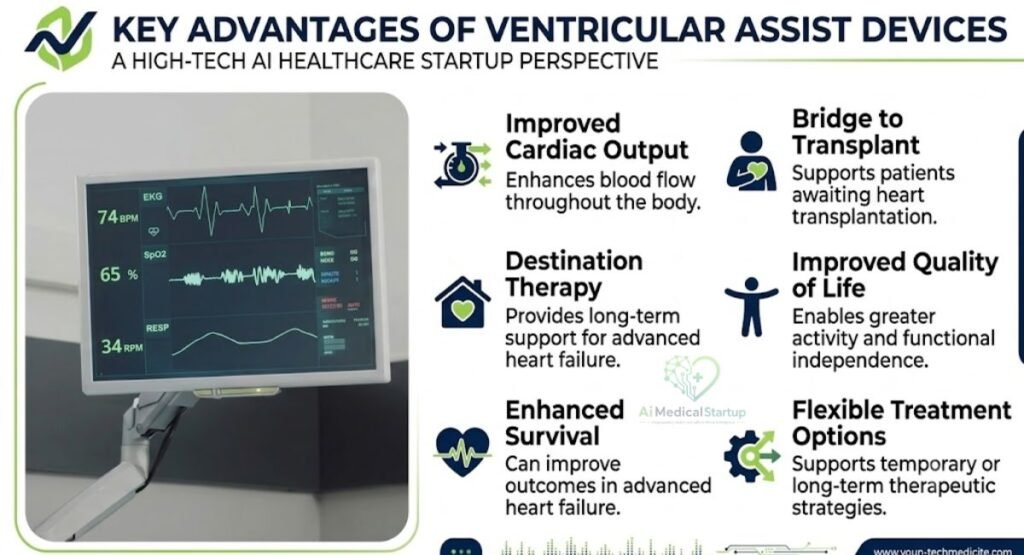
For selected patients, VADs can improve blood flow, reduce heart failure symptoms and support organ function. Patients may experience less breathlessness and fatigue, although the degree of improvement varies. Benefits depend on the severity of heart failure and the patient’s overall health.
Live Clinical Recovery & Functional Index
Interactive telemetry modeling projected functional capacity and organ perfusion over a 12-month post-implantation timeline.
Improving Blood Flow and Heart Failure Symptoms
By supporting cardiac output, a VAD helps circulate blood to vital organs. Some patients experience less congestion, fatigue and breathlessness. However, other medical conditions may continue to limit activity, and improvement is not guaranteed.
Exercise Capacity and Quality of Life
Functional capacity after VAD implantation may improve as patients recover and participate in rehabilitation. Many report better daily function, although the equipment, alarms and clinic visits can be challenging. Support from caregivers and healthcare teams can ease adjustment.
VADs as a Bridge to Transplantation
An LVAD can maintain circulation while an eligible patient waits for a donor heart. It may help preserve organ function and physical strength. However, implantation does not guarantee transplantation because eligibility and donor availability can change. For additional clinical data insights, review guidelines via American College of Cardiology.
VAD Complications and Risks
VAD therapy carries risks, including bleeding, stroke, infection, pump thrombosis and right ventricular failure. Mechanical problems and abnormal heart valve function can also occur. Regular monitoring and prompt treatment help manage complications, but they cannot remove every risk.
Clinical Incidence & Complication Distribution
Responsive data visualization highlighting primary adverse event categories across long-term mechanical circulatory support cohorts.
Bleeding and Gastrointestinal Hemorrhage
Anticoagulants help reduce clot formation but increase bleeding risk. Some patients develop gastrointestinal bleeding that may recur or become serious. Patients should report unusual bleeding and should never change blood-thinning medication without medical guidance.
Stroke, Thromboembolism, and Pump Thrombosis
Clots can cause pump thrombosis or travel to other parts of the body. Stroke can result in sudden weakness, confusion or speech problems and requires emergency care. Clinicians monitor blood tests and device function to help reduce neurological complications.
Driveline Infections
The driveline can provide a route for infection where it passes through the skin. Redness, pain, discharge or fever should be reported promptly. Careful dressing changes and hygiene support driveline-related infection prevention.
Right Ventricular Failure
An LVAD supports the left ventricle but does not directly replace right ventricular function. If the right ventricle cannot move enough blood toward the lungs, right ventricular failure may limit treatment benefits. Careful assessment and postoperative monitoring help clinicians detect this problem.
Aortic Insufficiency and Long-Term Complications
Some patients develop aortic valve problems or changes in heart structure over time. These issues can reduce the effectiveness of LVAD support. Regular imaging and device reviews help detect complications and guide treatment.
Mechanical Failure and Power Interruption
A depleted battery, damaged cable or controller problem can interrupt pump support. Patients should keep backup equipment ready and learn how to respond to alarms. Suspected pump stoppage requires immediate action according to the device-specific emergency plan.
Monitoring and Reducing Complications
Clinicians review symptoms, laboratory tests, pump readings and imaging. Pump performance monitoring can help identify changes that need investigation. Medication management, infection prevention and patient education remain essential even as monitoring technology improves. For professional clinical safety guidelines, consult International Society for Heart and Lung Transplantation (ISHLT).
Survival Rates and Long-Term Outcomes After VAD Implantation
Contemporary durable LVADs can improve survival for selected patients, but outcomes vary with health status, complications and device performance. LVAD survival rates describe groups of patients and cannot predict an individual’s lifespan with certainty.
Live LVAD Cohort Survival & Outcome Trajectory
Interactive comparative telemetry illustrating 1-year through 5-year survival projections versus traditional therapy benchmarks.
Clinical Trials and Registry Data
Clinical trials provide controlled comparisons, while registries show how devices perform in routine care. Results should be interpreted according to the patient population, follow-up period and outcome measured. The MOMENTUM 3 trial provides important evidence on HeartMate 3 outcomes. For validated research updates, explore New England Journal of Medicine.
One-Year and Longer-Term Survival
Survival statistics differ depending on whether a study measures survival alone, transplantation or freedom from complications. Patients should ask their specialist which results are most relevant to their situation and treatment goal.
Factors That Influence Survival
Heart failure severity, kidney function, infection, stroke, bleeding and right ventricular health can affect outcomes. Regular follow-up and timely treatment may help manage complications. Survival figures are group estimates, not guarantees.
Age, Kidney Function, and Other Conditions
Kidney or liver disease, diabetes, frailty and lung conditions can complicate recovery. Age matters, but clinicians also consider independence, overall health and likely treatment benefit.
Long-Term Quality of Life
Follow-up evaluates symptoms, mobility, hospital admissions and emotional wellbeing. Many patients report improved function, but device care remains a significant responsibility. Quality of life should be considered alongside survival.
The Future of Ventricular Assist Devices: Wireless Power, Smart Monitoring, and AI
Future VADs may offer smaller pumps, improved energy systems and better monitoring. A driveline-free ventricular assist device could reduce dependence on external cables and potentially lower some driveline-related risks. However, fully implantable systems and wireless power technologies remain areas of development rather than universal standard care.
Fully Implantable VADs and Wireless Power
A fully implantable VAD could reduce external equipment demands. Researchers are exploring transcutaneous energy transfer, inductive charging and improved implantable batteries to deliver power across intact skin. Reliability, heat management and safe energy storage remain important challenges.
AI-Powered Monitoring and Intelligent Pump Control
Future systems may combine embedded hemodynamic sensors with artificial intelligence in VAD monitoring. These tools could help identify changes in blood flow and pump performance. Intelligent pump control may eventually adjust support to activity, but clinical studies must establish safety and effectiveness.
Miniaturized Pumps and Personalized Support
Miniaturized heart pumps, compact electronics and improved materials may enhance comfort and blood compatibility. The long-term aim is AI-driven personalized circulatory support that better reflects each patient’s needs. Promising designs still require robust testing before routine use.
Total Artificial Hearts and Emerging Technologies
A total artificial heart replaces the pumping function of both ventricles, unlike a VAD that assists the native heart. SynCardia is an established technology for selected patients, while BiVACOR remains an investigational system. Their indications, evidence and availability are different.
FAQs About Ventricular Assist Devices
Explore detailed answers regarding life expectancy, daily lifestyle adjustments, MRI safety, and mechanical specifications for VAD therapy.
Life expectancy varies with age, overall health, device performance and complications. Some patients live for several years with durable support, but published survival rates cannot predict an individual’s outcome precisely.
Many patients return home and resume selected activities. However, daily life includes battery management, driveline care, medication and regular medical appointments.
No. A VAD assists one or both ventricles, while a total artificial heart replaces the pumping function of both ventricles.
Costs vary by country, hospital, device, insurance and recovery needs. A full estimate should include surgery, hospitalization, equipment and long-term follow-up.
MRI safety depends on the specific device and its components. The radiology team must verify the manufacturer’s instructions before imaging.
Some patients can shower with approved protective equipment and travel with careful planning. Patients should follow their device-specific instructions and consult their VAD team first.
An LVAD mechanically pumps blood, while a pacemaker uses electrical impulses to help regulate heart rhythm. They treat different problems.
Removal may be possible if heart function recovers enough to maintain circulation without support. Doctors must confirm recovery through careful testing before considering this step.
Power interruption can be life-threatening. Patients must keep backup batteries ready, respond to alarms and follow their device-specific emergency plan.
Conclusion: Are Ventricular Assist Devices Redefining Heart Failure Care?
Ventricular assist devices provide an important treatment option for selected patients with advanced heart failure. They can improve circulation, ease symptoms and support patients awaiting transplantation or receiving destination therapy. However, surgery, infection, bleeding and device-related complications remain important concerns.
Future progress in pump design, wireless power and AI-assisted monitoring may improve patient care. These advances must prove their safety and effectiveness through clinical research. Patients should discuss available options with an experienced heart failure team and weigh expected benefits against risks and daily treatment demands. For more patient guides, explore resources via American Heart Association.



Dr. Kanza Sarfraz, M.B.B.S., is a medical doctor and graduate of Allama Iqbal Medical College, Lahore. She brings nearly seven years of clinical experience across tertiary-care hospitals, medical headquarters, and healthcare facilities in both the public and private sectors. Her clinical experience provides a practical perspective on healthcare delivery, emerging medical technologies, and the evolving role of artificial intelligence in medicine.