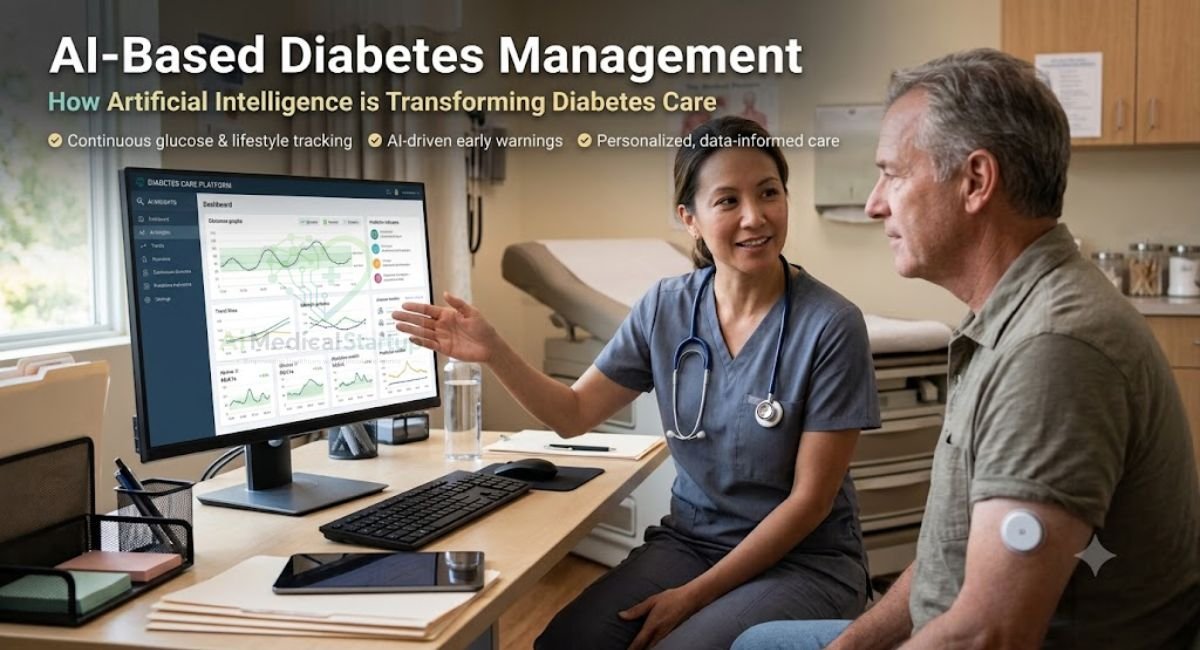
ai-based-diabetes-management

AI-Based Diabetes Management

Primary Healthcare & AI

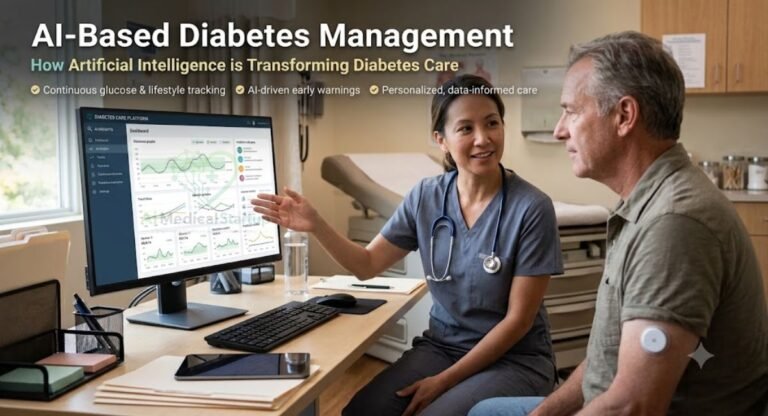
AI-Based Diabetes Management: How Artificial Intelligence Is Transforming Diabetes Care in Primary Care

Discover how machine learning, predictive analytics, and automated monitoring tools are empowering primary care providers to improve patient outcomes, prevent complications, and streamline diabetes management.

7 Min Read
Medically Reviewed

Smarter Care Diagnostics

94% accuracy in early intervention prediction using clinical AI models in primary care settings.

Diabetes is no longer a condition managed only through routine checkups and medication adjustments. As patient numbers continue to rise, primary care teams need smarter ways to detect risks, monitor glucose patterns and personalize treatment. AI-based diabetes management is emerging as a powerful approach, combining medical data with machine learning to support faster and more informed clinical decisions. From blood glucose management and continuous monitoring to early risk prediction, artificial intelligence can help clinicians identify concerning patterns before they become serious problems.

It can also support personalized diabetes care by analyzing factors such as glucose readings, medical history, lifestyle habits and treatment responses. In primary care, these capabilities may improve diabetes screening and strengthen long-term disease monitoring without replacing the judgment of healthcare professionals. As artificial intelligence in diabetes care continues to evolve, its role is shifting from experimental technology toward practical clinical support, offering new opportunities for earlier intervention, better coordination and more patient-centered diabetes care.

Understanding AI-Based Diabetes Management in Primary Care

The basic idea behind diabetes management in primary care is straightforward: detect problems early, understand the patient’s risk and act before complications become harder to control. AI can strengthen each part of that process by examining information at a scale that would be difficult for a clinician to process manually. This is one reason artificial intelligence in healthcare has attracted growing attention across screening, monitoring and chronic disease management.

For example, an AI system can examine longitudinal laboratory results alongside medication records, weight measurements and glucose trends. It may then flag a pattern suggesting rising metabolic risk. That does not mean the software has diagnosed the patient. Instead, it gives the healthcare professional another useful signal to investigate. The distinction matters because good AI-powered healthcare is not about replacing the doctor. It is about helping the doctor see the bigger picture sooner.

What Is AI-Based Diabetes Management?

At its core, AI-based diabetes management uses computational methods to analyze health information and generate predictions, classifications or recommendations. Machine learning models can learn relationships within clinical datasets while deep learning systems can identify complex patterns in images and other high-dimensional information. These technologies can support screening, risk stratification, glucose forecasting and complication detection.

The practical value comes from connecting different data streams. A system may combine complex healthcare data, laboratory measurements, medication history and wearable readings with clinical information. Its output might be a risk score, an alert or a recommendation for further review. The final clinical decision still depends on context, patient preferences and professional judgment rather than on an algorithm alone.

Why Primary Care Is Important in Diabetes Management

Primary care sits close to the beginning and middle of the diabetes journey. It is often where diabetes screening, risk assessment, lifestyle counseling and long-term monitoring occur. Because many people with type 2 diabetes have few obvious symptoms initially, primary-care teams can play an important role in recognizing risk before the disease becomes clinically obvious.

Interactive Data

Primary Care Capabilities and Outcomes

Hover over the bars to compare traditional vs. AI-supported clinical metrics.

This setting also creates an enormous amount of longitudinal information. Weight changes, blood pressure, laboratory tests, prescriptions and previous diagnoses can form a useful clinical timeline. AI can help organize that timeline and identify people who may require attention. In this way, primary healthcare can become more proactive rather than waiting for complications to force the issue.

How AI Supports Doctors and Patients

AI can act like an additional analytical layer around routine care. Clinical decision support systems may identify patients who need screening, flag unusual glucose patterns or help clinicians interpret large amounts of information. For patients, connected technologies can provide real-time health information and reminders that support everyday self-management without requiring a clinic visit for every question.

The strongest model is collaborative. A clinician provides context that an algorithm may not understand, while the algorithm can rapidly analyze information that humans cannot easily review at scale. This combination of human intelligence and computational analysis can make patient-centered care more responsive. WHO similarly emphasizes human autonomy, safety, transparency, accountability, equity and sustainability when AI is used in health.

AI vs. Traditional Diabetes Care

Traditional diabetes care often depends on periodic appointments, laboratory testing and patient-reported information. AI-supported care can add continuous or near-continuous analysis between those appointments. That difference can be valuable because glucose control is not static. It changes with food, activity, medication, illness, sleep and many other factors.

Traditional vs. AI-Supported Diabetes Care

How Artificial Intelligence transforms clinical workflows and patient outcomes

Comparison of Traditional vs. AI-Supported Diabetes Management Approaches
📋 Traditional Approach AI-Supported Approach
Periodic Periodic clinical review Continuous Continuous or frequent data analysis
Manual risk assessment Algorithm-assisted risk stratification
Retrospective glucose review Glucose trend and blood glucose prediction
General treatment planning More individualized treatment support
Manual image interpretation Automated image analysis in validated applications
Reactive follow-up Earlier alerts and early intervention

Still, AI does not make conventional medicine obsolete. Established tests, physical assessment, clinical history and shared decision-making remain fundamental. The real shift is that clinicians can gain another analytical tool between conventional encounters.

Diagnosis and Early Detection of Type 2 Diabetes

The earlier diabetes is identified, the more opportunity there may be to address its causes and consequences. Early detection of diabetes is especially important because asymptomatic diabetes can progress quietly. The American Diabetes Association's 2026 Standards of Care recognize A1C and plasma glucose criteria for diagnosis and recommend risk-based screening for people at increased risk.

AI can complement that pathway by identifying people who may warrant closer assessment. However, prediction is not the same as diagnosis. A model can estimate probability based on a patient's data, while validated laboratory testing establishes whether diagnostic criteria are met. Keeping those roles separate protects patients from both false reassurance and unnecessary alarm.

How Type 2 Diabetes Is Traditionally Diagnosed

Established diabetes diagnosis relies on biochemical evidence rather than an AI prediction. Current ADA guidance recognizes A1C, fasting plasma glucose and the two-hour plasma glucose value during a 75-g oral glucose tolerance test as diagnostic approaches. In the absence of unequivocal hyperglycemia, confirmatory testing is generally required.

ADA & NICE Diagnostic Standards vs. AI Signal

2-Step Clinical Workflow

Step 1

AI Risk Prediction

Continuous monitoring of EHR trends & demographics.

Step 2

Clinical Triage

High-risk alert generated for physician review.

Step 3

Lab Confirmation

A1C (≥6.5%) or Fasting Glucose (≥126 mg/dL).

This distinction is crucial for anyone discussing AI-based diagnosis. A prediction model may identify a person as high risk, but it should not be presented as a substitute for appropriate laboratory testing. In the UK, NICE guidance also places HbA1c at the center of type 2 diabetes assessment and management.

How AI Can Support Diabetes Risk Assessment

AI can turn scattered information into a more coherent diabetes risk assessment. A model may analyze age, weight, blood pressure, previous laboratory values, medications, family history and other clinical variables. Predictive analytics can then estimate the likelihood of developing diabetes or experiencing a complication within a defined period.

The benefit is particularly interesting in busy primary-care environments. Instead of waiting until every risk factor becomes clinically obvious, an algorithm can scan a large patient population and highlight a high-risk population for professional review. The clinician can then decide whether additional testing, counseling or preventive healthcare is appropriate.

AI-Based Detection of Prediabetes

Prediabetes represents an important window for prevention. It indicates abnormal glucose regulation that does not meet the diagnostic threshold for diabetes. The ADA's 2026 guidance includes A1C, fasting plasma glucose and oral glucose tolerance testing within the framework for identifying prediabetes.

AI can add value by estimating which patients may be more likely to develop diabetes and therefore benefit from testing or prevention efforts. That can support diabetes prevention through lifestyle modification, weight management and other evidence-based interventions. Yet the algorithm should guide attention rather than label someone permanently. Risk is dynamic and can change as health circumstances change.

Predicting Diabetes Before Symptoms Appear

Diabetes does not always announce itself with dramatic symptoms. A person can feel perfectly well while metabolic abnormalities gradually develop. AI-based diabetes prediction aims to recognize patterns before obvious clinical deterioration occurs. Models can analyze longitudinal information and detect combinations of risk factors that might otherwise remain fragmented across medical records.

This approach illustrates the difference between prediction and certainty. A high predicted risk does not mean diabetes is inevitable. Instead, it creates an opportunity for early treatment, testing and lifestyle intervention. When used responsibly, prediction becomes a nudge toward investigation rather than a substitute for diagnosis.

Electronic Health Record Data

Electronic health records can provide a rich source of information for AI models. They may contain laboratory results, diagnoses, medications, vital signs and previous encounters. Machine learning algorithms can analyze these longitudinal records to identify relationships associated with future diabetes risk.

The challenge is data quality. Missing measurements, inconsistent coding and differences between healthcare systems can distort predictions. A model developed in one health system may also perform differently elsewhere. That is why clinical validation should accompany deployment rather than assuming that a strong research result automatically translates into routine practice.

Blood Glucose and HbA1c Patterns

Glucose and HbA1c measurements offer a window into changing metabolic health. AI can examine trends rather than viewing each result as an isolated number. A gradual shift across several measurements may carry different meaning from a single abnormal value.

However, algorithms need context. HbA1c can be affected by conditions that alter the relationship between HbA1c and glycemia. The ADA specifically notes situations where plasma glucose criteria should be used because of altered HbA1c interpretation.

Age, Weight, Lifestyle, and Family History

Risk models can incorporate familiar diabetes risk factors, including age, BMI, waist circumference, hypertension, smoking, family history and physical activity. Dietary patterns and other behavioral information may also contribute. These factors are useful because type 2 diabetes usually emerges from a complex interaction rather than a single cause. Still, data should never become a shortcut for stereotyping patients. Genetic factors, social circumstances and access to care can interact in complicated ways. A useful model should therefore complement a proper clinical assessment instead of reducing a person to a risk score.

Multi-Factor Risk Model

Diabetes Risk Factors & Clinical Context

How predictive risk scores combine demographic, lifestyle, and clinical data to inform clinical care.

💡
Clinical Insight: Scores Complement, Not Replace Care

While algorithmic scores calculate risk based on data, genetics, social determinants of health (SDOH), and care access vary widely. Risk scores serve as triage guides, never a substitute for holistic clinical assessment.

Clinical Applications of Artificial Intelligence in Primary Care

The most interesting part of AI in primary care is not a futuristic robot making decisions. It is the quieter technology working behind the scenes. AI can sort information, detect patterns and highlight patients who may need attention. In a crowded clinic, that analytical assistance can be useful because clinicians face more data than any person can comfortably review.

The FDA describes AI and machine-learning medical-device applications across image processing, early disease detection, diagnosis, prognosis, risk assessment and personalized diagnostics. Its current AI-enabled device list also shows how rapidly the regulated device landscape continues to evolve.

AI-Assisted Clinical Decision Support

Clinical artificial intelligence can provide decision support by analyzing patient information and producing risk estimates or alerts. A system might identify an overdue screening test, detect an unusual laboratory pattern or highlight a patient whose risk profile has changed. The key word is support. AI-assisted clinical care works best when clinicians understand what the system does, know its limitations and retain responsibility for interpreting the result. WHO recommends meaningful oversight, transparency and accountability because apparently confident technology can still produce harmful errors.

Personalized Diabetes Risk Stratification

Not every patient carries the same level of risk. Risk stratification helps clinicians distinguish people who may need routine monitoring from those who could benefit from closer follow-up. AI can analyze multiple variables simultaneously and produce individualized estimates rather than relying on one factor alone. This can support individualized care when used appropriately. For example, two patients may have similar glucose measurements but very different cardiovascular histories, kidney function or medication profiles. A model that considers multiple dimensions may reveal a more nuanced picture than a single laboratory value.

Electronic Health Record Analysis

A medical record can resemble a puzzle with pieces scattered across years of appointments. AI can help assemble those pieces. Natural-language processing can analyze clinical notes while machine-learning systems can process structured laboratory and medication data. The goal is not simply to collect more information. It is to turn information into something clinically useful. Data-driven healthcare can help clinicians identify patterns, but the system must account for missing information, documentation errors and changes in clinical practice. Otherwise, the algorithm may confidently learn the wrong lesson.

Identifying Patients at High Risk of Complications

Diabetes can affect several organ systems over time. Diabetes complications include diabetic retinopathy, diabetic nephropathy, diabetic neuropathy, cardiovascular disease and peripheral vascular disease. AI can potentially help identify patients whose combined clinical profile suggests elevated complication risk. The value lies in prioritization. A clinician cannot manually calculate every possible future outcome for every patient during a busy consultation. AI can help highlight patterns for review, supporting complication prevention and more timely referral when appropriate.

AI-Powered Patient Monitoring

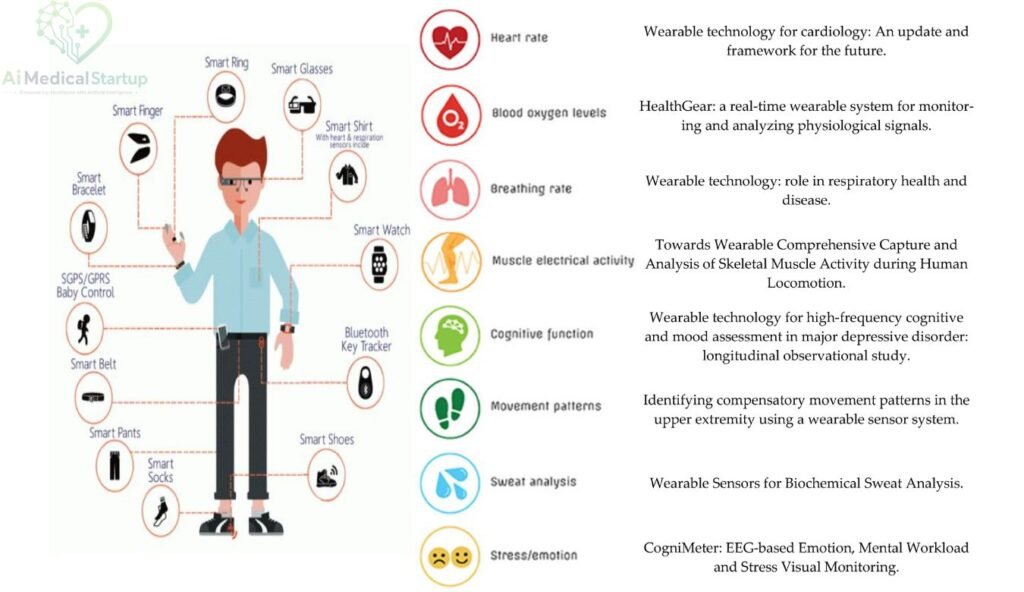
The rise of connected devices is changing what monitoring can look like. Remote patient monitoring can bring glucose readings, weight, blood pressure and other measurements into a broader care pathway. Wearable devices can generate large amounts of wearable device data, while mobile platforms can support communication between patients and healthcare teams.

This creates a more continuous form of health monitoring. Instead of asking what happened during the last clinic visit, clinicians can sometimes examine what happened between visits. The challenge is avoiding information overload. More data are useful only when the care team can interpret them and act appropriately.

Predictive Analytics

Predictive analytics examines existing information to estimate what might happen next. In diabetes care, this can include forecasting glucose changes, identifying patients at higher risk of complications or detecting patterns associated with future deterioration. The strength of predictive models comes from pattern recognition across large datasets. Their weakness is uncertainty. A prediction is not a promise. It describes a probability under particular assumptions, so clinicians should consider the model's validation population, performance characteristics and clinical context.

Clinical Alerts and Recommendations

An alert can be useful when it appears at the right moment. AI may identify hyperglycemic events, potential hypoglycemic events or other concerning trends and notify a patient or clinician. The purpose is to prompt appropriate action rather than create anxiety. Poorly designed alerts can cause fatigue. If every minor fluctuation generates a notification, users may eventually ignore the important ones. Effective systems therefore need sensible thresholds, clear explanations and appropriate escalation pathways.

Personalized Treatment Planning

AI can help organize information relevant to personalized treatment. Glucose trends, medication history, lifestyle patterns and previous treatment responses can be analyzed together. This may support personalized healthcare rather than a one-size-fits-all approach. The final plan should still reflect the person's circumstances. Dietary preferences, work schedule, financial resources, cultural factors and treatment goals can influence whether a recommendation is practical. Technology should fit the patient's life rather than asking the patient to fit the technology.

AI for Diabetes Screening, Monitoring & Risk Prediction

Screening and monitoring are natural areas for AI because they generate repeated measurements. AI-based screening can help prioritize people for testing while monitoring systems can examine what happens after diagnosis. Together, these approaches create a bridge between prevention and ongoing diabetes care.
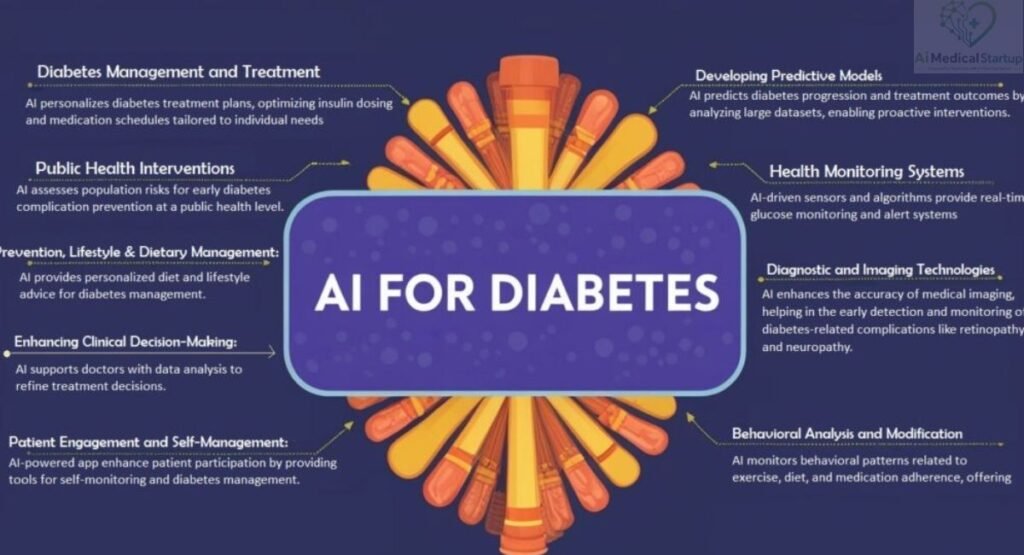
artificial-intelligence-for-diabetes-complications

There is an important caveat. Current ADA guidance states that evidence is insufficient to use CGM itself for screening or diagnosis of prediabetes or diabetes. That means readers should distinguish between using glucose technology for management and using it as a validated diagnostic screening test.

AI-Based Screening for Type 2 Diabetes

AI-based screening can combine demographic, clinical and behavioral information to identify people who may warrant conventional diabetes testing. Non-invasive screening approaches are also being explored, including models using wearable measurements and novel sensing technologies.

Researchers have investigated unusual signals such as facial texture features and tongue feature analysis. These approaches are intriguing because they could eventually broaden access to screening. However, emerging technologies require rigorous external validation before they should be treated as established clinical tools.

Continuous Glucose Monitoring and AI

Continuous glucose monitoring has transformed the amount of glucose information available to many people with diabetes. Instead of isolated finger-stick readings, CGM biosensors can provide repeated measurements and trend information throughout the day.

AI can analyze this stream to identify patterns around meals, activity, sleep and medication. Modern systems can also provide alerts for rising or falling glucose. FDA-authorized CGM technologies already provide real-time glucose information and trend alerts, although specific indications vary by device.

Predicting Blood Glucose Trends

Glucose rarely behaves like a straight line. A meal, exercise session, medication dose or stressful day can shift the trajectory. Glucose level prediction attempts to anticipate that movement by analyzing recent and historical measurements.

These glucose prediction algorithms can become more useful when they incorporate contextual information. A model that knows only the previous glucose value has less information than one that can also consider meals, physical activity and medication. Even then, forecasts remain estimates and should not be mistaken for certainty.

Detecting Abnormal Glucose Patterns

A single high or low reading can have many explanations. Repeated patterns tell a different story. AI can examine dynamic glucose monitoring data to identify recurrent overnight lows, post-meal spikes or periods of unstable glucose.

This can support stable blood sugar levels by drawing attention to patterns that might otherwise disappear inside a large dataset. However, users still need to interpret readings alongside symptoms and clinical advice. Technology should make the signal clearer, not encourage people to ignore the wider clinical picture.

Predicting Diabetes-Related Complications

Long-term diabetes can damage blood vessels and nerves. Micro-vascular complications include retinal, renal and neurological disease while macro-vascular complications include major cardiovascular and vascular disease. AI can potentially identify combinations of factors associated with these outcomes.

The important concept is prevention. If a model highlights increased risk, the next step should be appropriate clinical assessment and intervention. Predictive technology becomes meaningful when it changes care in a beneficial way rather than simply generating another number on a dashboard.

Diabetic Retinopathy

Diabetic retinopathy is a particularly important target for AI because retinal photographs contain patterns that computer-vision systems can analyze. FDA-recognized retinal diagnostic software can use AI algorithms to evaluate fundus images for retinal disease and identify people with referable retinopathy.

This can support screening pathways by helping identify patients who require further ophthalmic assessment. The technology does not eliminate the need for appropriate eye care. Image quality, disease severity and the specific indication of the device all matter.

Diabetic Kidney Disease

Diabetes can affect kidney function gradually, making longitudinal surveillance important. AI models can analyze laboratory values, diagnoses and other patient information to estimate renal risk. Renal function monitoring can therefore become more data-driven when multiple measurements are considered together.

The concept is especially relevant to diabetic kidney disease, where early recognition can influence monitoring and management. AI may help prioritize attention, but clinicians still need validated laboratory assessments and appropriate guideline-based care.

Cardiovascular Risk

Diabetes and cardiovascular disease frequently intersect. Risk models can consider blood pressure, lipid measurements, kidney function, smoking history and other factors when estimating cardiovascular risk. AI can process these variables simultaneously rather than examining each one in isolation.

That may help identify people who need closer assessment for cardiovascular disease, including conditions such as ischemic heart disease. Yet risk prediction should remain part of broader cardiovascular prevention rather than becoming a standalone decision-making system.

Diabetic Neuropathy

Diabetic neuropathy can develop gradually and may not be obvious during a short consultation. AI-assisted approaches are being explored for symptom analysis, physiological measurements and risk prediction. Similar principles apply to diabetic foot assessment, where early recognition of risk can support preventive care.

The goal is not to replace a physical examination. Instead, AI could help identify patients who warrant more careful assessment. That distinction is important because neuropathy and foot complications can involve clinical findings that algorithms may not capture.

AI-Based Blood Glucose Management and Insulin Guidance

For many people living with diabetes, daily management is where technology becomes tangible. Blood glucose management involves countless decisions about food, activity, medication and insulin. AI can help turn continuous measurements into predictions and alerts, reducing some of the mental burden associated with constant monitoring.

The technology has already moved beyond theory in automated insulin delivery. FDA-authorized systems connect CGM data with insulin pumps and algorithmic controllers. In 2024, the FDA expanded an automated glycemic controller indication to include adults with type 2 diabetes, illustrating how automated diabetes technologies are moving into broader populations.

AI-Powered Blood Glucose Prediction

Blood glucose prediction attempts to estimate future glucose levels using recent measurements and other contextual signals. If a system detects a trajectory toward hypoglycemia, it may generate an early warning before the glucose reaches a more dangerous level. Prediction can also support broader glycemic control. By revealing recurring patterns, AI may help clinicians and patients understand how meals, exercise and treatment interact. The usefulness of a forecast depends on the quality of the data and the validated performance of the system.

Personalized Insulin Dose Support

Insulin management requires precision because too little insulin can contribute to hyperglycemia while too much can cause hypoglycemia. AI-based systems can analyze glucose trends and other variables to provide insulin dosage guidance or support insulin dose calculation. This is an area where safety cannot be treated as an afterthought. Algorithms should operate within validated indications and appropriate safeguards. A patient should not independently change an insulin regimen simply because a consumer AI system produces a confident-looking recommendation.

Clinical Helper Tool

Insulin Dose Calculator

Calculate mealtime bolus and correction doses based on target glucose and ratios.

AI and Continuous Glucose Monitoring

CGM provides the raw material for many modern automated systems. Continuous glucose monitoring captures repeated glucose values while software identifies trends, patterns and alerts. When connected to an insulin pump, the algorithm can use those readings to adjust insulin delivery within the system's approved design.

FDA documentation describes automated insulin-delivery systems in which CGM readings communicate with an insulin pump through an algorithm. Some systems automatically adjust insulin delivery while others use different levels of automation.

Automated Alerts for Hypoglycemia and Hyperglycemia

An effective alert is a small warning with potentially large value. AI-enabled systems can identify patterns associated with hypoglycemic events and hyperglycemic events, then notify the user before or during an episode depending on the system's capabilities.

For example, a CGM may identify a downward glucose trend and alert the user. More advanced automated systems can respond through insulin-delivery adjustments. FDA-cleared technologies demonstrate that these capabilities are not merely theoretical, although performance and indications vary among products.

AI-Powered Diabetes Management Apps

Mobile technology has turned smartphones into useful companions for diabetes management. Diabetes management apps can record glucose values, meals, medication and activity while some provide educational or decision-support features. mHealth apps can also connect users with remote care teams.

The strongest applications do more than count numbers. They help users understand patterns and take appropriate action. Still, consumer applications vary widely in evidence and regulation. A polished interface does not automatically mean a clinical recommendation is trustworthy.

AI for Insulin Titration

AI-assisted insulin titration can use historical glucose data, treatment response and other variables to support adjustment decisions. The goal is to make insulin therapy more responsive to the individual's changing needs rather than relying only on fixed assumptions.

However, insulin titration remains a high-stakes activity. The system needs validated algorithms, clear indications and safeguards. Clinicians should understand when recommendations are reliable and when unusual circumstances require a different approach.

Closed-Loop and Automated Insulin Delivery

Closed-loop systems connect glucose sensing with insulin delivery through a control algorithm. FDA describes artificial-pancreas systems as combinations of CGM technology, insulin pumps and computer-controlled algorithms that help regulate glucose.

These systems illustrate how AI-enabled diabetes management can move from prediction toward action. Yet not every automated insulin-delivery system is the same and not every system should be described as AI in the same technical sense. The precise algorithm, regulatory indication and degree of automation matter.

Human Oversight in Insulin Decisions

Human oversight becomes especially important when technology influences medication delivery. Patients can experience illness, unusual meals, device failures or other circumstances that fall outside the algorithm's expectations. Clinicians and users therefore need clear instructions for responding when the system behaves unexpectedly.

WHO emphasizes that humans should remain in control of healthcare systems and medical decisions while safety, transparency and accountability remain central to AI deployment.

AI in Gestational Diabetes Prediction and Management

Pregnancy adds another layer of complexity to diabetes care. Gestational diabetes mellitus affects maternal glucose regulation during pregnancy and can influence both maternal health and fetal health. Screening and management therefore require careful coordination between obstetric and diabetes services.

AI may support this process by identifying risk patterns earlier and helping organize monitoring data. However, pregnancy is a setting where clinical validation matters enormously. A prediction model should complement established prenatal pathways rather than replace them.

What Is Gestational Diabetes?

Gestational diabetes refers to diabetes first recognized during pregnancy. It can increase risks for the mother and baby when it is not appropriately detected and managed. NICE guidance describes structured assessment, glucose monitoring and individualized targets within pregnancy care.

The condition also has implications beyond delivery. Women who have experienced gestational diabetes have an increased future risk of type 2 diabetes. That makes postpartum follow-up an important part of the wider prevention story rather than an administrative footnote.

How AI Predicts Gestational Diabetes

GDM prediction models can analyze maternal characteristics, clinical history and laboratory information to estimate risk. Some researchers are exploring models that use information available early in pregnancy so that higher-risk women can receive appropriate assessment sooner.

The attraction is obvious: prediction could potentially move risk identification earlier in the pregnancy timeline. Still, predictive performance varies across populations. A model trained in one demographic group may not perform equally well in another, which makes external validation essential.

Risk Factors Used by AI Models

AI models may consider maternal age, BMI, previous gestational diabetes, family history, blood pressure, laboratory findings and other clinical variables. Some research also investigates genetic factors and broader family genetics. The model should not become a black box that labels a pregnancy without explanation. Clinicians need to understand which factors influence the prediction and what action the result should trigger. Risk assessment is useful only when it leads to an appropriate clinical pathway.

AI-Based Screening During Pregnancy

AI could potentially support earlier non-invasive screening and help prioritize women for established testing. That may be particularly valuable where specialist resources are limited. However, predictive screening should not be confused with definitive diagnosis. NICE guidance emphasizes formal risk assessment and testing pathways for gestational diabetes. It also recommends glucose monitoring and individualized targets during pregnancy.

Personalized Monitoring and Management

Pregnancy changes rapidly, so personalized intervention can be particularly valuable. AI may help analyze glucose patterns, nutrition information and treatment responses between appointments. Remote technologies could also support prenatal care when appropriate. The best approach remains collaborative. A pregnant patient should understand what the technology measures, what its alerts mean and when professional help is needed. AI should make care more connected rather than make pregnancy feel like a dashboard of numbers.

Predicting Gestational Diabetes Before Diagnosis

Early prediction could identify women who warrant closer assessment before conventional diagnosis would normally occur. This is especially interesting for women with several established risk factors. However, an elevated prediction is not proof that pregnancy diabetes is present. It should trigger appropriate evaluation rather than premature labeling. This distinction protects patients from unnecessary anxiety while preserving the value of early risk detection.

Monitoring Maternal Blood Glucose

Glucose monitoring during pregnancy requires careful attention because both high and low glucose can matter. AI can help organize repeated measurements and identify trends that may deserve clinical review. NICE recommends individualized glucose targets during pregnancy and specific monitoring approaches depending on the treatment pathway. AI can potentially make those measurements easier to interpret, but it should operate within established clinical guidance.

Predicting Pregnancy-Related Complications

Predictive models may eventually help estimate risks associated with gestational diabetes and other pregnancy complications. Such tools could support earlier assessment and more targeted follow-up. The evidence needs careful interpretation, though. A prediction model must demonstrate reliable performance in the population where it will be used. Pregnancy outcomes depend on many interacting biological and social factors that may not be fully represented in a dataset.

AI-Based Imaging and Detection of Diabetes Complications

Some of the most visible advances in healthcare AI involve images. Computers can analyze thousands of pixels rapidly and identify patterns associated with disease. In diabetes care, medical imaging has become an important area for research and clinical deployment, particularly in retinal disease.

The FDA's AI-enabled device landscape includes systems used for image acquisition and processing as well as diagnostic applications. This illustrates how AI imaging technology is becoming part of regulated medical-device development rather than remaining solely inside academic laboratories.

AI in Diabetic Retinopathy Screening

Retinal screening is a strong example of how AI can extend access to specialist-level image interpretation. A validated system can examine retinal photographs and identify patterns associated with diabetic eye disease. This can be particularly useful in primary care because screening may occur closer to where patients already receive routine healthcare. When an abnormality is detected, appropriate referral can follow. The algorithm therefore becomes one part of a larger care pathway rather than the entire pathway.

AI-Based Retinal Image Analysis

Computer vision can examine retinal images for subtle features associated with retinopathy and diabetic macular edema. AI systems may classify disease severity or identify patients requiring further evaluation. Research also explores DME detection and image segmentation. These systems demonstrate the potential of automated image analysis, although performance depends on image quality, patient population and the exact clinical task for which the algorithm was validated.

AI for Cardiovascular and Vascular Assessment

Diabetes can affect the cardiovascular system through multiple pathways. AI may analyze imaging and clinical information to support cardiovascular risk assessment, vascular evaluation and treatment planning. The broader concept is precision. Rather than considering diabetes as an isolated glucose problem, AI can help connect glucose control with cardiovascular and vascular health. That perspective supports a more comprehensive model of diabetes management.

AI in Kidney and Other Organ Assessment

AI research extends beyond the eye. Imaging and clinical models are being explored for kidney disease, vascular complications and diabetic foot assessment. In some research settings, AI can analyze patterns that might be difficult to quantify manually. The future may involve multimodal systems that combine imaging, laboratory results and longitudinal clinical information. Such treatment response prediction could eventually help clinicians understand which interventions are working. However, these applications require careful validation before routine use.

Automated Image Interpretation

Automated interpretation allows software to evaluate medical images according to a defined task. The analysis can help detect abnormalities, segment structures or classify images. The advantage is consistency and speed. The limitation is that an algorithm may fail when an image falls outside the conditions represented in its training data. Human review remains important, particularly when findings are ambiguous or the clinical situation is unusual.

Early Detection of Micro-vascular Complications

Diabetes-related damage can develop gradually, so detecting early changes matters. AI-assisted imaging may support early detection of retinal and other micro-vascular complications before symptoms become obvious. The value is greatest when detection leads to action. An algorithm that identifies a potential abnormality is only the first step. Follow-up testing, specialist assessment and appropriate treatment still determine what happens next.

Integrating Imaging Results Into Primary Care

AI imaging becomes more useful when its results fit smoothly into primary-care workflows. A screening system might identify a patient at increased risk and automatically prompt an appropriate referral or follow-up process. That requires interoperability, clear reporting and defined responsibilities. The clinician needs to know what the result means, what confidence the system has and what action is recommended. Without that context, even accurate technology can become another source of administrative clutter.

Benefits, Challenges, and Future of AI in Diabetes Care

The case for AI-based diabetes management is strongest when technology solves a genuine clinical problem. Earlier risk detection, continuous monitoring and faster analysis can all be valuable. AI may also help clinicians manage growing workloads while giving patients more insight into their own health. But healthcare is not a laboratory spreadsheet. People behave unpredictably, data can be incomplete and algorithms can fail. WHO therefore stresses safety, transparency, accountability, equity and human oversight when AI is deployed in healthcare.

Benefits of AI-Based Diabetes Management

AI can make diabetes care more proactive by identifying patterns earlier and processing information continuously. It can also support treatment optimization, help prioritize patients and make complex datasets easier to interpret.

Clinical Impact

Potential Benefits & AI Contributions

Discover how artificial intelligence enhances decision-making and patient outcomes in primary care.

01
🔍

Earlier Detection

How AI Contributes

Identifies patterns associated with rising risk before traditional indicators trigger standard alerts.

02
🎯

Personalized Care

How AI Contributes

Combines multiple patient-specific variables into targeted, individual therapy recommendations.

03
📈

Continuous Monitoring

How AI Contributes

Analyzes repeated glucose readings, laboratory results, and real-time wearable device data streams.

04
⚙️

Workflow Support

How AI Contributes

Automates selected routine analytical tasks to free up clinical time for high-value clinician interaction.

05
🛡️

Risk Prediction

How AI Contributes

Estimates future complication risks or clinical deterioration patterns with high precision.

06
🩺

Targeted Screening

How AI Contributes

Helps prioritize high-risk patients for timely follow-ups and specialist assessments.

These benefits do not automatically occur simply because software contains AI. Clinical value depends on evidence, implementation quality and whether the technology improves real-world healthcare outcomes.

Earlier Detection

Earlier detection gives healthcare teams more time to respond. AI can examine longitudinal data and flag patterns associated with early risk detection. For diabetes, that may mean identifying a person who needs formal testing or recognizing a complication risk that deserves closer follow-up. The important point is that earlier detection should lead to useful clinical action rather than simply creating another notification.

Personalized Treatment

People respond differently to treatment. AI can examine glucose trends, medication responses and lifestyle information to support personalized treatment. That approach aligns with precision medicine, where decisions increasingly account for individual characteristics. However, personalization should include the person's goals and circumstances. A mathematically optimal recommendation may be useless if it does not fit the patient's daily life.

Continuous Monitoring

Traditional care provides snapshots. Connected technologies can provide a moving picture. Metabolic monitoring through CGM and other digital tools can reveal patterns that occasional measurements may miss. Continuous information can support remote diabetes care, especially when patients have difficulty attending frequent appointments. Yet monitoring should remain purposeful. A flood of data without a clinical response can create burden rather than value.

Reduced Clinical Workload

Healthcare professionals spend significant time reviewing records, organizing information and following up with patients. Automated systems can potentially reduce some repetitive analytical work. That does not mean AI removes the need for professionals. Instead, it can shift human effort toward tasks that require communication, judgment, empathy and complex reasoning. The best automation removes friction rather than removing people.

Improved Risk Stratification

AI can compare many variables simultaneously and identify patterns associated with future risk. This can support predictive healthcare and help clinicians decide where closer attention may be warranted. Risk models are most useful when they have been validated in the population where they are deployed. A model's performance can change across countries, healthcare systems and demographic groups.

Challenges and Limitations of AI in Primary Care

The biggest mistake would be to treat AI as infallible. Diagnostic errors, inaccurate predictions and misleading recommendations can occur. Models can also perform differently across populations because their training data may not adequately represent everyone. There are also broader questions about privacy, accountability and equity. WHO warns that systems trained mainly on data from high-income settings may not perform equally well in other populations and emphasizes inclusive design and governance.

Data Privacy and Security

Diabetes technology can process highly sensitive information. Glucose readings, medication records, genetic information and lifestyle data can reveal intimate details about a person's life. Strong cybersecurity, appropriate consent and responsible data governance are therefore essential. Healthcare organizations must also understand where data are stored, who can access them and how they may be reused.

Algorithmic Bias

An algorithm learns from its data. If the training dataset under-represents certain populations, the resulting model may perform poorly for those groups. This is why AI in primary care requires continuous evaluation. Developers and healthcare organizations should examine performance across relevant demographic and clinical groups rather than relying only on an overall accuracy number.

False Positives and False Negatives

Every prediction system has the possibility of error. A false positive may send someone for unnecessary testing while a false negative may create false reassurance. The consequences depend on the clinical task. A screening alert and an automated insulin adjustment do not carry the same level of risk. Systems therefore need safety measures proportionate to their intended use.

Lack of Clinical Transparency

Some AI systems can be difficult to explain. A clinician may see a risk score without fully understanding why the model reached that conclusion. Explainable AI aims to address this problem. Transparency does not mean exposing every line of computer code. It means giving users enough meaningful information to understand the system's intended use, limitations and reasoning.

Integration with Existing Healthcare Systems

A technically impressive system can fail if it does not fit the clinic. EHR compatibility, staff training, workflow design and alert management all influence adoption. Healthcare organizations also need clear governance. Someone must know who monitors performance, investigates errors and decides when a model needs updating. Without that infrastructure, AI can become an expensive layer sitting awkwardly on top of existing processes.

The Future of AI-Based Diabetes Management

The next stage of AI-based diabetes management in primary care will likely involve more connected and multimodal systems. Instead of analyzing one data source, future platforms may combine glucose measurements, laboratory results, medical images, medications, clinical notes and wearable signals.

Generative AI may also become useful for summarizing records, explaining trends and helping clinicians communicate complex information. WHO's 2025 guidance on large multimodal models emphasizes both their potential in healthcare and the need for evidence, governance and safeguards.

The most meaningful future is therefore not a machine replacing the clinician. It is a healthcare environment where the right information appears at the right moment. AI-enabled diabetes management could make care more predictive, connected and individualized while clinicians remain responsible for decisions that require context, accountability and human understanding.

Conclusion

Diabetes management is gradually shifting from a model based mainly on periodic measurements toward one that can incorporate continuous information and predictive analysis. Artificial intelligence in diabetes care can support screening, risk assessment, glucose forecasting, insulin delivery, complication detection and personalized monitoring. These capabilities may help healthcare professionals identify problems earlier and respond more efficiently.

Still, technology is only one piece of the puzzle. Reliable AI-powered healthcare needs validated algorithms, high-quality data, appropriate regulation and strong clinical oversight. For patients, it should provide useful information without creating confusion or replacing professional care. For clinicians, it should reduce unnecessary workload while preserving judgment. The future of diabetes management in primary care will ultimately depend not on how much AI can do, but on how safely and thoughtfully people use it.

Help & Insights

Frequently Asked Questions About AI-Based Diabetes Management

Everything you need to know about how AI is changing diabetes care in primary clinical settings.

AI can support diabetes management by analyzing glucose measurements, laboratory results, clinical histories, and other health information. It can help with risk prediction, screening, glucose forecasting, complication detection, and selected forms of treatment support. Some regulated technologies also use algorithms to automate aspects of insulin delivery. The exact capability depends on the device or software and its approved indication.

Yes, AI can estimate a person's future diabetes risk using factors such as age, weight, family history, blood pressure, and laboratory information. However, diabetes prediction is different from a medical diagnosis. Current ADA guidance continues to rely on established glucose and A1C criteria for diagnosis rather than treating an AI prediction as diagnostic proof.

AI can analyze glucose trends and support blood glucose management through predictions, alerts, and automated systems. Continuous Glucose Monitoring (CGM) technology provides frequent measurements that software can interpret. Some automated insulin-delivery systems use algorithms to adjust insulin delivery based on CGM readings. FDA-authorized systems demonstrate that algorithm-based glucose management is already being used clinically.

AI models can estimate the risk of gestational diabetes mellitus using maternal characteristics, clinical history, and laboratory information. Research into early prediction is expanding. However, an AI-generated risk estimate does not replace established pregnancy screening or diagnostic pathways. NICE guidance continues to provide structured recommendations for risk assessment, testing, and glucose management during pregnancy.

AI-based retinal systems use computer-vision algorithms to analyze photographs of the retina. They can identify patterns associated with diabetic retinopathy and determine whether further assessment may be appropriate. The FDA recognizes a class of retinal diagnostic software that uses AI algorithms to analyze digital fundus images for retinal disease screening.

Some automated systems can calculate or adjust insulin delivery using glucose information and validated algorithms. However, the phrase "insulin dose recommendations" should not be interpreted as permission to follow an arbitrary consumer AI output. Automated insulin-delivery systems operate under specific regulatory indications and safety controls. Clinical context remains important, particularly when illness, device problems, or unusual circumstances occur.

Potential benefits include earlier risk detection, continuous monitoring, personalized analysis, complication prediction, and workflow support. AI can process large amounts of information quickly and identify patterns that may be difficult to recognize manually. However, the actual benefit depends on evidence, implementation, and whether the technology improves meaningful health outcomes rather than simply producing more data.

Potential risks include inaccurate predictions, false positives, false negatives, privacy problems, cybersecurity threats, algorithmic bias, and excessive reliance on automated recommendations. WHO emphasizes human autonomy, safety, transparency, accountability, and equity when AI is used for health care.

AI is more realistically viewed as a clinical support technology than a replacement for doctors. Algorithms can process data rapidly, but clinicians provide context, communication, physical assessment, shared decision-making, and accountability. The most useful model is likely to be AI-assisted clinical care, where technology handles appropriate analytical tasks while healthcare professionals remain central to patient care.

Risks of AI in Healthcare

Risks of AI in Healthcare: Bias, Errors, Privacy, Safety & How to Mitigate Them Sept 16, 2026 •...

AI in Fitness

Hero Section – AI Fitness Calculator The Future of Digital Health AI in the Fitness Industry:...

AI in Pulmonology

Special Report 2026 The Rise of AI in Respiratory Care A Comprehensive Guide to Next-Gen Pulmonology...
ai-in-fitness

AI in Fitness

Hero Section – AI Fitness Calculator
The Future of Digital Health

AI in the Fitness Industry:
How AI Is Changing Fitness and Wellness

From predictive recovery tracking to computer-vision form checks, discover how machine learning and smart wearables are shaping the next generation of personal coaching.

85% Personalization Boost
24/7 Adaptive Insights
AI

AI Workout Readiness Bot

● Dynamic Engine Ready

Calculated Readiness: 72%

Balanced state detected. Optimal for a Standard Strength & Conditioning Session.

The fitness industry is entering a new era where technology can understand more than just steps and calories. AI in the fitness industry is helping transform workouts, coaching, recovery, nutrition, and everyday wellness through smarter data analysis. Modern AI fitness apps can study activity patterns, training history, sleep, and performance to deliver more personalized guidance. Wearables and connected devices also provide valuable information that artificial intelligence in fitness can process in real time.

From virtual coaches to exercise form analysis, fitness technology is becoming more adaptive and responsive. As these innovations grow, personalized fitness could make training more efficient, accessible, and engaging while raising important questions about accuracy, privacy, safety, and the future relationship between humans and intelligent technology.

AI in the Fitness Industry: How Artificial Intelligence Is Changing Fitness and Wellness

The biggest change brought by AI and fitness is the move from passive tracking to active interpretation. A conventional tracker may tell you that you walked 8,000 steps. An AI-enabled system can potentially combine that activity with your previous workouts, heart rate, sleep, goals, and recovery patterns to provide a more useful recommendation. This creates a shift from simply collecting numbers toward creating customized fitness experiences.

The distinction matters because fitness is highly individual. Two people can complete the same workout and respond very differently. Their age, experience, recovery, sleep, nutrition, training history, and physical condition may all influence the outcome. Modern fitness technology aims to recognize those differences. AI can support that process by identifying patterns across large datasets and adapting recommendations over time.

What Is AI in Fitness?

AI in fitness refers to the use of artificial intelligence technologies to analyze exercise, activity, behavioral, and sometimes health-related information. These systems can use AI algorithms, machine learning, computer vision, predictive models, and natural-language interfaces to produce recommendations or automate specific tasks. Examples include workout planning, movement analysis, virtual coaching, activity interpretation, and recovery suggestions.

transformation-of-fitness-with-ai

The important distinction is that AI does not simply store information. It attempts to find relationships within that information. An AI-powered training system might notice that a user performs better after longer recovery periods. It might then modify future sessions. Similarly, computer vision can analyze movement through a camera and provide posture correction or technique feedback. The quality of these outputs depends heavily on the quality of the underlying data and model.

Why Is AI Becoming Important in the Fitness Industry?

Consumer expectations are changing. People increasingly want fitness services that fit their schedules, goals, abilities, and preferences. Traditional fitness coaching can be highly effective, but it is not always affordable or available. AI can make certain forms of virtual coaching available through smartphones and connected devices at almost any time.

Another factor is the enormous amount of information generated by modern devices. Wearable technology, smartphones, fitness trackers, and smartwatches can collect activity and physiological measurements throughout the day. AI provides an interpretation layer over this information. For fitness companies, personalization can also support user engagement, workout adherence, and potentially user retention when recommendations feel relevant rather than generic.

How AI Differs From Traditional Fitness Technology

Traditional digital fitness tools generally focus on measurement, storage, and simple calculations. AI-powered systems attempt to go further by recognizing patterns and generating adaptive recommendations. A basic application may count repetitions. A more advanced system may use computer vision to assess movement and provide real-time feedback.

Fitness Technology Comparison Table

Traditional vs. AI-Powered Fitness Tech

Compare how traditional tracking measures metrics against how dynamic AI systems interpret your data.

Traditional Fitness Technology AI-Powered Fitness Technology
Records steps AI Interprets activity patterns
Counts repetitions AI May analyze movement quality
Displays heart rate AI Interprets heart-rate trends
Stores workout history AI Can adapt future training
Provides fixed programs AI Can generate personalized workout plans
Shows sleep duration AI May connect sleep with recovery recommendations
Tracks calories AI Can combine activity with broader behavioral patterns

The difference is therefore not simply whether a product uses the word “AI.” A meaningful AI system should provide some form of intelligent analysis, prediction, personalization, or automated decision support.

The Role of Data in AI-Powered Fitness

Data is the foundation of modern data-driven fitness. AI systems may receive information about activity, exercise history, sleep, heart rate, workout duration, movement, preferences, and goals. They may also use user input about available equipment, preferred training days, favorite exercises, and desired outcomes. The system then converts this raw information into structured information that models can analyze.

This creates both opportunity and responsibility. High-quality, representative data can improve personalization, while incomplete or biased data can produce weak recommendations. In health-related applications, data governance becomes especially important because some fitness information can qualify as sensitive personal information depending on context and jurisdiction.

How Does AI Work in Fitness Applications and Platforms?

An AI fitness platform usually operates as a continuous feedback system. First, it gathers information. Next, it cleans and processes that information. The system then identifies patterns, compares them with the user’s objectives, and produces recommendations. As new information arrives, the system can update its understanding of the user.

This process is becoming more sophisticated as fitness platforms connect multiple devices. A smartwatch can provide activity data. A smartphone can provide location or movement information. A smart ring can provide additional recovery measurements. A connected gym machine can contribute exercise performance data. Combining these sources can create a more complete picture than any single device can provide.

Collecting Fitness and Health Data

Modern fitness applications can gather information from wearable devices, smartphones, smartwatches, connected gym equipment, cameras, and manual questionnaires. Common inputs include heart rate, activity levels, exercise duration, calories burned, sleep information, movement, and training history. The user may also provide goals such as weight loss, muscle gain, endurance, or general health.

The challenge is that different devices measure different things with different levels of accuracy. Sensor placement, device quality, movement, skin contact, and environmental conditions can affect measurements. AI systems therefore need strong data collection and validation processes before raw measurements become useful recommendations.

Processing and Interpreting User Data

Collected information is usually not ready for immediate AI analysis. The system may need to clean missing values, identify unusual measurements, standardize formats, and remove obvious noise. This stage is called data processing, and it can have a major impact on the final result.

A fitness platform may then organize the information into categories such as training load, activity level, recovery, sleep, and exercise history. Cloud-based databases and cloud computing can allow large platforms to process data at scale, although companies must also consider cloud storage, security, access permissions, and regulatory requirements.

Understanding Individual Fitness Patterns

AI becomes more useful when it understands patterns rather than isolated events. One poor night’s sleep may not mean much by itself. A repeated pattern of poor sleep followed by reduced exercise performance may provide more meaningful information.

The system can examine user preferences, workout styles, favorite exercises, training times, and motivational patterns. Over time, these signals can reveal behavioral trends. This allows a platform to build a more individualized profile rather than treating every user according to the same template.

Generating Personalized Recommendations

Once an AI system has enough information, it can produce tailored recommendations. These may include exercise selection, training intensity, workout duration, rest periods, recovery days, or changes to a training schedule. Some systems can also generate dietary recommendations, although nutrition advice varies greatly in quality and should not be confused with individualized medical nutrition therapy.

The most useful systems do not simply generate a plan once and leave it unchanged. They continuously compare the plan with actual performance. If a user consistently struggles with a particular workload, the system may suggest an adjustment. This creates a cycle of personalized training rather than a static program.

Real-Time Activity Tracking and Feedback

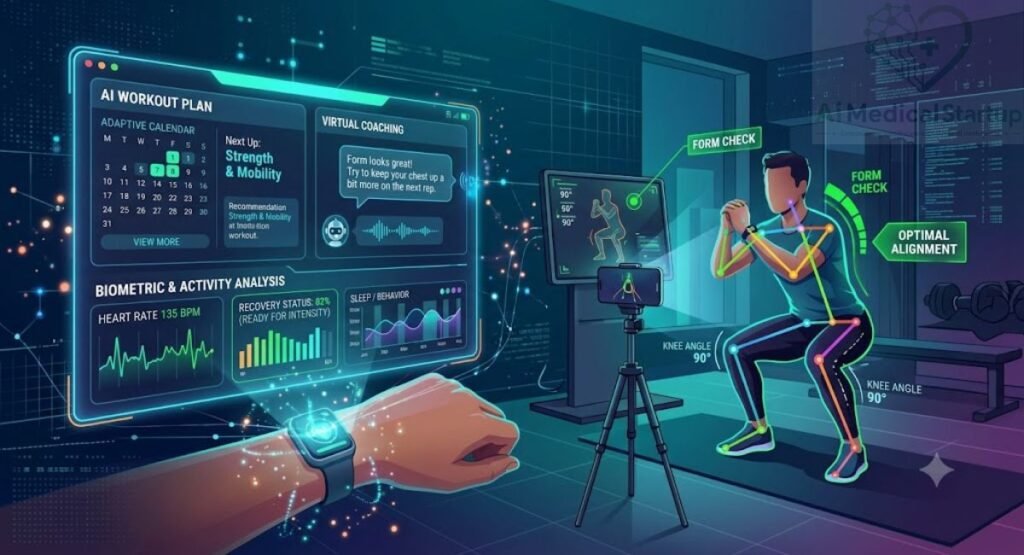
Real-time AI can provide feedback while an activity is happening. Camera-based systems may analyze body position. Wearables may monitor heart rate and activity. Running platforms can analyze pace and movement. Smart gym equipment can monitor repetitions and resistance.

The advantage is immediate feedback. A user may receive real-time feedback rather than discovering a problem after the session. However, real-time recommendations must be carefully designed because exercise conditions change quickly. AI should support good judgment rather than encourage users to chase an algorithmic score at the expense of comfort, safety, or proper technique.

Predictive Analytics for Fitness and Wellness

Predictive analytics uses historical and current information to estimate what may happen next. In fitness, this can involve predicting performance trends, recovery needs, training readiness, or changes in activity behavior.

These systems may produce predictive recommendations based on patterns such as training load, sleep, recovery, and previous performance. The word “predictive” should not be confused with certainty. An AI model can estimate probability, but it cannot guarantee that an outcome will occur. This distinction becomes especially important when fitness applications begin to overlap with predictive health.

Machine Learning and Continuous Improvement

Machine learning allows software to identify patterns from data rather than relying only on manually written rules. A model can learn relationships from previous examples and apply those patterns to new situations.

As users interact with an application, new information may improve personalization. This is sometimes described as continuous model training, although not every consumer application continuously retrains its production model. Some systems update user-specific recommendations without changing the underlying model. Others periodically retrain models using larger datasets. The important point is that AI fitness systems can become increasingly context-aware when designed responsibly.

AI, Machine Learning & Computer Vision in Fitness

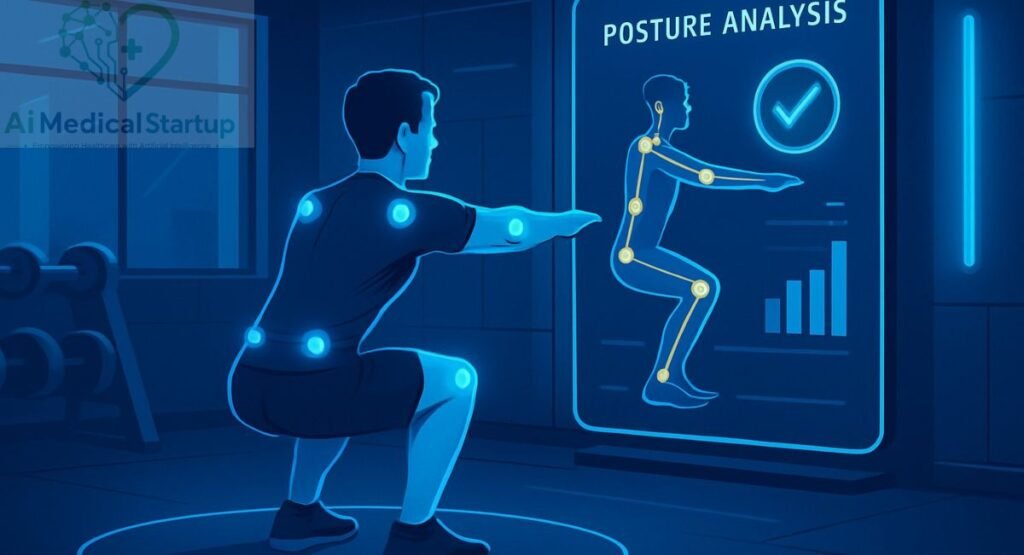
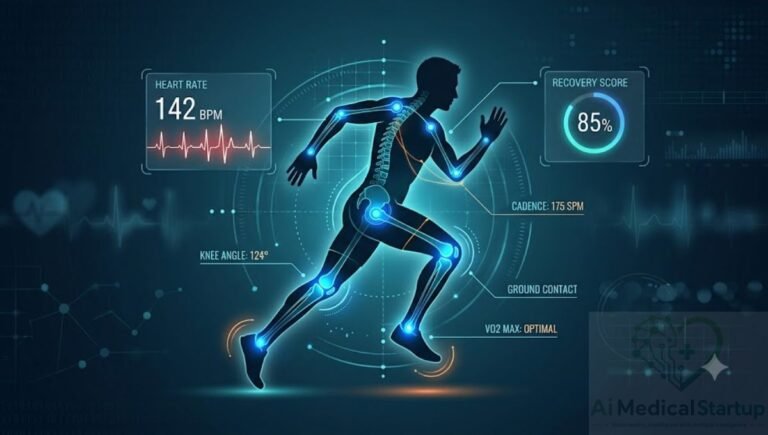
Artificial intelligence is the broader concept, while machine learning is one important method used to build AI systems. Computer vision is another technology that allows systems to interpret visual information. In fitness, computer vision can identify body landmarks and analyze movement patterns during exercises.

posture-analysis-through-ai

For example, a camera-based application may estimate the position of a user’s knees, hips, shoulders, and elbows during a squat. The software can compare those movements against predefined criteria and provide feedback. However, camera angle, lighting, clothing, body position, and occlusion can affect performance, so AI transparency and clear limitations remain important.

How Wearable Sensors Feed AI Systems

Wearable sensors create a continuous stream of information. Accelerometers can detect movement. Gyroscopes can measure orientation and rotation. Optical sensors can estimate heart rate. GPS can track movement outdoors. Other sensors can contribute information about sleep or activity.

AI systems can combine these signals with contextual information. For example, the same heart-rate value can mean different things during rest, walking, sprinting, or strength training. Context allows AI to interpret measurements more intelligently than isolated numbers.

Key Applications and Use Cases of AI in the Fitness Industry

The practical applications of AI fitness solutions are expanding rapidly. Some systems focus on individual consumers, while others serve trainers, gyms, sports teams, and wellness providers. The strongest applications generally solve a clear problem rather than adding AI simply for marketing.

Across the industry, AI is being used for personalized programming, virtual coaching, movement analysis, wearable interpretation, nutrition planning, recovery, engagement, and business operations. These applications can overlap. A single fitness platform may combine several of them into one integrated experience.

Personalized Workout and Training Plans

AI can create personalized training programs by combining fitness level, goals, schedule, equipment, previous performance, and preferences. A user preparing for a 10K race needs a different plan from someone beginning resistance training. A person with only 20 minutes available on weekdays may also need a different program.

The major advantage is adaptability. A static program may become inappropriate when circumstances change. AI can potentially modify customized workout routines as performance and behavior evolve. However, the quality of those changes depends on the model, the data, and whether the system understands important individual limitations.

AI-Powered Virtual Fitness Coaches

Virtual fitness coaches can provide guidance without requiring a trainer to be physically present. They can explain exercises, organize workouts, answer basic fitness questions, track progress, and provide motivation. Generative AI is making these systems more conversational because users can communicate with them through natural language.

A useful virtual fitness coach should do more than generate impressive-sounding text. It should understand the user’s context, communicate limitations clearly, and avoid presenting uncertain information as fact. Human trainers remain valuable when users need direct observation, nuanced judgment, accountability, or specialized expertise.

Exercise Form and Movement Analysis

Computer vision is opening another major area for artificial intelligence fitness applications. Cameras can capture movement and software can estimate joint positions, angles, repetition counts, and movement patterns.

This technology can support proper form, posture corrections, and exercise demonstrations. It may be especially useful for common movements such as squats, lunges, push-ups, yoga poses, and mobility exercises. Yet AI-based form assessment should not be treated as infallible. A camera sees only what is within its field of view, and movement quality cannot always be reduced to a simple mathematical pattern.

Wearable Technology and Performance Tracking

Wearable technology has become one of the most important data sources for modern fitness. Fitness trackers and smartwatches can collect activity and physiological measurements throughout the day.

wearable-technology-and-healthcare-tracking

AI can transform those measurements into performance tracking and recommendations. Instead of seeing hundreds of isolated readings, users may see trends in activity, recovery, sleep, or training load. This is where AI adds value beyond simple measurement.

Injury Prevention and Recovery

AI can support injury prevention by identifying unusual training patterns, sudden increases in workload, movement changes, or prolonged fatigue. Some systems can flag patterns that deserve attention before a user continues increasing training volume.

AI can also support injury recovery by organizing rehabilitation exercises, tracking adherence, or providing progress information. However, injury diagnosis and rehabilitation decisions may require qualified professionals. An AI system should not encourage someone to exercise through unexplained pain or replace appropriate clinical evaluation.

AI-Powered Nutrition and Diet Planning

Nutrition is becoming closely connected to fitness applications. AI can help users organize nutrition planning, estimate caloric needs, analyze food logs, and create meal suggestions based on goals and dietary preferences.

AI nutrition systems can also consider nutrient intake, activity, training schedules, and personal preferences. Yet nutrition is not one-size-fits-all. People with medical conditions, eating disorders, allergies, pregnancy-related needs, or complex dietary requirements may need professional guidance rather than generic AI nutrition planning.

Sleep, Recovery & Stress Monitoring

Fitness does not happen only during workouts. Recovery can influence performance, motivation, and consistency. AI systems can combine sleep duration, sleep quality, activity, training history, and other measurements to create recovery-oriented recommendations.

sleep-recovery-and-stress-monitoring

Some platforms also explore stress monitoring and emotion AI. This area requires particular caution. Emotional states are complex, and sensor measurements cannot reliably capture every psychological experience. AI can identify patterns in behavior or physiological signals, but it should not pretend to understand someone’s emotional state with certainty.

Predictive Health and Wellness Insights

The future of health and wellness technology is increasingly moving toward predictive insights. Instead of asking only what happened, systems are beginning to ask what might happen next.

In fitness, this could mean identifying changes in activity, recovery, training consistency, or other lifestyle patterns. Such systems can encourage preventive measures and healthier lifestyle adjustments. However, consumer wellness predictions should not automatically be interpreted as medical diagnoses.

AI-Powered Gym and Fitness Management

AI can also operate behind the scenes. Gyms and wellness companies can use AI to understand attendance, member behavior, equipment usage, class demand, and engagement patterns.

For businesses, AI-powered fitness solutions can support personalization at scale. A large fitness platform may use automation to recommend classes, training content, or reminders to thousands of users. This can support operational efficiency while giving members a more individualized experience.

Computer Vision for Exercise Technique

Computer vision can act like a digital observer during certain exercises. The system can identify body landmarks and compare movement against predefined patterns. It may count repetitions, detect movement deviations, or offer real-time feedback.

The technology is promising, but context matters. A movement that looks different from a predefined pattern is not necessarily unsafe. Human bodies vary naturally. AI systems should therefore avoid treating one rigid movement pattern as the only acceptable technique.

AI-Based Recovery Recommendations

Recovery recommendations can combine training load, sleep, activity, and previous performance. If a user has trained intensely for several consecutive days and also shows signs of reduced recovery, an AI system might recommend a lighter session. The goal is not to tell the body exactly what to do. Instead, it is to provide another source of information. Good systems should present recovery recommendations as guidance rather than unquestionable instructions.

AI-Powered Personalized Workouts: The Future of Individual Training

Personalization may become one of the strongest long-term advantages of AI in fitness. Traditional workout plans often assume that people will follow the same progression on a fixed schedule. Real life is messier. People sleep poorly, miss sessions, travel, become busy, recover at different rates, and respond differently to training. AI can potentially make training more adaptive. A platform can compare planned workouts with actual performance and adjust future sessions. This creates AI-powered personalized workouts that evolve instead of remaining static.

How AI Creates Personalized Workout Plans

An AI workout planner can begin with basic information such as age range, fitness level, goals, available equipment, training frequency, and preferred activities. It can then combine those inputs with exercise history and performance data. Over time, the system can identify patterns. If a user consistently completes strength sessions successfully but struggles with high-volume workouts, the plan may change. The result can be more practical personalized workout plans rather than generic templates.

Adapting Workouts Based on Performance

Adaptive training depends on feedback. The system may monitor completed repetitions, pace, heart rate, training volume, perceived difficulty, or other performance signals. When performance changes, the AI can suggest workout adjustments. These may involve changing intensity, volume, exercise selection, or recovery time. The objective is performance optimization, not simply making every session harder.

AI Fitness Recommendations Based on Goals

Different fitness goals require different strategies. Someone pursuing weight loss may focus on sustainable activity and nutrition habits. Someone pursuing muscle gain may emphasize resistance training and progressive overload. An endurance athlete may require structured cardio training and recovery.

AI can organize these variables into individualized recommendations. The quality of the outcome depends on whether the system understands the user’s actual objective rather than simply matching a keyword such as “fat loss” or “muscle building.”

Personalization for Beginners, Athletes, and Older Adults

Beginners often need simplicity, education, and gradual progression. Experienced athletes may want detailed performance analytics and structured training. Older adults may prioritize mobility, balance, strength, and safe progression. AI can potentially adapt the complexity and intensity of recommendations to different populations. However, users with health conditions or significant physical limitations should not assume that an automated system understands their medical history. Professional guidance may be necessary.

Real-Time Workout Adjustments

Real-time adaptation can use information from sensors, cameras, or user feedback. If exercise intensity becomes unexpectedly high, the system might recommend slowing down or taking a longer rest period. If performance is strong, it may suggest progressing according to the program. This creates a more dynamic workout experience. Yet real-time AI should remain conservative when uncertainty is high. A system that does not understand why a measurement changed should not pretend that it does.

AI for Weight Loss and Fat Reduction

AI can support weight-management efforts by combining activity tracking, workout planning, nutrition information, and behavioral patterns. It may identify periods of low activity or help users maintain consistent routines.

ai-for-weight-loss-and-fat-reduction

However, weight loss is influenced by many biological, psychological, environmental, and social factors. AI should support sustainable habits rather than encourage extreme calorie restriction or unrealistic promises.

AI for Muscle Building and Strength Training

For strength training, AI can track exercise history, training volume, repetitions, resistance, and progression. It may help users structure progressive overload and avoid repeating the same workload indefinitely.

AI can also identify changes in performance. If a user repeatedly fails to progress, the system may recommend adjusting volume, exercise selection, intensity, or recovery. Human expertise remains important when technique, pain, or complex training issues are involved.

AI for Endurance and Athletic Performance

Endurance training generates rich data. Runners and cyclists can collect information about pace, distance, heart rate, elevation, training load, and recovery. AI can analyze these variables to identify patterns. This can support individualized training schedules and performance forecasts. However, predictive models remain estimates. Weather, illness, stress, nutrition, sleep, and race-day conditions can all change actual performance.

AI Fitness Apps, Wearables & Smart Devices

The modern fitness app market is becoming increasingly connected to wearable and sensor ecosystems. Users no longer interact with fitness software only through a phone. Their experience may include a watch, ring, smart equipment, headphones, camera, or other connected device.

This ecosystem creates a major opportunity for AI fitness apps. The application becomes a central intelligence layer that interprets information from multiple sources. The more devices become interoperable, the more contextual the resulting recommendations can potentially become.

AI Fitness Apps

AI-powered fitness apps can provide workout plans, virtual coaching, nutrition support, activity tracking, progress analysis, and conversational guidance. Some focus on one area, while others combine several services.

The best applications should be judged by the quality of their recommendations rather than by the number of AI features listed on a marketing page. Users should consider personalization, privacy, evidence, usability, transparency, and whether the application clearly explains what its AI can and cannot do.

Smartwatches and Fitness Trackers

Smartwatches and fitness trackers are important sources of continuous activity information. They can monitor movement, workouts, heart rate, sleep, and other metrics depending on the device.

AI can analyze this information to produce summaries and recommendations. The value comes from interpretation. A user does not necessarily need another number. They need help understanding which numbers matter and what action, if any, they should consider.

AI-Powered Smart Rings

Smart rings offer another form of passive monitoring. Their small size allows users to wear them continuously, including during sleep. AI can combine ring-based measurements with activity and behavioral information to provide recovery or wellness insights. Their strength is not necessarily that they measure everything. It is that they can contribute another stream of contextual information to a broader fitness technology ecosystem.

Smart Gym Equipment

Connected treadmills, bikes, strength machines, mirrors, and other equipment can communicate with software platforms. AI can use this data to personalize workouts and track performance.

Some systems can automatically adjust resistance or recommend changes based on previous sessions. This can create a more responsive training environment. However, automation should always include sensible user controls because equipment-related errors can have physical consequences.

AI-Powered Cameras and Motion Sensors

Cameras and motion sensors are making home-based movement analysis more accessible. Computer vision can estimate body positions and identify repeated movement patterns.

This technology can support exercise demonstrations, repetition counting, and technique feedback. Yet users should understand that a camera-based system may not detect every relevant movement or external factor.

Integrating Fitness Data Across Multiple Devices

The real promise of connected fitness lies in integration. A single device provides only one perspective. Multiple sources can create a broader profile.

Fitness Data Sources Table

Multimodal Fitness Data Integration

Discover how various sensors and connected devices feed raw biometrics into AI systems for personalized coaching.

Data Source Potential Information AI Fitness Application
Smartwatch Activity and heart rate Training analysis
Smart ring Sleep and recovery signals Recovery insights
Smartphone Movement and user input Behavioral analysis
Gym equipment Resistance and repetitions Strength tracking
Camera Body movement Form analysis
Fitness app Goals and history Personalized recommendations

The challenge is interoperability. Different companies may store information differently, restrict access, or use closed ecosystems. Better integration could improve digital health solutions, but it also increases the importance of privacy and security.

How AI Uses Heart Rate and Activity Data

AI can interpret heart rate differently depending on context. A high heart rate during sprinting is expected. The same measurement during rest may require a different interpretation. By combining heart rate with activity, workout history, and other contextual information, AI can create more meaningful recommendations. Still, consumer sensors are not identical to clinical instruments, and users should avoid treating every wearable measurement as a medical result.

AI and Continuous Health Monitoring

Continuous monitoring represents a major shift in digital wellness. Instead of measuring fitness occasionally, users can collect information throughout daily life. AI can identify long-term patterns across those measurements. This supports the broader movement from tracking toward interpretation and prediction. At the same time, continuous collection creates serious questions about consent, data retention, security, and who controls the information.

Benefits of AI in Fitness for Users, Trainers, and Businesses

The benefits of AI fitness solutions extend beyond personalized workouts. Consumers can receive more adaptive experiences. Trainers can use data to understand clients more efficiently. Businesses can scale services without manually analyzing every customer. However, AI should not be judged only by how sophisticated it appears. A useful system should produce meaningful outcomes. Better personalization, improved adherence, safer decision-making, and greater accessibility matter more than flashy interfaces.

More Personalized Fitness Experiences

Personalization is perhaps the clearest benefit. AI can combine goals, preferences, history, activity, and performance to create recommendations that feel more relevant. Instead of receiving the same program as thousands of other users, a person may receive customized fitness experiences based on their circumstances. This can make fitness feel less like following a template and more like following an evolving plan.

Improved Workout Efficiency

AI can help users focus on exercises that align with their goals and available time. Someone with a short workout window may receive a condensed session rather than an unrealistic hour-long program. The goal is not simply to exercise more. It is to make exercise more purposeful. Better planning can reduce wasted time and help users maintain consistent routines.

Better Performance Tracking

AI can analyze performance across weeks or months. It can identify progress that may not be obvious from a single workout. This is particularly useful for athletes and structured training programs. Long-term performance tracking can reveal changes in workload, consistency, pace, strength, or recovery.

Greater Motivation and Engagement

Motivation often declines when progress feels invisible. AI systems can use feedback, milestones, reminders, personalized goals, and gamification to maintain engagement. Some platforms use challenges and rewards or social competitions to make exercise more interactive. These features can be effective for some users, although others may prefer private and low-pressure experiences.

Early Identification of Potential Injuries

AI may identify unusual patterns in training volume, movement, or fatigue that could indicate increased injury risk. This does not mean that AI can predict every injury. The practical value is more modest and more useful: a system can flag patterns that deserve attention. A trainer, physiotherapist, or clinician can then provide appropriate human assessment when necessary.

More Accessible Fitness Coaching

Traditional one-to-one coaching can be expensive and geographically limited. Digital fitness coaching can reach users at home and across different time zones. AI can also translate information, simplify explanations, and provide repeated guidance without requiring a human coach to be available every minute. This may improve access while still leaving room for professional support.

Data-Driven Decision Making for Fitness Businesses

Gyms and fitness companies can analyze membership patterns, class demand, equipment usage, and engagement. This can support operational decisions and personalized member communication. For businesses, better analytics may improve subscription rates and user retention, although those outcomes depend on product quality and customer experience rather than AI alone.

Scalable Digital Fitness Services

Human trainers have limited time. Software can serve thousands or millions of users simultaneously. This scalability is one reason AI-powered fitness solutions are attractive to large platforms. A well-designed AI system can provide personalized content at a scale that would be difficult through manual coaching alone.

Latest AI Fitness Trends Shaping the Industry

The latest AI fitness trends show that the industry is moving beyond simple activity tracking. The emphasis is shifting toward personalization, conversational interfaces, predictive insights, computer vision, and multimodal data.

This does not mean every emerging feature will become mainstream. Some will remain experimental. Others may become valuable as sensors, models, and evidence improve. The strongest trend is the gradual integration of AI into existing fitness ecosystems rather than the creation of entirely separate AI products.

AI-Powered Personal Trainers and Virtual Coaches

AI coaches are becoming more conversational and adaptive. Instead of selecting a workout from a menu, users can describe their goals and circumstances in natural language. A more advanced system can combine conversation with actual performance data. That creates a feedback loop between what the user says and what the sensors measure. The result could be more natural virtual coaching.

Generative AI for Fitness and Wellness

Generative AI can create text, plans, explanations, and other content based on user prompts. In fitness, this could mean generating workout ideas, explaining exercises, creating meal suggestions, or answering general questions. The major challenge is reliability. Generative systems can produce confident but incorrect information. WHO has warned that health-related generative AI requires careful oversight, transparency, expert supervision, and rigorous evaluation.

Computer Vision for Exercise Form Correction

Computer vision is becoming more practical as cameras and machine-learning models improve. Users can potentially receive automated feedback without attaching sensors to every part of their body. This may be particularly useful for home workouts, yoga, mobility training, and common resistance exercises. Yet computer vision should be treated as an assistive technology rather than a perfect judge of human movement.

Predictive Analytics for Injury and Recovery

Predictive injury analytics uses patterns in workload, movement, recovery, and performance to estimate potential risk. It may help users recognize when training is becoming excessive. The concept is valuable because prevention often depends on recognizing patterns early. However, no predictive model can guarantee that an injury will or will not occur. Models should therefore communicate uncertainty clearly.

Emotion AI and Mental Wellness

Fitness increasingly overlaps with mental well-being. Exercise can affect mood, stress, motivation, and sleep, so platforms are exploring ways to incorporate psychological signals into digital coaching. Emotion AI is controversial because emotions cannot be reliably reduced to a single sensor reading. Systems should avoid making strong psychological claims from weak signals. Emotional support should also remain distinct from mental-health diagnosis or therapy.

AI-Powered Nutrition Coaching

AI nutrition systems can analyze food logs, goals, dietary preferences, and activity. They may generate meal ideas or help users understand patterns in their eating behavior. This can make AI nutrition planning more accessible. However, personalized nutrition becomes more complex when allergies, medical conditions, medications, eating disorders, or pregnancy are involved.

Gamification and Adaptive Fitness Experiences

Gamification uses game-like mechanisms to encourage participation. AI can make these systems more adaptive by adjusting goals, difficulty, challenges, and feedback. For example, an application could recommend a manageable challenge after detecting reduced activity. Another user might receive a more demanding target. The objective is to keep the experience engaging without turning exercise into an unhealthy competition.

Hyper-Personalized Fitness Recommendations

The next generation of fitness platforms may move from personalization based on basic profiles toward continuously updated recommendations. Instead of asking only, “What is your goal?” the system may also consider what you have recently done, how you recovered, what you prefer, and how your behavior has changed. This creates a more dynamic form of personalized fitness.

AI Integration With Wearable Health Technology

Wearables are increasingly becoming data sources for AI systems. The future is less about individual devices and more about interconnected ecosystems. A smartwatch, ring, phone, gym machine, and fitness application could potentially contribute information to one personalized model. This creates exciting possibilities but also increases the importance of interoperability, consent, and data privacy.

Fitness AI Evolution Timeline

The Evolution of AI Fitness Intelligence

From passive historic logs to fully adaptive decision-making.

01
Stage 1

Tracking

“What happened?”

02
Stage 2

Analysis

“What patterns are visible?”

03
Stage 3

Personalization

“What fits this user?”

04
Stage 4

Prediction

“What may happen next?”

05
Stage 5

Recommendation

“What could the user consider doing?”

06
Stage 6

Adaptation

“How should the plan change?”

Fitness AI Stages – Grid Layout

The 6 Stages of AI Fitness Intelligence

Hover or tap on any stage to see its primary focus in action.

01 📊

Tracking

“What happened?”

02 🔍

Analysis

“What patterns are visible?”

03 🎯

Personalization

“What fits this user?”

04 🔮

Prediction

“What may happen next?”

05 💡

Recommendation

“What could the user consider doing?”

06

Adaptation

“How should the plan change?”

This transition is important because it changes the role of fitness technology. Instead of being a digital diary, the platform becomes an adaptive decision-support system.

The Growing Role of Multimodal AI

Multimodal AI can work with several types of information rather than text alone. In fitness, that could include video, voice, wearable measurements, written goals, and exercise history. A future AI coach might listen to a user’s question, analyze movement through a camera, review recent training data, and explain a recommendation conversationally. Such systems could make fitness technology feel more natural, but they also create greater responsibility around AI decision-making, privacy, and accuracy.

Real-World Examples of AI in Fitness

AI is already appearing across multiple areas of the fitness ecosystem. The most useful examples are not necessarily the products with the biggest marketing claims. They are platforms that use AI to solve specific problems such as personalization, movement analysis, recovery, or engagement.

The market includes consumer apps, wearable ecosystems, connected gym equipment, camera-based platforms, and sports-performance technologies. Their approaches differ significantly, so users should evaluate what the technology actually does rather than assuming every “smart” feature is artificial intelligence.

AI Fitness Apps and Virtual Coaching Platforms

AI fitness applications can provide personalized workout generation, conversational coaching, progress tracking, and nutrition assistance. Some are designed for general fitness, while others focus on running, strength training, mobility, or weight management. A useful evaluation framework includes personalization quality, data sources, evidence, privacy, transparency, usability, and the ability to correct inaccurate information. The presence of a chatbot alone does not make an application an effective AI fitness coach.

AI Features in Smartwatches and Wearables

Wearable ecosystems increasingly use algorithms and machine learning to transform raw sensor measurements into health and fitness insights. Features may include activity recognition, sleep analysis, recovery estimates, workout detection, and personalized trends. The important distinction is that many wearable features use algorithms without necessarily representing advanced generative AI. Consumers should therefore examine the actual functionality.

AI-Powered Exercise and Movement Platforms

Movement platforms can use computer vision and sensors to analyze exercise technique. They may count repetitions, identify body positions, and provide feedback. These systems can make guided training more interactive. Their effectiveness depends on factors such as camera placement, model quality, movement diversity, and whether the feedback is validated against meaningful performance or safety outcomes.

AI in Connected Gyms and Smart Fitness Equipment

Connected gyms can combine exercise equipment with software. AI can use machine data and member profiles to personalize workouts or monitor performance. This creates a different type of gym experience. Equipment becomes part of a connected ecosystem rather than functioning as an isolated machine. The long-term opportunity lies in combining equipment data with coaching and recovery information.

How Leading Fitness Companies Are Using AI

A useful comparison should focus on actual capabilities rather than marketing language.

AI Capabilities Table

AI Capabilities in Fitness Tech

AI Capability Example Fitness Application Main Benefit
Machine Learning Workout personalization Adaptive training
Computer Vision Exercise analysis Form feedback
Predictive Analytics Recovery analysis Training decisions
Generative AI Conversational coaching Natural interaction
Wearable Analytics Activity interpretation Continuous insights
Recommendation Engines Content selection Personalization
Behavioral Modeling Engagement systems Improved adherence

A company may use one or several of these technologies. Some products marketed as AI may actually rely on simple automation or rules-based systems. That distinction matters when consumers compare fitness solutions.

Challenges and Risks of Using AI in Fitness

The promise of AI is significant, but so are the risks. Fitness technology increasingly touches sensitive information about people’s bodies, behavior, sleep, activity, and health. That makes responsible design essential.

WHO guidance on AI for health highlights concerns involving privacy, cybersecurity, bias, transparency, accountability, and equitable access. These principles are relevant whenever fitness products move into health-related territory, even though not every consumer fitness application is a medical device.

Fitness Data Privacy and Security

Fitness platforms can collect information that reveals daily routines, locations, sleep behavior, activity patterns, and health-related measurements. This can become sensitive health information depending on the nature and use of the data.

Strong data security should include appropriate authentication, encryption, access controls, secure development, and responsible retention policies. Users should also understand what information is collected, why it is collected, and whether it is shared with third parties.

Accuracy and Reliability of AI Recommendations

AI is only as reliable as the system behind it. Poor sensor measurements, incomplete user information, weak models, or inappropriate assumptions can produce poor recommendations. This is why data integrity matters. An AI system should not present a prediction as a fact when the underlying evidence is uncertain. Clear communication of limitations can help protect user trust.

Algorithmic Bias in Fitness Technology

AI models learn from data. If training data does not represent different populations adequately, the resulting system may work better for some users than others. This is the problem of AI bias. Diverse ages, body types, abilities, movement styles, and populations should be considered during development. Diverse datasets can reduce some forms of bias, although diversity alone does not guarantee fairness.

Lack of Transparency and Explainability

Users should know when AI is making a recommendation and what kind of information influenced it. AI transparency does not require revealing every line of source code. It means providing understandable information about the system’s purpose, data inputs, limitations, and appropriate use. Transparent AI can make it easier for users to challenge or ignore recommendations that do not fit their situation.

Over-dependence on AI Coaching

AI can be convenient, but convenience can become dependence. A user may begin trusting an algorithm more than their own physical signals. This can be risky. Pain, dizziness, unusual fatigue, illness, or sudden changes in performance may require human assessment. AI should support decision-making rather than eliminate personal judgment.

Risks of Incorrect Exercise Recommendations

Incorrect exercise recommendations can have physical consequences. A model may misunderstand fitness level, recovery, technique, or injury history. The risk becomes greater when users assume that a personalized recommendation must be correct simply because it was generated from data. Personalization improves relevance, but it does not guarantee safety.

Integration and Compatibility Issues

Different devices can produce different measurements. Platforms may use proprietary formats or restrict data access. Poor integration can create incomplete profiles and inconsistent recommendations. Better interoperability could improve AI systems, but it must be balanced against security and privacy requirements.

Cost of Developing AI Fitness Solutions

Building AI products requires more than hiring a developer and adding a chatbot. Companies may need machine learning infrastructure, secure databases, data pipelines, model-development expertise, testing systems, and substantial computational resources.

They also need ongoing maintenance. Models can degrade when user behavior changes or when new devices introduce different data patterns. Scalable AI platforms therefore require long-term investment rather than a one-time development project.

How Fitness Companies Can Build Safer AI Systems

Responsible development should include clearly defined use cases, appropriate testing, human oversight, representative data, privacy controls, monitoring, and mechanisms for correcting errors.

WHO has emphasized the importance of transparency, accountability, human autonomy, safety, inclusiveness, and continuous evaluation in AI for health. These principles provide a useful framework for fitness companies moving toward health-related applications.

Protecting Sensitive Health and Fitness Data

Privacy protection should begin before data collection. Companies should collect only what they genuinely need and explain why they need it. Appropriate controls may include robust encryption, secure cloud storage, strong authentication, and data access controls. In the USA, HIPAA may apply to certain organizations and situations, but not automatically to every fitness application. In Europe, GDPR can impose important obligations when personal data is processed within its scope. UK organizations may also face UK GDPR and related data-protection requirements.

The Future of AI in the Fitness Industry

The future of AI in the fitness industry will probably not be defined by one revolutionary application. Instead, AI is likely to become an intelligence layer embedded across fitness apps, wearables, connected equipment, coaching services, and digital wellness platforms.

The biggest change may be subtle. Users may stop thinking about “using AI” and simply experience fitness systems that adapt automatically. The technology could become less visible while personalization becomes more sophisticated.

AI and Hyper-Personalized Fitness

Future systems may combine more types of information to create increasingly individualized recommendations. Instead of relying on age, weight, and fitness goals, AI could consider training history, recovery, preferences, environment, schedule, and behavior.

The challenge will be deciding how much personalization is genuinely useful. More data is not always better. Excessive collection can create privacy risks without providing meaningful additional value.

Predictive Fitness and Preventive Wellness

AI may increasingly help users understand patterns before they become obvious. A gradual decline in activity, repeated fatigue, or inconsistent recovery could trigger recommendations for rest or program changes.

This represents the broader transition toward preventive wellness. The objective is not to diagnose disease. It is to use patterns to support healthier behavior before problems become more difficult to address.

AI-Powered Digital Health Coaches

The future digital coach may combine fitness, nutrition, recovery, sleep, and general wellness information.

Such systems could become highly conversational. A user might ask why today’s workout feels difficult and receive an answer based on recent activity, sleep, and training history. However, the system should clearly distinguish wellness guidance from medical advice.

The Convergence of AI, Fitness, and Healthcare

The boundary between fitness and healthcare technology is becoming increasingly interesting. Wearables can collect continuous information. AI can interpret patterns. Digital platforms can connect users with professionals.

This does not mean every fitness application becomes a medical product. In the USA, the FDA maintains a list of AI-enabled medical devices that have met applicable premarket requirements for their intended uses. That distinction illustrates why health technology products need to be evaluated according to what they actually claim and do.

For AI Medical Startup, this intersection is particularly important. The future of digital health may involve closer connections between fitness, prevention, remote monitoring, healthcare, and personalized wellness.

AI-Powered Fitness for Older Adults and Chronic Conditions

AI could support older adults by helping personalize mobility, strength, balance, and low-impact activity programs. Wearables may also provide information about activity patterns and adherence.

People living with health conditions may potentially benefit from personalized digital support, but this area requires greater caution. Exercise recommendations for someone with a chronic disease should account for clinical context. AI should complement qualified healthcare professionals rather than independently manage complex medical situations.

What AI Could Mean for Personal Trainers

AI does not necessarily make personal trainers obsolete. In many cases, it may become a powerful assistant.

Trainers can use AI for progress summaries, workout organization, data interpretation, scheduling, and personalization. This allows human professionals to spend more time on observation, motivation, coaching, and judgment.

The likely future is therefore not human versus machine. It is human expertise supported by intelligent tools.

Will AI Replace Human Fitness Professionals?

AI may replace some repetitive tasks, but replacing the entire role of a skilled fitness professional is much harder.

A trainer can observe subtle behavior, communicate empathy, understand context, provide accountability, and adapt to situations that are difficult to encode into a model. AI can analyze data at enormous scale, but it does not automatically possess human judgment.

The most realistic future is augmentation rather than replacement. AI handles pattern recognition and repetitive analysis while professionals handle complex decisions and human relationships.

Human-AI Collaboration in the Future of Fitness

The strongest fitness ecosystem may combine the strengths of both sides. AI can process enormous datasets, identify patterns, automate routine tasks, and personalize recommendations. Humans can provide judgment, empathy, accountability, professional expertise, and contextual understanding. When these capabilities work together, AI and fitness become more useful than either one alone.

“Protecting human autonomy” is one of the core principles identified by WHO for responsible AI in health. That principle is worth remembering as fitness becomes increasingly automated. Technology should help people make better decisions, not remove their ability to make decisions for themselves.

FAQs
Got Questions?

FAQs

The growing popularity of AI in fitness has created many questions for consumers, trainers, tech companies, and healthcare professionals. Here are clear answers based on how AI is designed and applied.

AI in the fitness industry refers to artificial intelligence systems used to analyze fitness and behavioral information and provide recommendations, predictions, automation, or personalized experiences. Applications include workout planning, virtual coaching, movement analysis, wearable analytics, nutrition support, recovery recommendations, and gym management.

AI is used for personalized workouts, virtual coaching, exercise analysis, wearable interpretation, recovery monitoring, nutrition planning, engagement, and predictive analytics. Some systems also use computer vision to analyze movement and provide feedback during exercise.

The main benefits include personalization, convenience, scalable coaching, performance analysis, real-time feedback, improved engagement, and data-driven recommendations. AI can also help fitness businesses manage large user populations more efficiently.

Yes. AI can generate personalized workout plans using information such as fitness level, goals, training history, available equipment, schedule, and user preferences. More advanced systems can modify the plan according to performance and recovery.

AI can automate some tasks performed by trainers, but it is unlikely to completely replace skilled professionals. Trainers provide human judgment, motivation, accountability, observation, and context. The most useful model is likely to involve human professionals working with AI tools.

There is no single best application for everyone. Users should compare personalization, AI capabilities, privacy, data sources, usability, transparency, evidence, platform compatibility, and the quality of coaching. A good AI fitness app should clearly explain its limitations rather than simply advertising itself as “AI-powered.”

Fitness trackers and smartwatches collect information such as activity, heart rate, sleep, and workout data. AI can analyze those measurements and identify patterns. The resulting insights may include activity trends, recovery recommendations, workout suggestions, or performance summaries.

AI may help identify patterns associated with increased training load, fatigue, unusual movement, or recovery problems. These insights can support injury prevention, but they cannot guarantee that an injury will not occur. Pain or suspected injury should be evaluated appropriately by a qualified professional.

Accuracy varies considerably between systems. It depends on sensor quality, data completeness, model design, validation, and the specific task. AI recommendations should therefore be treated as informed guidance rather than unquestionable facts.

Major disadvantages include privacy risks, inaccurate recommendations, algorithmic bias, lack of transparency, overdependence on technology, integration problems, development costs, and the possibility of inappropriate recommendations.

The future is likely to involve more personalized workouts, conversational AI coaches, computer vision, predictive analytics, wearable integration, adaptive training, and connections between fitness and broader digital health solutions. Human professionals are likely to remain important as AI becomes a tool for analysis and personalization.

Final Thoughts – AI in Fitness
Summary & Key Insights

Final Thoughts on AI in Fitness

AI in the fitness industry is changing the role of technology from simple measurement toward interpretation, personalization, and prediction. Fitness applications can now process information from wearables, smartphones, cameras, connected equipment, and user behavior to create increasingly individualized experiences.

Key Conclusion Takeaways

  • Context is Everything: The most important opportunity isn’t just generating another workout plan—it’s creating systems that recognize how performance, recovery, and goals change daily.
  • Responsible Development Matters: Privacy, transparency, algorithmic bias, safety, and human oversight must evolve alongside technical capabilities.
  • A Collaborative Future: AI will handle data analysis and pattern recognition, while human trainers and coaches provide motivation, context, and empathy.

At the same time, responsible development matters. Fitness data can reveal intimate details about people’s lives. AI models can contain bias. Recommendations can be wrong. Automated systems can create false confidence. Privacy, transparency, safety, and human oversight therefore need to develop alongside technical capabilities.

The future of AI and fitness will probably be collaborative. AI will handle large-scale data analysis, pattern recognition, personalization, and repetitive tasks. Trainers, coaches, clinicians, and users will continue to provide judgment, context, motivation, and human connection.

“The most successful AI fitness solutions may not be the ones that try to remove humans from fitness. They may be the ones that help humans make smarter, safer, and more personalized decisions.”

As fitness technology moves toward predictive health, connected wearables, multimodal AI, and personalized wellness, the industry is entering a new phase. The goal should not be technology for technology’s sake. The goal should be better fitness experiences, better-informed decisions, and healthier long-term behavior.

AI-Based Diabetes Management

Primary Healthcare & AI AI-Based Diabetes Management: How Artificial Intelligence Is…

Risks of AI in Healthcare

Risks of AI in Healthcare: Bias, Errors, Privacy, Safety & How to Mitigate Them Sept 16, 2026 •…

AI in Fitness

Hero Section – AI Fitness Calculator The Future of Digital Health AI in the Fitness Industry:…

ai-in-pulmonology

AI in Pulmonology

Artificial intelligence is reshaping modern healthcare, and Respiratory medicine is becoming one of its most promising fields of transformation. Across primary care and pulmonology, intelligent technologies are helping clinicians interpret complex patient data, identify subtle disease patterns, and make faster clinical decisions. From advanced Diagnostic imaging to automated lung function analysis, AI can support earlier recognition of conditions that might otherwise remain unnoticed until symptoms become severe. This shift is particularly important as healthcare systems face rising respiratory disease burdens, growing patient volumes, and persistent workforce shortages.

AI-powered tools can help bridge gaps between frontline primary care and specialized pulmonary expertise while supporting more consistent evaluation across different clinical settings. At the same time, Pulmonary care is moving toward more proactive and personalized management, with digital systems capable of monitoring patients beyond traditional appointments. This comprehensive guide explores how AI is transforming respiratory diagnosis, treatment, monitoring, research, and the future of next-generation lung health solutions.

The Evolving Landscape of Respiratory Medicine

The practice of modern Respiratory medicine is moving rapidly away from episodic reactive care toward continuous physiological oversight. Primary health hubs now utilize cloud-connected diagnostic devices, automated clinical notes tools, and deep imaging models to track subtle disease progression in real time. This structural transformation relieves pressure on overcrowded emergency rooms by identifying physiological declines early and keeping patients out of the hospital.

Evolution of AI Techniques in Pulmonology

evolution-of-ai-techniques-in-pulmonology

Classical Machine Learning: The Era of Feature Engineering

Early medical software relied on structured statistical models and manual data extraction techniques to analyze patient parameters. Classical Machine Learning (ML) approaches, such as Support Vector Machines (SVM) and Random Forests (RF) / Ensemble Learning, successfully classified basic pulmonary function metrics by processing curated demographic and physiological inputs. These early implementations established foundational concepts for digital risk scoring in clinical settings, proving that mathematical algorithms could reliably flag abnormal lung dynamics.

Deep Learning: Mastering Unstructured Clinical Data

The arrival of Deep Learning (DL) architectures revolutionized medical analysis by extracting intricate patterns directly from raw physiological measurements and complex pixel arrays. Modern diagnostic systems utilize Convolutional Neural Networks (CNNs / 2D/3D CNN) alongside spatial Transformers (Vision Transformer [ViT], Swin Transformer) to automatically map spatial relationships inside complex thoracic scans without requiring hand-coded rules. Neural networks using backbone architectures like U-Net / ResNet / DenseNet segment delicate lung zones, highlight structural boundaries, and detect tissue density changes in seconds.

Generative AI, LLMs, and Foundation Models: The Current Frontier

Generative architectures and specialized Med-LLMs (e.g., Med-PaLM) represent the cutting edge of clinical automation, converting complex raw patient files into concise clinical overviews. Modern Multimodal foundation models and Generalist Medical AI (GMAI) engines process structured diagnostic numbers, raw imaging scans, and text entries simultaneously. These systems apply Natural Language Processing (NLP) and Cross-modal reasoning to analyze longitudinal patient charts and automatically generate comprehensive Report summarization outputs for multidisciplinary medical teams.

Key Drivers: Diagnostic Delays, Workforce Shortages & Data Overload

Systemic delays in primary care clinics across North America and Europe often result in late-stage diagnoses for critical conditions like lung cancer and idiopathic pulmonary fibrosis. General practitioners are overwhelmed by massive administrative workloads, reviewing hundreds of complex medical records and diagnostic images daily. Algorithmic software systems relieve this operational pressure by automatically triaging routine cases and alerting care teams immediately to high-risk physiological abnormalities.

AI in Respiratory Diagnostic Imaging

Thoracic radiology generates massive amounts of complex visual data that stretch clinical bandwidth past sustainable limits. Deploying automated Diagnostic imaging algorithms directly into primary screening pipelines speeds up patient evaluation by instantly analyzing chest radiographs and high-resolution computed tomography scans. Computer vision software acts as an tireless assistant for clinicians, flagging microscopic structural changes during routine checkups.

Computer vision models minimize subjective interpretation variances between different healthcare facilities and rural clinics. Algorithms analyze pixel density variations to identify subtle tissue changes that might escape notice during high-volume manual reviews. Primary care practices equipped with visual screening tools can deliver expert-level imaging assessments right in the local community.

Chest Radiography and Computed Tomography (CT)

Early Lung Cancer Detection and Nodule Characterization Identifying sub-solid Pulmonary nodules on low-dose computed tomography scans is critical for successful long-term outcomes in Thoracic oncology. Advanced Deep Learning (DL) models process three-dimensional scans to measure exact volumetric growth, evaluate border tissue characteristics, and calculate malignancy risks automatically.

Diagnostic workflow:

Stage 01 Raw CT Volume

Multi-slice volumetric imaging input from low-dose chest CT scans.

Stage 02 3D CNN Tissue Segmentation

Automated isolation of parenchymal tissue and sub-solid nodules.

Stage 03 Volumetric Tracking

Temporal comparison of lesion growth rates across prior scans.

Stage 04 Malignancy Risk Rating

Calculated probability score to assist multidisciplinary care teams.

These automated risk scores help clinicians follow standardized medical guidelines, ensuring patients with suspicious growths get referred for biopsies quickly without subjecting low-risk individuals to unnecessary invasive testing.

Interstitial Lung Disease (ILD) and COPD Phenotyping

Quantifying structural tissue degradation in Interstitial lung diseases (ILDs) requires detailed density mapping across multiple anatomical zones. Advanced image algorithms segment ground-glass opacities, honeycombing structures, and emphysematous tissue loss in seconds.

Index 01 🫁

Honeycombing Index

Quantifies permanent fibrotic tissue damage throughout lower lung fields.

Index 02 📊

Emphysema Rating

Calculates low-attenuation areas below minus nine hundred fifty Hounsfield units to assess destructive Chronic obstructive pulmonary disease (COPD) changes.

Index 03 🔬

Airway Diameter Tracking

Measures lumen narrowing and wall thickening across distal airways.

Acute, Infectious, and Dynamic Diagnostics

acute-infectious-and-dynamic-diagnostics

Automated Detection of Pneumonia, Tuberculosis, and COVID-19

Rapid evaluation tools analyze standard chest radiographs to identify consolidation patterns caused by acute bacterial or viral pathogens. High-speed algorithms for Tuberculosis (TB) screening and COVID-19 / pneumonia detection accelerate triage in community health centers, isolating infectious cases quickly and stopping community spread.

Point-of-Care Ultrasound (POCUS) Integration

Handheld ultrasound devices enhanced with real-time computer vision guide primary care doctors through bedside thoracic evaluations. “Integrating artificial intelligence into point-of-care ultrasound empowers primary care teams to perform high-precision thoracic examinations at the bedside, delivering accurate fluid estimates without waiting for formal radiology scans.”

Automated B-line counting and pleural fluid volume estimates allow instant diagnosis of acute lung congestion or fluid build-up during routine outpatient visits.

Pulmonary Angiography and Vascular Imaging (Pulmonary Embolism Detection)

Computer vision frameworks evaluate computed tomography angiography scans to identify dangerous filling defects within pulmonary arteries. Automated detection algorithms notify emergency response teams instantly, drastically cutting time-to-treatment for high-risk vascular blockages and reducing sudden mortality risks.

AI in Pulmonary Function Testing (PFTs) and Physiological Signals

Evaluating airflow limitations through lung function testing requires patient cooperation and precise interpretation. Intelligent software platforms evaluate test effort quality in real time, comparing raw effort loops against global respiratory database standards. These automated tools bring specialized clinical expertise directly to local primary care facilities.

Integrating automated signal analysis turns complex breath-by-breath recordings into clear diagnostic insights. Software algorithms eliminate common interpretation errors by identifying poor patient effort, mask leak artifacts, and subtle early airway obstructions. This continuous oversight ensures dependable diagnostic readings across every clinic.

Automated Interpretation of Spirometry and Plethysmography

Diagnostic engines process flow-volume curves to distinguish restrictive lung conditions from obstructive disorders like Chronic obstructive pulmonary disease (COPD).

Testing Metric Normal Physiological Range Obstructive Airway Pattern Restrictive Tissue Pattern
FEV1 / FVC Ratio Greater than or equal to 0.70 Less than 0.70 Normal or elevated value
Total Lung Capacity 80 percent to 120 percent predicted Normal or hyperinflated volume Less than 80 percent predicted
Diffusing Capacity (DLCO) 80 percent to 100 percent predicted Variable based on emphysema Reduced in parenchymal disease

Digital Stethoscopes and Acoustic AI for Cough/Wheeze Analysis

Smart digital stethoscopes record body soundscapes to classify abnormal breath sounds, such as fine fibrotic crackles and high-pitched wheezes. Acoustic models filter out environmental noise to isolate subtle sound frequencies, helping general practitioners confirm early airway constriction or fluid buildup before severe symptoms appear.

Cardiopulmonary Exercise Testing (CPET) Data Analytics

Algorithms evaluate breath-by-breath gas exchange data to distinguish heart-related exercise limits from lung-related ventilatory restrictions.

Diagnostic pathway:

Gas Exchange Stream Data

Cardiac Exercise Restriction

  • Low O₂ Pulse
  • Inadequate Heart Rate Response

Ventilatory Exercise Restriction

  • Elevated VE/VCO₂ Slope
  • Low Breathing Reserve (BR)


Automated data analytics identify the precise physiological bottleneck limiting a patient's physical endurance during structured exertion tests.

AI in Treatment Planning and Clinical Decision Support (CDSS)

Choosing the right treatments for chronic lung conditions requires matching current medical guidelines with individual patient traits. Modern Clinical Decision Support Systems (CDSS) compare local patient profiles against massive clinical treatment databases to recommend tailored therapeutic strategies. These decision platforms help family doctors manage complex respiratory treatments safely.

By cross-referencing patient charts with updated medical research, decision engines help prevent adverse drug interactions and highlight emerging treatment resistance. Intelligent software keeps community practice patterns aligned with global treatment protocols.

Precision Oncology and Interventional Decision Support

Target Volume Delineation in Radiotherapy: Deep learning models outline tumor boundaries and surrounding healthy organs on planning CT scans within minutes.

Benefit 01

Treatment Speed

Reduces manual contouring times from hours to minutes for oncology specialists.

Benefit 02 🎯

Target Accuracy

Eliminates outline variations between different radiation oncologists.

Benefit 03 🛡️

Healthy Tissue Protection

Spares functional lung tissue from unnecessary radiation exposure.

Robotic Bronchoscopy and AI-Guided Biopsies

Intelligent navigation algorithms map clear virtual paths through peripheral airways during minimally invasive procedures. Real-time visual tracking guides robotic catheters to tiny peripheral lesions, ensuring safe and accurate biopsy sampling.

Proactive Management of Chronic Airway Diseases

Predictors for Asthma and COPD Exacerbations: Predictive algorithms analyze local air quality trends, regional weather shifts, and daily patient symptom scores to forecast impending asthma or Chronic obstructive pulmonary disease (COPD) flare-ups.

“Proactive predictive models analyze environmental metrics and early symptom shifts to alert clinical teams days before a severe asthma attack occurs, shifting care from emergency reaction to preventative management.”

Automated risk alerts prompt physicians to adjust anti-inflammatory prescriptions days before severe physical symptoms force emergency room visits.

Personalized Pharmacotherapy and Inhaler Technique Monitoring

Sensors built into smart inhalers monitor daily dose delivery mechanics directly. Analytics engines evaluate inhalation speed, dose orientation, and breath-hold duration, providing instant feedback via mobile apps to ensure proper medication delivery deep into the lungs.

Rare Fibrotic Diseases and Acute Critical Care

Idiopathic Pulmonary Fibrosis (IPF) Progression Tracking: High-resolution Radiomics tools detect microscopic structural changes over time in patients with Idiopathic pulmonary fibrosis (IPF). Tracking subtle lung density shifts helps care teams adjust anti-fibrotic medication doses before vital lung capacity drops permanently.

Mechanical Ventilation Optimization and ARDS Management

Intensive care monitoring software evaluates real-time breathing mechanics and blood oxygen dynamics in severe acute respiratory distress syndrome cases.

Ventilation workflow:

Step 1 Patient Ventilator Stream

Continuous physiological and pressure data collection

Step 2 Compliance Analytics Engine

Real-time P/F ratio and compliance calculation

Step 3 Automated PEEP Adjustment

Targeted pressure optimization to prevent lung injury

Algorithm-driven adjustments optimize ventilator pressure settings, minimizing lung tissue injury across intensive care wards.

AI in Patient Management, Remote Care, and Prognosis

Managing chronic respiratory conditions requires continuous oversight outside traditional hospital visits. Integrating Digital twins / remote monitoring platforms creates continuous care networks that track vital physiological shifts during daily patient activities. Care teams receive immediate alerts whenever connected sensors register physiological declines.

Decentralized patient tracking systems prioritize clinical workloads by highlighting high-risk individuals who need prompt consultations. Connected health monitoring tools empower individuals to play an active role in managing their personal lung health from home.

Prognostic Modeling and Mortality Risk Scoring

Algorithms evaluate historical health records, baseline physiological tests, and lifestyle data to build accurate long-term survival projections. These intelligent risk scores help Multidisciplinary team (MDT) members establish clear treatment goals and evaluate candidates for advanced surgical interventions or lung transplants.

Remote Patient Monitoring (RPM) and Digital Twins

Wearable Biosensors for Continuous Respiratory Tracking: Wearable patches monitor pulse oximetry, respiratory rate, and daily cough counts continuously in home environments.

Remote monitoring workflow:

Step 1 Home Wearable Patch Sensor

Continuous monitoring of oxygen, pulse, and cough frequency

Step 2 Encrypted Cloud Sync

Secure real-time transmission of patient physiological data

Step 3 Pattern Analysis Engine

Algorithms identify subtle health baseline shifts

Step 4 Clinic Alert System

Direct notification to care team for early clinical intervention

Continuous tracking systems replace infrequent clinical checkups with rich longitudinal data streams.

Virtual Physiological Models for Personalized Simulation

Computational digital twins build detailed physical replicas of an individual’s lung architecture and airflow dynamics. Physicians simulate inhaled medication distribution patterns inside these virtual lung models to select the most effective inhaler device before writing a prescription.

Workflow Automation and Reducing Clinician Burnout

Ambient Clinical Intelligence for Documentation: Ambient voice recognition tools securely listen to patient consultations and convert spoken conversations into structured medical notes automatically.

Benefit 01 ⏱️

Documentation Efficiency

Cuts daily medical charting time significantly for primary care doctors.

Benefit 02 🩺

Patient Engagement

Enables direct eye contact during visits without computer distractions.

Benefit 03 💻

System Integration

Populates clinical data fields into electronic health record platforms automatically.

AI in Molecular Medicine and Translational Pulmonology

Combining advanced computational tools with biological research accelerates the discovery of targeted therapies for complex pulmonary conditions. Integrated Multi-omics (genomics, transcriptomics, proteomics) analysis links unique molecular signatures directly to real-world disease expressions. These computational systems identify personalized treatment options tailored to specific biological subgroups.

Translational research pipelines reveal hidden pathological mechanics across rare parenchymal lung conditions. Computational models streamline drug discovery by matching novel pharmaceutical compounds to target proteins quickly.

Multi-Omics and Biomarker Discovery

multi-omics-and-biomarker-discovery

Genomics, Transcriptomics, and Proteomics Integration

Data processing models combine single-cell RNA sequencing data with structural patient scans. This multi-layered analysis identifies distinct inflammatory patterns within complex patient populations, facilitating precise Biomarker discovery.

Liquid Biopsies and Non-Invasive Early Detection

Machine learning platforms evaluate circulating cell-free DNA (cfDNA) and cfRNA fragmentation patterns isolated from routine blood samples using Liquid biopsy (cfDNA,cfRNA) technology. Combined with advanced imaging, blood sample analytics detect early-stage lung cancers long before physical tumors appear on standard chest radiographs.

AI-Driven Drug Discovery and Molecule Repurposing

Virtual screening platforms model molecular docking interactions to evaluate established compounds for treating progressive fibrotic tissue conditions.

Drug discovery workflow:

Step 1 Target Protein Structure

Identification and 3D modeling of pathological tissue proteins

Step 2 Virtual Molecular Docking

In silico computational screening of chemical compound libraries

Step 3 Drug Candidate Selection

Validation of repurposed molecules for accelerated clinical testing

Using smart software for Drug repurposing / drug discovery significantly shortens developmental timelines for orphan lung diseases.

Key Challenges and Implementation Bottlenecks

Deploying artificial intelligence models into daily healthcare workflows introduces important technical, legal, and operational hurdles. Validating predictive software across diverse populations requires strict quality controls to prevent dangerous algorithmic biases. Healthcare leaders must address these system bottlenecks before committing to full-scale clinical adoption.

Establishing clear operational standards ensures artificial intelligence tools enhance patient safety without replacing sound clinical judgment. Transparent implementation strategies build long-term confidence among healthcare providers and patients alike.

Data Quality, Heterogeneity, and Algorithmic Bias

Diagnostic algorithms trained on limited or uniform datasets often show reduced accuracy when deployed in diverse real-world clinics. Variations in scanner hardware, imaging protocols, and patient demographics introduce data noise that degrades algorithm performance. Developers must curate diverse multi-center datasets to build safe, unbiased clinical models.

Interpretability, “Black Box” Models, and Physician Trust

Complex neural networks often generate diagnostic scores without displaying their underlying reasoning steps, making physicians hesitant to adopt their recommendations. Implementing Explainable AI (XAI) / SHAP frameworks displays visual heatmaps that explain automated outputs. These visual explanations help clinicians verify algorithmic predictions with confidence.

Regulatory, Medico-Legal, and Economic Barriers

FDA/EMA Approval Pathways for Software as a Medical Device (SaMD): Securing regulatory approval for medical software requires rigorous clinical validation and data safety testing.

North America 🇺🇸

US Regulation

The FDA utilizes Predetermined Change Control Plans to oversee self-updating machine learning software safely.

Europe 🇪🇺

European Standards

The EU AI Act and Medical Device Regulation mandate strict data governance, human oversight, and ongoing safety tracking.

Reimbursement Models and ROI in Primary Care

Establishing clear billing pathways is essential for long-term technology adoption in primary care. In the United States, practices rely on specific CPT billing codes to cover remote patient management and digital tracking services:

CPT Code

99453

Initial Setup & Education

Initial setup and patient education for remote monitoring equipment.

CPT Code

99454

Monthly Device & Transmission

Monthly device supply and automated physiological data transmission services.

CPT Code

99457

Clinical Management Time

First twenty minutes of clinical management time spent reviewing remote patient data.

Explainability and Translational Bottlenecks in Clinical Practice

Integrating diagnostic algorithms into existing electronic health record systems often uncovers severe technical hurdles. Forcing physicians to log into separate external software portals creates workflow friction that slows adoption. Software developers must build seamless background integration to ensure rapid clinical acceptance.

Future Directions and Emerging Paradigms

The next era of digital respiratory care will feature fully integrated, privacy-focused computing models. Future diagnostic engines will process real-time patient physiological metrics alongside local environmental data seamlessly. These emerging systems will transform reactive care models into proactive, precision health management platforms.

Connecting multiple diagnostic tools will establish comprehensive continuous care networks across community clinics. Intelligent platforms will deliver personalized health guidance to clinicians and patients without interrupting daily workflows.

Federated Learning (FL) for Privacy-Preserving Research

De-centralized Federated learning (FL) models train algorithms across global hospital networks without centralizing sensitive patient records.

Federated learning workflow:

Node A Local Hospital Network A

Local data training & private gradient computation

Node B Local Hospital Network B

Local data training & private gradient computation

Node C Local Hospital Network C

Local data training & private gradient computation

Security Layer Encrypted Model Gradient Sync

Aggregation of anonymized weights without sharing raw patient records

Central AI Global Base AI Model

Updated master intelligence deployed back to participating nodes


Local patient data remains protected behind hospital firewalls while the shared diagnostic model learns from global data trends.

Multimodal Pulmonary Foundation Models

Next-generation foundation architectures combine genomic profiles, high-resolution CT scans, tissue analysis from Digital pathology via Whole-slide imaging (WSI), and longitudinal lung function tracking simultaneously. Synthesizing these diverse data streams enables holistic disease profiling across all stages of patient care.

Seamless Integration into Primary Care Workflows

Future digital assistants will run quietly in the background during routine medical appointments. Highlighting relevant patient history and suggesting evidence-based test orders within native electronic records empowers family doctors to deliver specialized care effortlessly.

A Real-World Clinical Case Study: Early Diagnostic Transformation

A suburban primary care clinic implemented an AI-driven spirometry and chest radio-graph screening tool to improve local respiratory triage. A 58-year-old patient presented with mild, non-specific exertional breathlessness, initially suspected to be age-related reconditioning.

The integrated software analyzed the patient’s flow-volume spirometry loop, flagging an early restrictive pattern that standard manual inspection missed. Concurrently, the automated imaging algorithm identified subtle lower-lobe reticular opacities on a routine chest X-ray, suggesting early interstitial changes.

The combined clinical alert prompted an early referral to a regional pulmonology center. High-resolution computed tomography confirmed early-stage idiopathic pulmonary fibrosis. Starting anti-fibrotic therapy early preserved the patient’s lung function, demonstrating how intelligent primary care screening prevents diagnostic delays and improves long-term outcomes.

Frequently Asked Questions

Common inquiries about AI-driven respiratory care, remote monitoring, and data privacy.

How does artificial intelligence improve early lung cancer screening in primary care settings? +

Algorithms evaluate low-dose computed tomography images automatically to highlight microscopic sub-solid nodules and track volumetric growth rates over time. This automated characterization identifies suspicious lesions earlier, accelerating life-saving interventions for high-risk patients.

Can primary care physicians rely on automated spirometry readings safely? +

Yes, integrated diagnostic platforms analyze flow-volume loops alongside global lung function standards instantly. They alert clinicians to patient effort artifacts and flag early obstructive patterns like emphysema with high technical accuracy.

What is the role of remote patient monitoring in managing chronic respiratory conditions? +

Wearable sensors continuously track pulse oximetry, respiratory rates, and daily cough frequency from home. Care teams review these physiological trends remotely to spot impending asthma or emphysema flare-ups before emergency hospital visits occur.

How do regulators protect patient privacy when training medical algorithms? +

Privacy-preserving frameworks like decentralized federated training allow models to learn across multiple institutions by sharing encrypted algorithm updates rather than raw patient charts. Additionally, stringent regulatory frameworks enforce strict data governance standards.

Conclusions

Integrating artificial intelligence into primary respiratory care marks a major shift toward proactive, personalized pulmonary medicine. Intelligent software tools reduce clinician workloads, eliminate diagnostic delays, and expand specialized screening capabilities into routine primary care consultations. Overcoming regulatory, technical, and economic challenges will establish these diagnostic tools as essential components of modern healthcare systems. The future of lung healthcare relies on collaboration between advanced digital tools and human clinical intuition. Adopting these connected technologies ensures medical teams treat chronic lung conditions earlier, more accurately, and with unprecedented precision. Primary care centers equipped with intelligent diagnostic tools will drive the next generation of improved patient outcomes worldwide.

AI-Based Diabetes Management

Primary Healthcare & AI AI-Based Diabetes Management: How Artificial Intelligence Is…

Risks of AI in Healthcare

Risks of AI in Healthcare: Bias, Errors, Privacy, Safety & How to Mitigate Them Sept 16, 2026 •…

AI in Fitness

Hero Section – AI Fitness Calculator The Future of Digital Health AI in the Fitness Industry:…

AI in Pulmonology

Special Report 2026 The Rise of AI in Respiratory Care A Comprehensive Guide to Next-Gen Pulmonology…

AI in Mental Health

AI in Mental Health: Revolutionizing Diagnosis and Treatment Mental healthcare is changing rapidly…

AI Medical Scribes

AI Medical Scribes: How AI Is Transforming Clinical Documentation Clinical documentation can take…

AI-Based Prediction of Preeclampsia

AI-Based Prediction of Preeclampsia Using First-Trimester Biomarkers Preeclampsia can turn a…

Future of FemTech

AI Is Revolutionizing Women’s Health: The Future of FemTech Artificial intelligence is changing how…

Best AI Tools in Radiology

Best AI Tools in Radiology: Top Solutions for Medical Imaging in 2026 Radiology is changing quickly…
ai-in-mental-health

AI in Mental Health

AI in Mental Health: Revolutionizing Diagnosis and Treatment

Mental healthcare is changing rapidly, and AI in mental health is becoming an important part of that transformation. From identifying subtle behavioral patterns to supporting personalized care, artificial intelligence can help clinicians understand patients in new ways. Modern systems can analyze speech, text, clinical records, sleep patterns, and other digital signals to support mental health screening, risk assessment, and treatment planning. AI-powered chatbots and digital tools may also provide accessible support between professional appointments, while advanced technologies can assist with remote monitoring and early detection. However, AI is not a replacement for psychiatrists, psychologists, or therapists.

Mental health involves emotions, relationships, personal history, and cultural context that require human judgment and empathy. As AI in mental healthcare continues to evolve, its greatest value may come from combining technology with professional expertise. When developed responsibly, AI can improve accessibility, support earlier intervention, and help create more personalized mental health treatment without losing the human connection at the heart of care.

Why AI in Mental Health Is Becoming So Important

The demand for mental health care continues to expose weaknesses in traditional systems. Many people experience long waits, limited specialist availability, cost barriers, or geographic restrictions. A person may also notice symptoms long before they receive professional support. This gap creates an opportunity for carefully designed mental health technology.

AI can potentially help fill parts of that gap. It can analyze language, speech, questionnaires, electronic health records, wearable signals, and other information. However, responsible implementation matters more than technological novelty. WHO reported in 2026 that generative AI is increasingly being used for emotional support, even though many general-purpose systems were not designed or tested specifically for mental health.

The Growing Role of AI in Mental Health Care

What Is AI in Mental Health?

AI in mental health refers to the use of artificial intelligence technologies to support the prevention, screening, assessment, treatment, monitoring, and research of mental health conditions. These systems may use machine learning, deep learning, natural language processing, speech analysis, computer vision, or generative AI. Some systems look for patterns in patient information, while others interact directly with users. The distinction between a wellness application and a clinically validated system is important. An AI app that suggests breathing exercises is very different from a regulated technology designed to support psychiatric care.

ai-in-mental-health-market-growth-analysis
AI in Mental Health Market Growth Analysis

Why Artificial Intelligence Matters in Psychiatry and Psychology

Artificial intelligence in psychiatry and artificial intelligence in psychology are attracting attention because mental health assessment often involves complex and sometimes subtle patterns. A psychiatrist may consider symptoms, behavior, history, medication, sleep, family circumstances, and responses over time. AI cannot reproduce the complete human assessment, but it can help organize large datasets and identify patterns for further review. This makes clinical decision support one of the more practical uses of AI. It also explains why AI should be viewed as a clinical assistant rather than an autonomous clinician.

How AI Is Changing Traditional Mental Healthcare

Traditional mental healthcare often depends heavily on information gathered during scheduled appointments. AI can introduce a more continuous model. A patient might complete digital assessments between appointments, use an app for mood tracking, or provide passive data through a wearable. AI can then identify changes that may deserve attention. This does not make the data automatically meaningful. Sleep changes, for example, may result from travel, work, illness, parenting, medication, or ordinary lifestyle changes. Context remains essential.

Where AI Fits Into the Patient Care Journey

AI can potentially support several stages of the care journey. Prevention could include education and prompts for healthy behaviors. In mental health screening, it can help identify patterns requiring further assessment. During treatment, AI may support CBT, reminders, progress monitoring, or documentation. During follow-up, it can analyze longitudinal information and flag meaningful changes. The safest model keeps a clinician or qualified professional responsible for diagnosis, treatment decisions, and crisis management.

How AI Is Used to Diagnose and Detect Mental Health Conditions

AI-Powered Mental Health Screening Tools

AI-powered screening tools can analyze information from questionnaires, speech, text, video, physiological measurements, or combinations of these sources. The goal is usually to identify patterns associated with a possible condition rather than establish a final diagnosis. This distinction matters. Screening asks whether someone may need further evaluation. Diagnosis requires a much broader clinical assessment. A 2025 meta-analysis of AI-assisted depression screening found promising pooled performance from multimodal approaches, but the authors also identified important limitations involving data standardization and research design.

Predictive Analysis for Mental Disorders

Mental disorder predictive analysis uses historical and current information to estimate the likelihood of an outcome. Models may examine electronic health records, previous diagnoses, medication history, symptom measurements, hospitalizations, or behavioral information. Researchers are also investigating physiological and digital signals. The important point is that predictive probability is not certainty. A model may identify elevated risk without explaining why that risk exists. A clinician still needs to interpret the result in the context of the individual.

Identifying Early Warning Signs Through AI

One of the most interesting possibilities is early detection. AI may identify changes in speech, sleep, activity, communication, or behavior that develop gradually. A person’s baseline can be particularly useful. Instead of comparing someone with a generic population, a system may examine how their current behavior differs from their usual pattern. However, unusual behavior is not automatically a symptom. The system must account for context before generating a meaningful alert.

AI-Assisted Clinical Decision Support

AI-assisted clinical decision support can help clinicians organize information, summarize records, identify potentially relevant patterns, and monitor treatment response. This can be valuable when professionals manage large amounts of information. A psychiatrist may spend less time searching through records and more time speaking with the patient. Still, AI output requires review. Clinical responsibility cannot simply be transferred to software because a model produced a confident-looking recommendation.

Can AI Accurately Diagnose Mental Health Disorders?

The short answer is that AI can show impressive performance in controlled research, but that does not mean it can independently diagnose every psychiatric disorder. Performance depends on the condition, dataset, population, model, clinical setting, and quality of validation. False positives can create unnecessary concern, while false negatives can delay care. AI models may also perform differently across languages, cultures, age groups, and healthcare systems. For these reasons, AI diagnosis should generally be understood as an emerging area of clinical support rather than a universal replacement for professional diagnosis.

Applications of AI in Mental Health Treatment and Therapy.

AI Chatbots and Virtual Therapists

AI chatbots can provide conversational support, psychoeducation, reminders, journaling prompts, and structured exercises. Some systems are designed around cognitive behavioral therapy, while others provide broader wellness support. The appeal is obvious. A digital assistant can be available outside normal appointment hours. However, availability does not equal clinical competence. A chatbot may misunderstand sarcasm, cultural context, crisis language, or complex symptoms. Users should therefore understand whether they are using a wellness tool, an AI therapist, or a clinically evaluated intervention.

applications-of-ai-in-mental-health-treatment-and-therapy

AI-Powered Virtual Counseling

Virtual counseling supported by AI can extend certain forms of digital care between professional appointments. An AI system may help users reflect on thoughts, practice coping strategies, or complete structured exercises. It can also remind users to complete activities recommended by a clinician. However, an automated conversation should not be confused with licensed counseling. Human therapists can respond to context, build therapeutic relationships, recognize nonverbal cues, and take responsibility during complicated situations.

Personalized Treatment Recommendations

Personalized treatment is another major area of AI research. Instead of giving every patient the same intervention, AI may eventually help identify which approaches are more likely to work for a particular person. Researchers can analyze symptom patterns, treatment history, behavioral information, and responses over time. The goal is personalized mental healthcare, not automated prescribing. Medication choices, diagnosis, and major treatment decisions still require appropriate clinical judgment and regulatory safeguards.

AI-Assisted Cognitive Behavioral Therapy

Cognitive behavioral therapy remains one of the best-known evidence-based psychological approaches, and researchers are exploring how AI can help deliver or support CBT. AI systems may guide thought records, behavioral activation, structured exercises, and symptom monitoring. Yet the evidence is not uniformly positive. A 2026 systematic review of AI-delivered CBT found limited evidence of efficacy for anxiety and depressive symptoms and highlighted concerns about study quality and the need for further user-centered research.

Supporting Therapists and Mental Health Professionals

AI may provide its greatest practical value by helping professionals rather than attempting to replace them. A system can summarize lengthy records, organize information, assist with documentation, track patient-reported outcomes, or identify changes that deserve review. This could reduce administrative pressure and give therapists, psychiatrists, and other mental health professionals more time for human interaction. The goal should be simple: automate repetitive work while preserving the parts of care that require empathy, judgment, and accountability.

AI for Mood Tracking, Behavioral Analysis, and Remote Monitoring

Mood and Sentiment Analysis

Mood tracking has traditionally depended on questionnaires and personal journaling. AI can extend this approach through sentiment tracking and language analysis. Systems may examine changes in word choice, writing style, emotional vocabulary, or communication patterns. These signals can contribute to mood analysis, but they should never be treated as direct measurements of a person’s emotional state. Someone can write positively while struggling privately, just as someone can write negatively during an ordinary stressful day.

Monitoring Speech, Text, and Behavioral Patterns

AI can analyze speech patterns, pauses, speaking rate, vocal characteristics, and linguistic features. Researchers also examine text, facial expressions, movement, and other behavioral signals. These features may become useful vocal biomarkers or broader digital markers of change. However, speech and behavior are influenced by culture, personality, language, environment, medication, and physical health. A reliable system therefore needs more than a single signal. It needs careful validation across diverse populations.

Wearables and Apps for Mental Health Monitoring

Wearable technology creates another potential source of information. Smartwatches, smart rings, fitness trackers, and other wearable devices can record sleep, movement, heart-related measurements, and activity patterns. Mental health apps can add questionnaires, journaling, and symptom tracking. Together, these sources may support longitudinal monitoring. Yet physiological data is not synonymous with mental health data. Poor sleep could indicate stress, illness, shift work, travel, or hundreds of other factors.

wearables-for-mental-health-monitoring
Wearables for Mental Health Monitoring

AI-Based Remote Patient Monitoring

Remote monitoring can help clinicians understand what happens between appointments. A patient might complete digital assessments while an app records selected behavioral or physiological information. AI can analyze changes over time and present relevant patterns to a healthcare provider. This model could be useful for telepsychiatry, follow-up care, and patients who live far from specialist services. Its success depends on consent, data quality, privacy, clinical workflow, and reliable communication between the technology and the care team.

Real-Time Risk Detection and Crisis Alerts

Real-time risk detection is one of the most sensitive applications of AI. Systems may look for combinations of language, behavioral changes, clinical history, or other signals associated with elevated risk. In theory, this could support crisis alerts, faster clinical review, and suicide prevention. In practice, errors can be dangerous. A false alarm may cause distress, while a missed signal may create a false sense of safety. Any crisis system therefore needs clear escalation procedures and human review rather than blind dependence on an algorithm.

AI for Early Detection of Depression, Anxiety, and Other Disorders

Detecting Depression With AI

AI-based depression detection often combines several signals. Researchers have investigated speech, facial behavior, language, gait, EEG, and other physiological measurements. A 2025 systematic review and meta-analysis reported a pooled AUC of 0.95 for multimodal approaches in the studies it analyzed, compared with lower pooled performance for several single-modal approaches. These results are promising, but the authors noted that all included studies were retrospective and called for standardized datasets and better study designs.

AI and Anxiety Detection

Anxiety can influence speech, sleep, activity, attention, and physiological responses. AI systems may analyze combinations of these signals to identify patterns associated with anxiety symptoms. The challenge is that these features are not unique to anxiety. Stress, caffeine, physical illness, poor sleep, medication, and environmental pressure can produce similar changes. Therefore, AI may be useful for identifying a pattern that deserves attention, but a clinician must determine what that pattern actually means.

Suicide Risk and Self-Harm Prediction

AI researchers are exploring suicide risk, self-harm, and crisis prediction using clinical records, language, behavioral patterns, and other information. The potential benefit is significant because earlier identification could create an opportunity for crisis intervention. The risks are equally serious. Prediction models can make errors, and inappropriate alerts can damage trust or create unnecessary interventions. Responsible systems require transparent thresholds, human review, strong privacy protections, and clear pathways for urgent care.

Detecting Bipolar Disorder and Psychosis

AI research also examines bipolar disorder and psychosis. Changes in sleep, activity, speech, communication, and behavior may provide useful longitudinal information. In bipolar disorder, for example, changes in activity and sleep may sometimes accompany shifts in mood. In psychosis research, language and speech patterns have attracted attention. These signals are not diagnostic by themselves. Complex conditions require professional evaluation, history, clinical observation, and consideration of alternative explanations.

Early Intervention Through Predictive Analytics

The promise of predictive analytics is not simply to predict disease. Its greater value may be helping clinicians act earlier. The basic pathway is straightforward: data produces a pattern, the pattern generates a risk signal, a professional reviews the signal, and appropriate care follows. If validated properly, such systems could support early intervention before symptoms become more severe. The challenge is ensuring that predictions are accurate enough, clinically useful, and equitable across different patient groups.

Benefits of Using AI in Mental Healthcare

Earlier Detection and Intervention

AI can continuously analyze selected information instead of relying entirely on occasional appointments. This may help identify meaningful changes earlier. For example, a combination of worsening sleep, reduced activity, and changing questionnaire responses might prompt a clinician to review a patient sooner. Earlier attention does not guarantee better outcomes, but it can create an opportunity for intervention before a problem escalates.

More Personalized Mental Health Care

AI can help move mental healthcare toward personalized care by examining individual patterns over time. A person’s baseline may be more informative than a population average. AI could help clinicians understand how symptoms change, which interventions appear helpful, and when a patient may need additional support. This is particularly relevant to personalized treatment, where the goal is to match care more closely with individual needs rather than rely on one-size-fits-all approaches.

Improving Access to Mental Health Services

AI may improve healthcare access by offering low-intensity digital support, screening assistance, and remote services. This could matter in rural regions and underserved communities where specialist availability is limited. Digital systems can also support multilingual and geographically distributed services. Yet technology cannot solve every access problem. Internet connectivity, device costs, digital literacy, language, disability access, and trust still influence whether someone can benefit from digital care.

24/7 Support Through AI-Powered Tools

One advantage of AI-powered mental health tools is availability. A digital system does not need to follow office hours. It can provide educational information, journaling prompts, structured exercises, and reminders at convenient times. This can be useful for people who need support between appointments. However, 24/7 availability should never be presented as 24/7 clinical supervision. An AI tool may not be able to respond safely to a serious crisis.

Reducing the Workload on Mental Health Professionals

Healthcare professionals spend substantial time documenting, reviewing information, scheduling, and managing administrative tasks. AI can potentially reduce some of this burden. A system may summarize records, organize questionnaires, or highlight changes in patient-reported outcomes. If implemented carefully, this can create more time for direct clinical care. The key is to reduce administrative friction without creating a new burden of checking unreliable AI-generated information.

Supporting Remote and Underserved Communities

Digital mental health tools may extend certain services beyond major medical centers. This is particularly important for people who face transportation barriers, limited specialist availability, or long travel distances. Telepsychiatry can connect patients with professionals remotely, while AI can support selected parts of the surrounding workflow. However, responsible deployment must account for cultural context, language, accessibility, privacy, and local clinical resources.

Potential benefitHow AI may contributeImportant limitation
Earlier detectionIdentifies changes across multiple data sourcesSignals can be nonspecific
Personalized careFinds individual patternsRecommendations need validation
Better accessProvides scalable digital supportDigital exclusion remains
Continuous monitoringTracks selected changes over timePrivacy becomes more complex
Clinician supportOrganizes information and documentationHuman review remains necessary
Remote careSupports digital workflowsTechnology cannot replace clinical infrastructure

Leading AI Mental Health Tools, Platforms, and Companies

Prominent AI-Driven Mental Health Platforms

The market contains many AI-driven mental health platforms, but they should not all be placed in the same category. Some are wellness products. Others provide conversational support. Some are connected to clinical services, while others are regulated medical technologies. The most important question is not whether a platform advertises AI. It is whether the technology has appropriate evidence, a clearly defined purpose, suitable safeguards, and transparent limitations.

AI Chatbots and Digital Mental Health Assistants

Digital assistants range from general-purpose conversational AI systems to dedicated mental health applications. Their functions may include psychoeducation, mood check-ins, journaling, structured CBT exercises, or communication support. The distinction between an AI therapist and an automated wellness assistant should be clear. A polished conversation can feel human, but conversational fluency does not prove clinical competence.

AI Tools for Clinicians and Psychologists

Clinician-facing AI may ultimately become one of the most practical parts of AI mental health adoption. Tools can support documentation, information retrieval, assessment organization, patient monitoring, and research. Psychologists may use AI to organize patient-reported information, while psychiatrists may use systems that help summarize longitudinal records. These tools can save time, but clinicians must remain responsible for interpreting information and making clinical decisions.

AI-Powered Wearables and Mental Health Apps

Wearables and health apps can create longitudinal data that traditional appointments often cannot capture. Smartwatches may provide activity and sleep measurements. Smart rings may provide additional physiological information. Mobile applications can collect mood ratings and questionnaires. AI can then combine these signals into patterns. The opportunity is significant, but so is the risk of collecting more information than necessary.

How to Evaluate an AI Mental Health Tool

Before trusting an AI mental health product, examine its evidence and purpose. A useful evaluation begins with the question of whether the technology has been independently studied. Then consider privacy, security, regulatory status, accuracy, transparency, human oversight, and crisis procedures. Users should also understand whether the tool provides general wellness support or operates within a regulated clinical pathway. Marketing language should never substitute for evidence.

Evaluation areaWhat to ask
Clinical evidenceHas the tool been tested in appropriate studies?
AccuracyWhat are its false-positive and false-negative rates?
PrivacyWhat patient data does it collect and retain?
SecurityHow is sensitive information protected?
RegulationDoes the product have a relevant regulatory status?
TransparencyDoes the provider explain how the system works and its limits?
Human oversightCan a qualified professional review important decisions?
Crisis responseWhat happens when serious risk is detected?

Challenges and Ethical Concerns of AI in Mental Healthcare

Patient Data Privacy and Security

Data privacy is especially important in mental healthcare because conversations and records can contain deeply personal information. AI systems may process symptoms, diagnoses, medication information, therapy conversations, behavioral patterns, or physiological measurements. Strong patient data security therefore requires appropriate technical controls, governance, consent practices, and clear data-use policies. In the United States, healthcare organizations may also need to consider HIPAA obligations where applicable. European deployments must consider GDPR and other relevant rules.

Bias and Algorithmic Fairness

Algorithmic bias can appear when training data does not adequately represent the people who will use a system. Language, culture, age, gender, socioeconomic circumstances, and other factors can influence mental health expression. A model trained mostly on one population may perform differently elsewhere. This is particularly concerning when AI is used for risk assessment. A system should be evaluated across relevant populations rather than assuming that performance in one dataset will transfer automatically.

Accuracy, Reliability, and False Predictions

AI systems can produce false positives and false negatives. Generative models can also produce convincing but incorrect information. A model may perform well in a research dataset yet fail in a different clinical environment. This problem is sometimes described as a gap between technical performance and real-world usefulness. Mental health systems need external validation, monitoring, clear limitations, and mechanisms for correcting errors.

Can AI Replace Human Therapists?

AI is unlikely to replace the core human role of a skilled therapist in any responsible near-term model of care. Human empathy, therapeutic relationships, contextual understanding, and clinical responsibility cannot be reduced to pattern recognition. A therapist can notice contradictions, understand family dynamics, respond to nonverbal behavior, and adapt to an evolving relationship. AI can support some parts of therapy, but human interaction remains central to many forms of mental healthcare.

Human Oversight and Clinical Responsibility

Human oversight is a foundational principle for high-stakes AI. If an algorithm flags a patient as high risk, someone qualified must determine what the result means and what should happen next. The same principle applies to treatment recommendations and diagnostic support. WHO’s 2026 work on responsible AI for mental health emphasizes safety, accountability, evidence, cultural context, and co-design with mental health experts and people with lived experience.

Informed Consent and Transparency

Patients should understand when they are interacting with AI and what information the system uses. Informed consent becomes especially important when sensitive behavioral or emotional information is collected continuously. Users should also know whether information is stored, shared, or used to improve models. Transparency does not require exposing every technical detail. It means explaining the system’s purpose, limitations, risks, and human oversight in language people can understand.

Regulatory and Legal Challenges

AI regulation is developing across the United States, United Kingdom, and European Union. Mental health technologies may also fall under medical-device rules depending on their intended purpose and functionality. In the United States, FDA clearance is not synonymous with FDA approval, and neither term should be used casually. Some digital therapeutic technologies have specific regulatory pathways, while general wellness apps may not. European and UK systems have their own evolving regulatory requirements. This makes regulatory verification essential before making claims about a product.

Latest AI Mental Health Research and Breakthroughs

Emerging AI Models for Mental Health

Modern generative AI and multimodal systems are expanding what researchers can investigate. Instead of processing one type of information, multimodal models can potentially combine language, audio, images, physiological information, and clinical records. This could make AI more context-aware. It also creates greater governance challenges because more data means more opportunities for privacy risks, hidden bias, and inappropriate inference.

AI Research in Psychiatry and Psychology

Current AI research in psychiatry and psychology covers diagnosis support, treatment response, risk prediction, digital biomarkers, clinical documentation, and therapeutic interventions. Researchers are increasingly interested in real-world validation rather than impressive laboratory results alone. This distinction matters because a model must work reliably in the environment where clinicians and patients actually use it. A system that performs perfectly on a curated dataset may not perform similarly in ordinary clinical care.

Advances in Digital Biomarkers

Digital biomarkers are measurable data points collected through digital technologies that may provide information about health or behavior. In mental healthcare, researchers are studying speech, movement, sleep, activity, smartphone behavior, and physiological measurements. The appeal is continuous observation. Instead of relying only on what a patient remembers during an appointment, clinicians could potentially observe patterns over weeks or months. Yet more data does not automatically mean better care.

AI and Emotional Response Analysis

AI can analyze language, facial expressions, speech characteristics, and other signals associated with emotion. These technologies are sometimes described as emotion recognition or emotional-response analysis. However, interpreting someone’s internal emotional state from an external signal is extremely difficult. Facial expressions vary across cultures and individuals. Voice tone changes with context. Text can be sarcastic or ambiguous. Therefore, emotional AI should be treated cautiously rather than as a direct window into someone’s mind.

FDA-Cleared AI and Digital Mental Health Technologies

The regulatory landscape includes digital technologies that support psychiatric or neurological conditions, but terminology must be handled carefully. FDA clearance generally refers to a particular regulatory pathway and does not mean that the FDA has endorsed every claim made in marketing. FDA-approved digital therapeutics are also not interchangeable with every mental health application available in an app store. For example, the FDA’s device classification database includes prescription digital therapy devices designed to reduce sleep disturbance associated with psychiatric conditions such as PTSD or nightmare disorder.

Notable Research and Clinical Developments in 2026

The year 2026 has brought greater attention to responsible implementation, not just technological capability. WHO reported that international experts are increasingly concerned about general-purpose generative AI being used for emotional support despite insufficient mental-health-specific testing. The organization called for mental health to be integrated into AI impact assessments and recommended co-design involving mental health experts and people with lived experience.

Research has also become more nuanced. The 2026 systematic review of AI-delivered CBT found that evidence for anxiety and depressive symptoms remains limited and called for better-quality research. This is an important reminder that rapid AI development does not automatically translate into proven clinical effectiveness.

The Future of AI in Mental Health: What Comes Next?

Will AI Replace Psychiatrists and Therapists?

The more realistic future is human-AI collaboration. AI may handle repetitive analysis, documentation, monitoring, and some low-intensity interventions. Psychiatrists and therapists can then focus more heavily on clinical reasoning, relationships, complex cases, and treatment decisions. This model could change how professionals work without removing the human foundation of care. In mental healthcare, technological efficiency is valuable only when it improves the patient’s experience and outcomes.

AI-Powered Personalized Mental Healthcare

Future systems may build a more detailed picture of each person’s changing needs. AI could combine symptom questionnaires, treatment history, sleep, activity, speech, and other appropriate information to support personalized mental healthcare. Instead of treating every measurement as equally important, models could learn individual baselines. The challenge will be ensuring that personalization does not become excessive surveillance.

Combining AI With Wearables and Digital Biomarkers

The combination of AI with wearable devices and digital biomarkers could create a new layer of continuous mental health observation. A wearable might detect changes in sleep or activity, while an application records mood. AI could analyze these signals together. Such a system might identify patterns earlier than occasional appointments. However, it must distinguish clinically meaningful changes from ordinary fluctuations.

AI for Continuous Mental Health Monitoring

Continuous monitoring could change the question from “How are you feeling today?” to “How has your pattern changed over several weeks?” That shift could be valuable for relapse prevention and treatment monitoring. It also raises a difficult ethical question: how much monitoring is too much? Patients should not have to surrender constant access to their emotional lives simply to receive personalized care. Consent, data minimization, and patient control will therefore become increasingly important.

The Role of Generative AI in Mental Health

Generative AI may become useful for psychoeducation, structured journaling, communication assistance, clinician documentation, and selected therapeutic exercises. It can explain complicated information in accessible language and adapt responses to a user’s questions. But fluent language can create misplaced trust. WHO’s 2026 guidance specifically highlighted concern about general-purpose generative AI being used for emotional support without adequate mental-health-specific testing.

What Patients and Healthcare Providers Can Expect

Patients can expect more digital screening, remote monitoring, personalized support, and AI-assisted services. Providers can expect more automated documentation, data summaries, clinical decision support, and longitudinal patient information. Neither group should expect AI to remove the need for professional judgment. The strongest future model will likely combine artificial intelligence, qualified clinicians, digital tools, and patient preferences within a carefully governed healthcare system.

FAQs About AI in Mental Health

How is AI being used in mental health?

AI in mental health is being explored for screening, risk assessment, diagnosis support, therapy assistance, mood tracking, behavioral analysis, remote monitoring, documentation, and clinical research. AI chatbots can provide certain forms of structured digital support, while machine learning models can analyze speech, text, physiological signals, or clinical records. The exact role depends on the technology and its level of clinical validation.

Can AI diagnose mental health disorders?

AI can assist with screening, pattern recognition, and clinical decision support, but that is different from independently diagnosing a mental health disorder. Diagnosis requires clinical context, professional judgment, history, and appropriate assessment. Research results can be promising, especially for conditions such as depression, but performance varies across datasets and populations. AI should therefore support qualified professionals rather than automatically replace them.

Can AI replace a therapist?

AI cannot currently reproduce all the functions of a qualified therapist. A therapist provides human empathy, relationship-building, contextual interpretation, ethical responsibility, and clinical judgment. AI can assist with exercises, education, monitoring, and administrative tasks. It may become an increasingly useful therapeutic support technology, but virtual therapy should not be treated as identical to human-led therapy.

Is AI therapy safe?

The safety of AI therapy depends on the specific product, evidence, privacy practices, design, and level of human oversight. Some systems may provide useful low-intensity support, while others may have limited clinical evidence. Users should understand what data is collected, whether the system has been clinically evaluated, and what happens during a crisis. AI should not be the only source of support during an urgent mental health emergency.

How does AI detect depression and anxiety?

AI can analyze combinations of speech, text, questionnaires, behavioral patterns, sleep, activity, and physiological information. Researchers are particularly interested in multimodal approaches because different signals may provide complementary information. However, these signals are not unique to depression or anxiety. AI can identify a pattern associated with risk or symptoms, but professional assessment is needed to determine the underlying cause.

What are the risks of AI in mental healthcare?

The major risks include data privacy, cybersecurity, algorithmic bias, inaccurate predictions, hallucinated information, overreliance, emotional dependency, inadequate crisis responses, and unclear accountability. There is also a risk that AI could widen healthcare inequalities if systems perform poorly for underrepresented populations. Responsible development requires evidence, transparency, human oversight, appropriate regulation, and meaningful patient involvement.

What is the future of AI in mental health?

The future of AI in mental health will likely involve closer integration between AI, clinicians, digital therapeutics, wearables, telepsychiatry, and digital biomarkers. Generative AI may provide more personalized interactions, while predictive systems may support earlier intervention. The most credible future is not AI replacing human care. It is AI helping professionals deliver more informed, accessible, continuous, and personalized care while keeping human responsibility at the center.

Conclusion: AI Can Transform Mental Healthcare, But Humans Still Matter Most

AI in mental health has the potential to reshape how people are screened, treated, monitored, and supported. Machine learning can identify patterns across large datasets. Natural language processing can analyze speech and text. Wearable technology can provide longitudinal information. Generative AI can offer new forms of digital interaction. Together, these technologies could make parts of mental healthcare more accessible and personalized.

But technology alone does not make mental healthcare better. A sophisticated model can still be biased. A fluent chatbot can still provide harmful advice. A highly accurate screening system can still produce false positives. More data can also create more privacy risks. That is why the future should focus on evidence-based AI, human oversight, patient autonomy, strong data protection, and transparent regulation.

Recent WHO guidance reinforces this direction. Experts have called for AI mental health tools to be grounded in evidence, developed with mental health professionals and people with lived experience, and designed around safety, accountability, cultural context, and human well-being.

The most useful way to think about AI is therefore not as a replacement for psychiatry or psychology. Think of it as a powerful new instrument. In the right hands, with the right safeguards, it can help clinicians see patterns earlier, personalize support, reduce administrative work, and extend access to care. The human relationship remains the heart of mental healthcare. AI can make that relationship more informed, responsive, and connected—but it should never make it less human.

AI-Based Diabetes Management

Primary Healthcare & AI AI-Based Diabetes Management: How Artificial Intelligence Is…

Risks of AI in Healthcare

Risks of AI in Healthcare: Bias, Errors, Privacy, Safety & How to Mitigate Them Sept 16, 2026 •…

AI in Fitness

Hero Section – AI Fitness Calculator The Future of Digital Health AI in the Fitness Industry:…

AI in Pulmonology

Special Report 2026 The Rise of AI in Respiratory Care A Comprehensive Guide to Next-Gen Pulmonology…

AI in Mental Health

AI in Mental Health: Revolutionizing Diagnosis and Treatment Mental healthcare is changing rapidly…

AI Medical Scribes

AI Medical Scribes: How AI Is Transforming Clinical Documentation Clinical documentation can take…

AI-Based Prediction of Preeclampsia

AI-Based Prediction of Preeclampsia Using First-Trimester Biomarkers Preeclampsia can turn a…

Future of FemTech

AI Is Revolutionizing Women’s Health: The Future of FemTech Artificial intelligence is changing how…

Best AI Tools in Radiology

Best AI Tools in Radiology: Top Solutions for Medical Imaging in 2026 Radiology is changing quickly…

AI in Healthcare

AI in Healthcare: Uses, Benefits, Risks & the Future of Medicine Healthcare is entering a new…