
MedTech News | UTR Therapeutics, Medtronic, Abbott

MedTech News: Latest Medical Technology, FDA Approvals, Devices & Healthcare Innovations
Medical technology is moving at a remarkable clip. In one week, a new cancer-screening test can reach patients while a cardiac mapping platform earns a regulatory milestone. At the same time, implantable monitoring and surgical devices keep pushing clinical care forward. This MedTech news roundup examines six notable developments and explains what they could mean for clinicians, patients and the wider health system.
The stories span the United States, Europe and international markets. They also show how healthcare technology now blends software, molecular biology, diagnostics, connected devices and minimally invasive treatment. Rather than repeating corporate headlines, this article explores the science, regulatory position, clinical evidence and practical significance behind each medical technology news development.
Latest MedTech News and Medical Technology Developments
The newest medical technology developments reveal a striking pattern: innovation is moving closer to the point of care. UTR Therapeutics is pursuing targeted molecular intervention. Medtronic is refining cardiac mapping software. Abbott is expanding blood-based cancer screening. Meanwhile, VEMERIX, Avisi Technologies and FIRE1 are advancing procedural guidance, glaucoma surgery and physiologic monitoring.
For readers following the latest medical technology across the US, UK, and EU, context matters as much as novelty. A press release can announce a launch, clearance, or trial milestone, but it cannot by itself establish long-term patient benefit. That is why this MedTech innovation roundup separates regulatory events from clinical evidence and future potential.
| Company | Development | Clinical Area | Key Milestone |
|---|---|---|---|
| UTR Therapeutics Inc. | UTRxMYCN M1-14 | Sarcoma | FDA designation |
| Medtronic | Affera Prism-2 Mapping Software | Electrophysiology | FDA clearance & CE Mark |
| Abbott | SimpleScreen CRC | Colorectal cancer | FDA approval & U.S. launch |
| VEMERIX | Ultrasound puncture kit | Image-guided procedures | International launch |
| Avisi Technologies | VisiPlate | Glaucoma | 2-year clinical follow-up |
| FIRE1 | NORM-HF | Heart failure | First patient implant |
The Biggest MedTech Developments Making News in 2026
These six stories highlight how advanced medical devices are becoming more connected, precise, and reliant on software and data. From RNA manipulation to implantable monitoring, the common thread is a unified effort to intervene earlier, see more clearly, and personalize treatment decisions.
UTR Therapeutics Advances RNA-Based Cancer Treatment
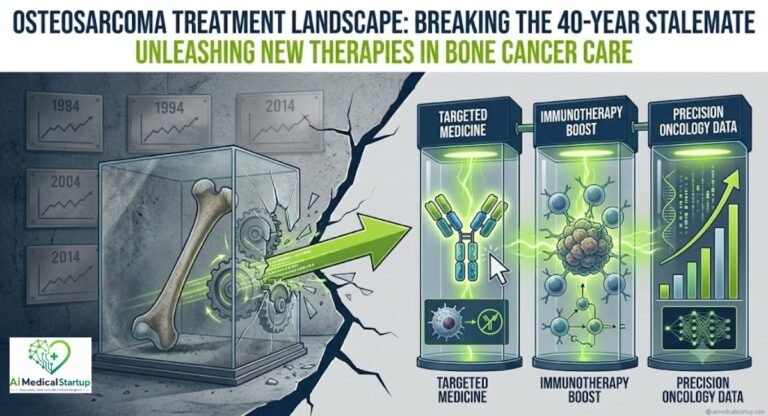
UTR Therapeutics secured FDA designations for UTRxMYCN M1-14, a novel RNA therapy targeting MYCN-driven sarcomas—addressing complex cancers that traditional medicines often miss.
Medtronic Expands Cardiac Mapping and Ablation
Medtronic gained FDA clearance and CE Mark for its Affera Prism-2 Mapping and PulseSelect ProxBox software, enhancing real-time, integrated cardiac mapping for complex arrhythmia treatments.
Abbott Expands Blood-Based Cancer Screening
Following July’s FDA approval, Abbott officially launched SimpleScreen CRC in the U.S. on September 30, expanding accessible, blood-based colorectal cancer screening for average-risk adults.
VEMERIX Brings Probe-Matched Ultrasound Guidance
VEMERIX unveiled its single-use Ultrasound Guidance Puncture Kit. Designed for probe-matched customization, it maintains perfect needle alignment within the imaging plane during critical procedures.
Avisi Reaches Two-Year VisiPlate Clinical Milestone
Avisi Technologies reached a two-year clinical milestone for VisiPlate, an investigational aqueous shunt for open-angle glaucoma. Long-term findings from the VITA study are set for the 2026 AAO annual meeting.
FIRE1 Starts NORM-HF With First Patient Implant
FIRE1 marked the first patient implant in its NORM-HF pivotal trial, testing whether continuous physiologic monitoring of the inferior vena cava enables earlier, proactive heart failure intervention.

What Happens After an FDA Designation?
Crucial Distinction: Designation does not equal regulatory approval. The FDA clarifies that orphan designation is separate from the approval process and still requires full scientific review. For UTRxMYCN M1-14, future milestones depend on upcoming clinical trial data and regulatory evaluations.
| FDA Term | What It Generally Means |
|---|---|
| Orphan Drug Designation | Incentive status for qualifying rare-disease drugs |
| Rare Pediatric Disease Designation | Designation that may support later voucher eligibility |
| FDA Clearance | Marketing pathway used for certain medical devices |
| FDA Approval | Formal authorization based on the applicable review standard |
Medtronic’s New Cardiac Mapping and Ablation Software
Cardiac ablation technology is shifting rapidly toward software-driven precision. On September 30, Medtronic earned U.S. FDA clearance and CE Mark for Affera Prism-2 Mapping Software, alongside a CE Mark for its PulseSelect ProxBox software. These tools enhance visualization, deliver real-time tissue feedback, and significantly reduce reliance on X-ray fluoroscopy during procedures.
Affera Prism-2 Mapping Software
Creates 3D electrical maps of the heart using magnetic and impedance tracking. Integrates Beat Matching and Pace Tagging to pinpoint arrhythmia circuits quickly while enabling low- or zero-fluoroscopy workflows.
PulseSelect ProxBox Adapter
Delivers real-time, impedance-based proximity feedback for pulsed field ablation systems. Gives electrophysiologists clear confirmation of catheter placement relative to target cardiac tissue prior to energy delivery.
Dual-Energy Ecosystem: Sphere-9 Catheter
Mapping provides the roadmap; ablation delivers the fix. The Sphere-9 platform unifies mapping and dual-energy therapy in one procedural ecosystem.
Pulsed Field Ablation
Uses electrical pulses to create irreversible electroporation in targeted myocardial cells with minimal thermal impact.
Radiofrequency Ablation
Employs thermal energy to isolate abnormal electrical pathways, offering a proven alternative based on biophysical needs.
What These Regulatory Milestones Mean
These latest FDA regulatory and CE Mark approvals reflect how software integration is transforming arrhythmia treatment, such as atrial fibrillation. Combining high-definition navigation with proximity feedback streamlines workflows and boosts clinical confidence.
Cardiac Ablation & Mapping Procedure Flow
An integrated step-by-step pathway illustrating how high-definition 3D mapping and real-time guidance lead directly to targeted therapeutic energy delivery.
3D Cardiac Mapping
Abnormal Signal Identification
Catheter Navigation
Tissue Targeting
Energy Delivery
Post-Ablation Confirmation

Abbott Launches SimpleScreen CRC Blood Test
A major milestone in noninvasive cancer screening: simple blood-based molecular diagnostics for average-risk adults aged 45+.
Freenome earns regulatory clearance for SimpleScreen CRC.
Abbott officially brings the blood test to eligible adult populations.
Validated in 48,000+ patient PREEMPT CRC clinical trial.
High specificity for advanced colorectal neoplasia detection.
Screening Modality Comparison
| Screening Approach | Sample Type | Primary Advantage | Follow-up Requirement |
|---|---|---|---|
| SimpleScreen CRC | Blood | Routine blood draw; higher patient compliance | Positive result requires diagnostic colonoscopy |
| Cologuard Plus | Stool | Noninvasive home-based collection | Positive result requires diagnostic colonoscopy |
| Colonoscopy | Direct Visualization | Gold standard; direct removal of precancerous lesions | Invasive procedure with sedation requirements |
Expanding Screening Reach
Blood draw convenience removes friction for up to 60 million Americans currently overdue for recommended colorectal cancer screening.
Crucial Diagnostic Next Steps
A positive blood test signals the need for further testing; it must always be followed by a diagnostic colonoscopy to confirm outcomes.
Global Adoption Pathway
US commercial launch does not equal instant global availability. For instance, UK NHS screening relies primarily on FIT stool tests.
Clinical Workflow & Product Configurations
Precision image-guided puncture integration for existing ultrasound systems.
1. In-Plane Procedural Workflow
-
1
Ultrasound Probe
Standard probe selected
-
2
Puncture Kit
Secures needle + probe
-
3
In-Plane Visualization
Full length needle tracking
-
4
Controlled Advancement
Predictable trajectory path
-
5
Guided Puncture
Targeted clinical execution
2. Product Configurations
Needle-Guide Bracket
Dedicated probe attachment interface
Standard Configuration
Versatile general procedure setup
Extended Configuration
Adaptable for complex angles
Procedure Kit
Complete sterile procedural bundle
Avisi Technologies and the Latest VisiPlate Clinical Data
Glaucoma treatment often becomes a balancing act between lowering intraocular pressure and maintaining durable drainage. VisiPlate takes a novel engineering route with an ultrathin multichannel design.
Open-angle glaucoma, no prior filtration surgery
Tracks long-term drainage, fibrosis & healing
Presentation milestone for clinical data
Clinical Data & Study Progression
Avisi’s VITA study enrolled 15 people with open-angle glaucoma and no previous filtration surgery, while later development moved toward a U.S. pivotal study.
The immediate clinical data milestone is the completion of two-year follow-up. Avisi plans to present those findings at the 2026 American Academy of Ophthalmology meeting.
What to Watch at the AAO Meeting
The 2026 AAO meeting provides an important window into the next stage of ophthalmology technology. Avisi says Dr. Jonathan S. Myers will present the two-year VITA data, with additional sessions covering VisiPlate design and surgical experience.
Such presentations can shape specialist discussion before broader regulatory or commercial decisions.
- Featured Speaker: Dr. Jonathan S. Myers
- Session Focus: Two-year VITA data, VisiPlate design, surgical experience
- Industry Role: Shapes specialist discussion ahead of regulatory and commercial decisions
FIRE1 Begins NORM-HF Pivotal Trial With First Patient Implant
Shifting heart failure management from reactive hospitalization to proactive, daily physiologic monitoring of inferior vena cava (IVC) congestion.
Estimated Patients
Investigational Tech
Clinical Trial ID
The NORM-HF Pivotal Trial
The NORM-HF study is an international, randomized trial evaluating whether early IVC congestion detection can enable physician-guided intervention before symptoms escalate.
It compares NORM-guided care directly against standard management in NYHA Class II & III heart failure patients, measuring worsening HF events and cardiovascular mortality.
How the NORM System Works
Combines continuous digital monitoring with clinical oversight to extend care beyond hospital walls:
- 1 Implanted IVC Sensor: Collects internal vascular physiology readings.
- 2 Wearable Belt & App: Transmits daily measurements automatically.
- 3 Congestion Assessment: Generates early alerts for targeted clinical intervention.
MedTech News FAQ
The current MedTech news landscape can look like alphabet soup. FDA, CE Mark, IDE, PMA, and 510(k) all describe different regulatory concepts. Understanding those labels helps you separate genuine market milestones from early development announcements, preventing common misconceptions about clinical effectiveness.
An investigational device can be innovative without being ready for routine care. Good healthcare innovation reporting keeps those boundaries visible instead of blurring them.
MedTech news covers developments involving medical devices, diagnostics, clinical software, monitoring systems, procedural tools and related technologies. The field overlaps with digital health but is broader. It can include an implantable sensor, a cancer test, medical device technology or software embedded inside a treatment platform.
This year’s developments point toward several key themes: RNA-based therapies pushing molecular targeting, cardiac platforms combining software with advanced ablation, digital health connecting devices to remote monitoring, less burdensome diagnostic testing, and surgical platforms chasing greater precision and workflow efficiency.
The distinction is fundamental. FDA clearance commonly refers to a device receiving clearance through the 510(k) pathway based on substantial equivalence to an existing device. FDA approval applies to PMA (Premarket Approval) review for certain high-risk devices. The FDA also uses De Novo classification for novel low-to-moderate-risk devices.
An FDA designation identifies a qualifying drug as intended for a rare disease or condition and may unlock development incentives. These include tax credits, user-fee exemptions, and potential seven-year market exclusivity after approval. Designation remains strictly separate from the later drug approval process.
A CE Mark indicates that applicable European conformity requirements have been addressed for the product and its intended use. Under the EU Medical Device Regulation (MDR), manufacturers may need notified-body involvement depending on risk classification, while the EU continuously updates EUDAMED and regulatory infrastructure.
Clinical trials answer critical questions that laboratory testing cannot settle. Researchers examine safety, usability, effectiveness and longer-term outcomes in defined populations. For investigational medical devices, these results determine whether a concept survives the transition from prototype to routine clinical practice.
Absolutely not. Company announcements may describe prototypes, trial milestones, market launches, or regulatory decisions. Medical device commercialization depends heavily on regional authorizations, manufacturing scale, reimbursement coverage, and local health rules.
Look beyond headlines. Company announcements are useful starting points, but official regulatory databases and trial registries provide deeper context. Always compare clinical data directly against actual regulatory status when evaluating next-generation medical technology.



Dr. Kanza Sarfraz, M.B.B.S., is a medical doctor and graduate of Allama Iqbal Medical College, Lahore. She brings nearly seven years of clinical experience across tertiary-care hospitals, medical headquarters, and healthcare facilities in both the public and private sectors. Her clinical experience provides a practical perspective on healthcare delivery, emerging medical technologies, and the evolving role of artificial intelligence in medicine.