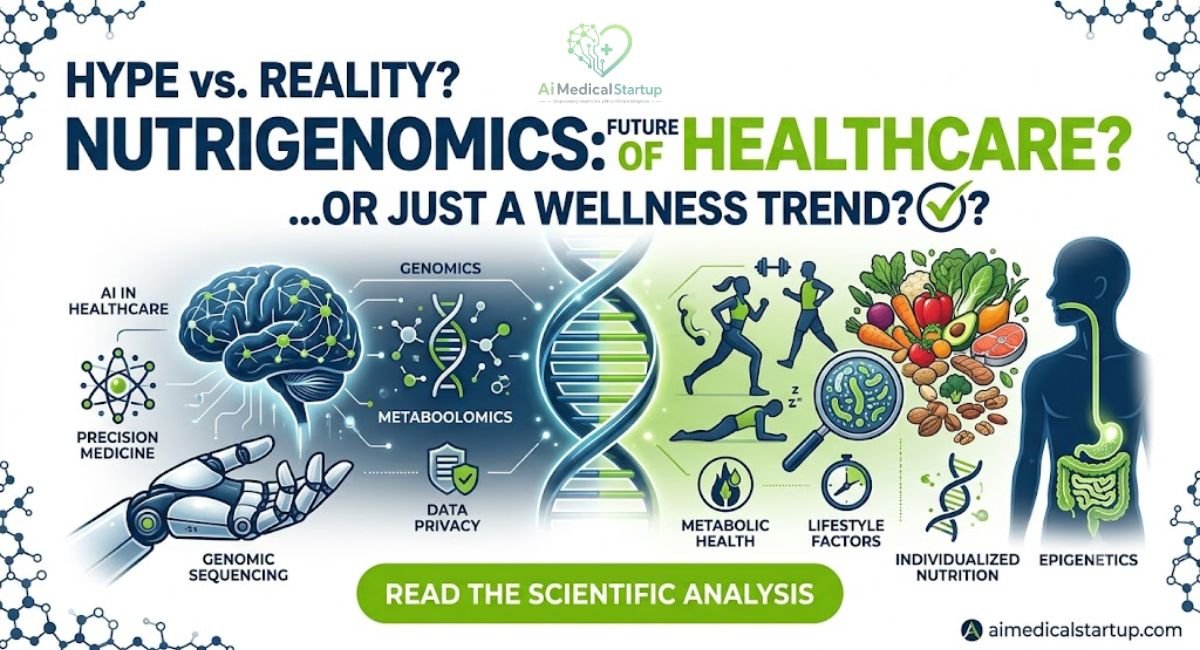
Nutrigenomics

Is Nutrigenomics the Future of Healthcare or Just a Wellness Trend?
Imagine following a healthy diet but getting different results from someone eating the same foods. Your genes, lifestyle and gut microbiome may help explain why. Nutrigenomics explores how food influences gene expression and how these biological changes may affect your health. It offers exciting possibilities for personalized nutrition, supported by advancements in AI in healthcare, yet many commercial genetic testing claims still need stronger scientific evidence.
From weight management to cardiovascular disease prevention, researchers are investigating how precision nutrition could improve dietary advice. However, a DNA test cannot reveal your perfect diet with certainty. Understanding the science helps you separate genuine medical progress from wellness marketing.
Genomic Sequencing & Precision Health
Integrating multi-omics data and machine learning algorithms to deliver tailored dietary interventions.
What is Nutrigenomics?
Nutrigenomics studies how nutrients, dietary patterns and bioactive compounds influence gene expression, cellular activity and metabolism. Your genome contains your genetic instructions, while gene expression determines how cells use particular instructions to produce proteins. Diet can influence these processes without changing your underlying DNA sequence. For example, compounds in vegetables may affect molecular pathways involved in inflammation and cellular protection.
This field belongs to nutritional genomics, a broader area connecting genetics with food and health. Researchers examine gene–diet interactions to understand why people respond differently to similar meals. However, genes are only part of the picture. Age, sleep, physical activity, medication and the wider food environment also influence health. Nutrigenomics therefore supports scientific investigation rather than offering a guaranteed prescription for every individual. You can learn more about how modern technologies integrate with health data through our guide on AI wearables blood tests health data.
Role of Nutrigenomics in Personalized and Precision Nutrition
Personalized nutrition adapts dietary guidance to your health history, preferences and goals, while precision nutrition combines these details with biological measurements such as genetic variants, blood biomarkers and gut microbiome profiles. This approach may help explain differences in glucose transport or cholesterol levels. However, individualized nutrition works best when genetic findings complement established clinical advice. Researchers continue to investigate whether these genetic-based dietary recommendations consistently improve health outcomes. To see how these advanced insights apply in clinical practice, explore our resource on AI based diabetes management.
Nutrigenomics vs. Nutrigenetics vs. Conventional Nutrition
Although these terms overlap, they describe different approaches. Nutrigenomics examines how diet affects gene activity, whereas nutrigenetics studies how inherited variations influence responses to food. Conventional nutrition relies on population research, dietary trials and established nutritional requirements. For example, a gene variant may influence caffeine metabolism, but that finding does not automatically determine your entire diet. The clinical utility of each approach depends on the quality of supporting clinical validation.
| Approach | Main Focus | Typical Application |
|---|---|---|
| Nutrigenomics | Diet and gene activity | Studying biological responses to nutrients |
| Nutrigenetics | Genetic variations and food responses | Investigating selected inherited traits |
| Conventional nutrition | Dietary needs across populations | Evidence-based dietary guidance |
From Waistlines to Gut Health: Clinical Applications of Nutrigenomics
Nutrition-related chronic diseases rarely develop from one cause alone. Nutrigenomics investigates how genetic predisposition interacts with dietary patterns and other environmental factors or lifestyle factors. This research may eventually refine obesity management, type 2 diabetes prevention and cardiovascular disease prevention. Yet the strength of evidence varies by condition. Some genetic findings already support specific clinical decisions, while broader personalized diet plans still require more rigorous testing.
The goal is not to replace sound nutrition advice with complicated genetic reports. Instead, researchers want to identify when biological information can improve existing dietary interventions. For example, a clinician might combine clinical history, blood biomarkers and dietary habits before considering genetic information. This integrated approach supports metabolic health while reducing the risk of unnecessary personalized supplementation or restrictive diets.
Obesity Management
Why do some people lose weight easily while others struggle despite similar efforts? Variants in the FTO GENE and MC4R GENE have been associated with appetite regulation and body weight. You can calculate your baseline metabolic rate using our BMR calculator to better understand your daily caloric expenditure. However, these variants do not dictate your future. Research into genotype-matched diets has produced mixed findings. Effective obesity management still depends on sustainable eating habits, physical activity, sleep and the wider environment, alongside appropriate clinical support.
Type 2 Diabetes
Your body may respond differently to the same meal than another person’s body. Researchers studying postprandial glucose have documented substantial individual variation in blood glucose response. Genetic differences affecting insulin secretion and glucose transport may contribute to these patterns. For precise meal planning, explore our diabetes meal carb calculator or assess long-term glycemic trends with our AI powered A1C eAG trend calculator. Combining genetic information with continuous glucose monitoring could help researchers refine dietary strategies. However, glucose readings and DNA results alone cannot diagnose diabetes or replace established preventive healthcare.
Cardiovascular Disease
Heart health depends on several interconnected factors, including diet, genetics and lifestyle. Variants in the APOE GENE can influence lipid metabolism and may affect responses to saturated fat or omega-3 fatty acids. Variants in the MTHFR GENE can also influence folate metabolism, folate processing and homocysteine levels. You can monitor cardiovascular metrics using our blood pressure reading calculator & monitor log tool. However, these findings do not independently determine cardiovascular risk. Blood pressure, cholesterol levels, family history and established clinical assessments remain central to cardiovascular disease prevention.
Gastrointestinal Health
Your digestive system brings together food, genes and the gut microbiome. Variants near the LCT GENE influence lactase persistence and can help explain certain cases of lactose intolerance. Particular HLA GENOTYPES are associated with celiac disease susceptibility, although genetic testing alone cannot confirm the diagnosis. Researchers are also exploring irritable bowel syndrome (IBS) and inflammatory bowel disease (IBD). If you are managing inflammatory gastrointestinal conditions, review our guide on ulcerative colitis treatment. Microbiome profiling and microbial RNA testing remain evolving fields with important limitations in clinical interpretation.
Micronutrient Deficiencies
Genetic differences can influence how your body processes or transports certain nutrients. Variants affecting the MTHFR GENE may alter folate processing, while other pathways influence vitamin D, vitamin B12 absorption and the conversion of beta-carotene into vitamin A. These findings may help guide selected investigations. However, clinical records, blood biomarkers and clinical assessment remain essential for identifying many micronutrient deficiencies. Genetic results should complement laboratory evidence rather than replace it.
The Tech Stack Behind Personalized Eating: Technologies Driving Nutrigenomics
Behind modern AI-powered nutrition lies a growing collection of biological and digital technologies. Genomic sequencing, high-throughput genotyping and next-generation sequencing (NGS) help researchers examine genetic variations, including single nucleotide polymorphisms (SNPs). Meanwhile, bioinformatics, bioinformatics software and machine learning in nutrition can analyze genomic databases to identify predictive models. You can learn more about how intelligent algorithms drive digital health in our overview of AI platforms in healthcare. These tools may improve dietary research, but an association between a gene and a health outcome does not automatically establish a useful treatment.
Researchers also use metabolomics to measure small molecules linked to metabolic activity and metagenomic sequencing to investigate gut microbial communities. RNA sequencing and epigenetic marks provide further information about gene expression and regulation. Combined with wearable health technology, wearable devices, continuous glucose monitors and digital nutrition platforms or dietary tracking applications, these tools can capture multi-omics data and longitudinal data over time. However, useful results depend on reliable measurements, sound machine learning algorithms, representative research populations and strong clinical validation.
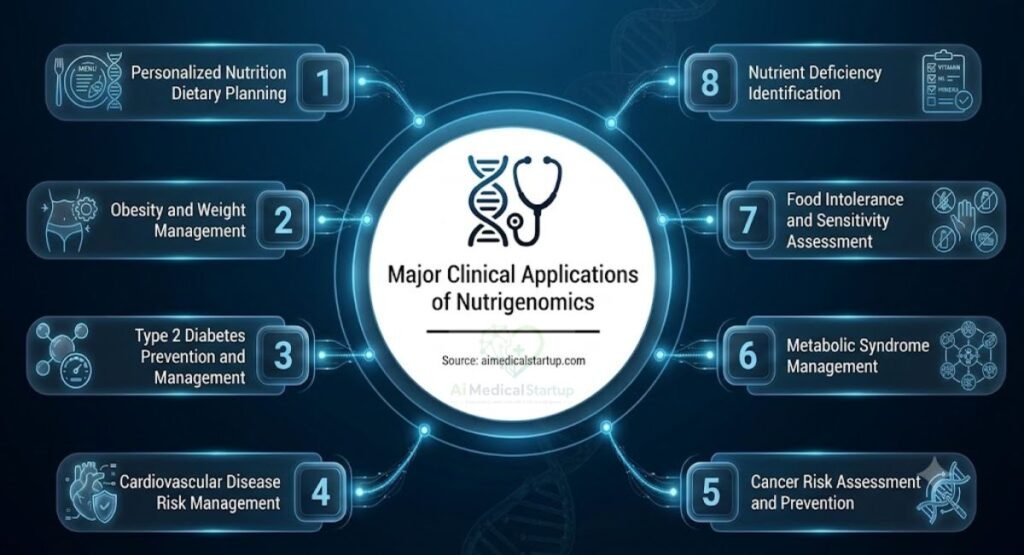
Hype vs. Reality: Challenges and Limitations Holding Nutrigenomics Back
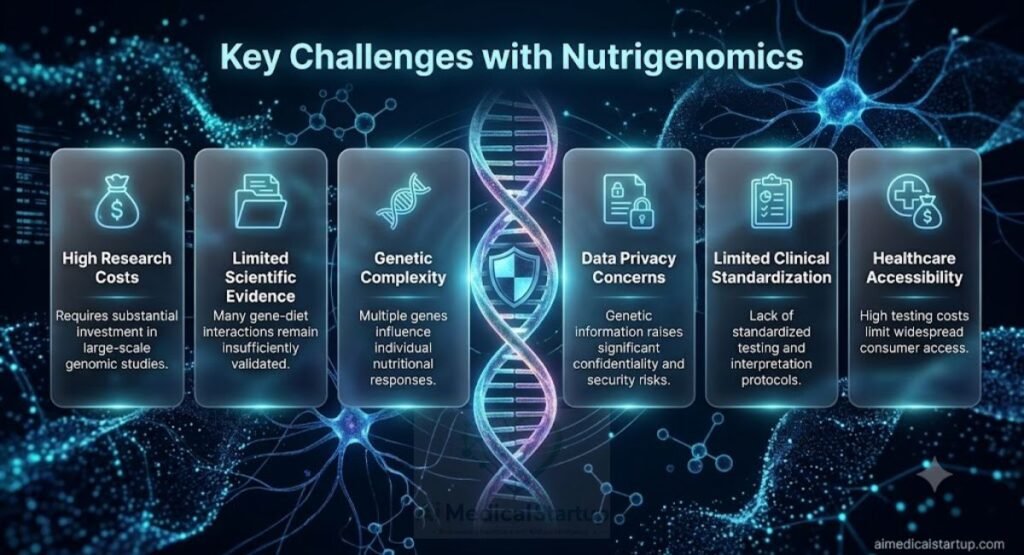
The biggest challenge is proving that genetic insights improve health beyond standard nutritional care. A randomized controlled trial can test whether tailored advice produces better results than conventional guidance. Yet findings remain mixed, and many gene variants have small effects on complex conditions. The Academy of Nutrition and Dietetics consensus report to determine whether adding genetic testing to nutrition care improves outcomes. This highlights the need for stronger evidence-based recommendations. If you want to understand how regulatory frameworks evaluate emerging technologies, read our guide on rules for healthcare AI.
Privacy and fairness matter just as much as scientific accuracy. Genetic data privacy requires clear informed consent, secure storage and transparent rules for sharing sensitive information. Limited genetic ancestry representation in research can also create algorithmic bias and worsen existing health disparities. In the USA, UK and EU, consumers should check how providers use their data and whether qualified professionals can explain the results. Registered dietitians and genetic counselors can help interpret findings without exaggerating their meaning. For professional guidance, you can also consult with our doctors for healthcare advice or contact us directly.
Mainstream Medicine or Niche Luxury? The Future Outlook for Nutrigenomics
The future of personalized nutrition will likely depend on combining genetics with clinical history, blood biomarkers, dietary tracking applications and lifestyle factors. Falling DNA sequencing costs, improved multi-omics integration and better predictive models may strengthen precision healthcare. However, the nutrigenomics market could grow faster than the evidence supporting every product. In the USA, UK and EU, wider adoption will depend on clinical utility, affordability, appropriate oversight and measurable benefits. Nutrigenomics may become a valuable tool in personalized preventive medicine, but it is unlikely to replace sound nutrition fundamentals. To explore broader innovations in the field, check out our overview on healthcare tech.
FAQs about Nutrigenomics
What is nutrigenomics in simple terms?
It studies how food influences gene activity and gene expression, and how these changes may affect overall health.
Can DNA testing for nutrition tell you exactly what to eat?
No. Genetic testing kits and commercial genetic testing can identify selected gene variants, but they cannot reliably predict every nutritional requirement or determine your perfect diet with certainty.
Can nutrigenomics help with obesity management or type 2 diabetes prevention?
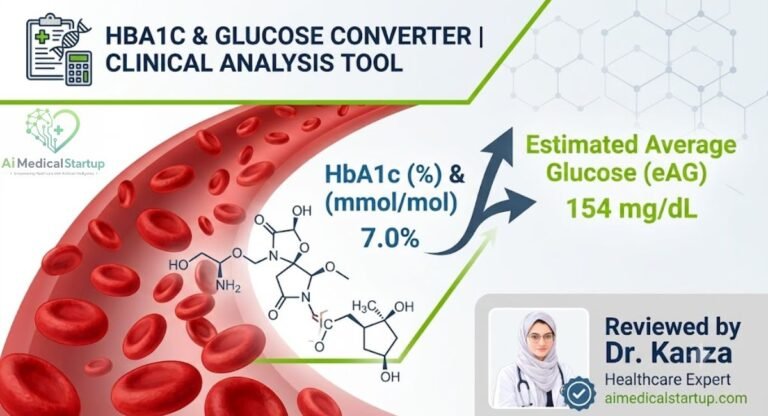
It may help refine selected dietary interventions, although benefits vary and clinical validation remains incomplete. You can also explore tools like our THR calculator and HbA1c glucose converter to support broader health management.
Are commercial nutrigenomics testing kits worth the cost?
Their value depends on the test’s accuracy, the evidence-based nutrition research behind its recommendations, and whether the results change clinical decisions or dietary adherence.
How much does nutrigenomics testing cost?
DNA sequencing costs vary across providers and countries, so compare services and look for clear clinical utility before buying.
Is genetic testing private?
Genetic data privacy protections depend on the provider and applicable legal frameworks. Review informed consent terms carefully, particularly for direct-to-consumer genetic testing. For personal dietary decisions, consult a qualified healthcare professional or our registered dietitian rather than relying on a genetic report alone.
Key Takeaway
Nutrigenomics offers a promising way to understand why people respond differently to food. However, nutrition science has not yet established that genetic risk assessment can identify the perfect diet for everyone. Its greatest value may come from combining genetic insights with clinical nutrition, blood biomarkers and sustainable lifestyle factors. Before investing in testing or personalized supplementation, look for transparent evidence, appropriate clinical guidance and clear genetic data privacy protections.
References
For readers who want to explore the scientific evidence in more detail, these publications provide useful starting points:
- The Academy of Nutrition and Dietetics consensus report on genetic testing in nutrition care examines the limitations of current evidence.
- A 2026 review of randomized controlled trials on personalized nutrition explores potential benefits and research gaps discusses remaining research gaps.
- The review of nutrigenomics-guided lifestyle interventions discusses limitations of existing studies highlights clinical evaluation challenges.
Medical Note: This article is for educational purposes and does not replace individual medical advice, diagnosis, or treatment. For personalized medical evaluation, please request a consultation with our healthcare experts.


Registered & Licensed Dietitian Nutritionist AHPC | Public Health Nutrition • Gut Care & Fitness | Member: PNDS, SIGNS International, The Nutrition Society (UK), PEN®