Vascular Dementia Treatment

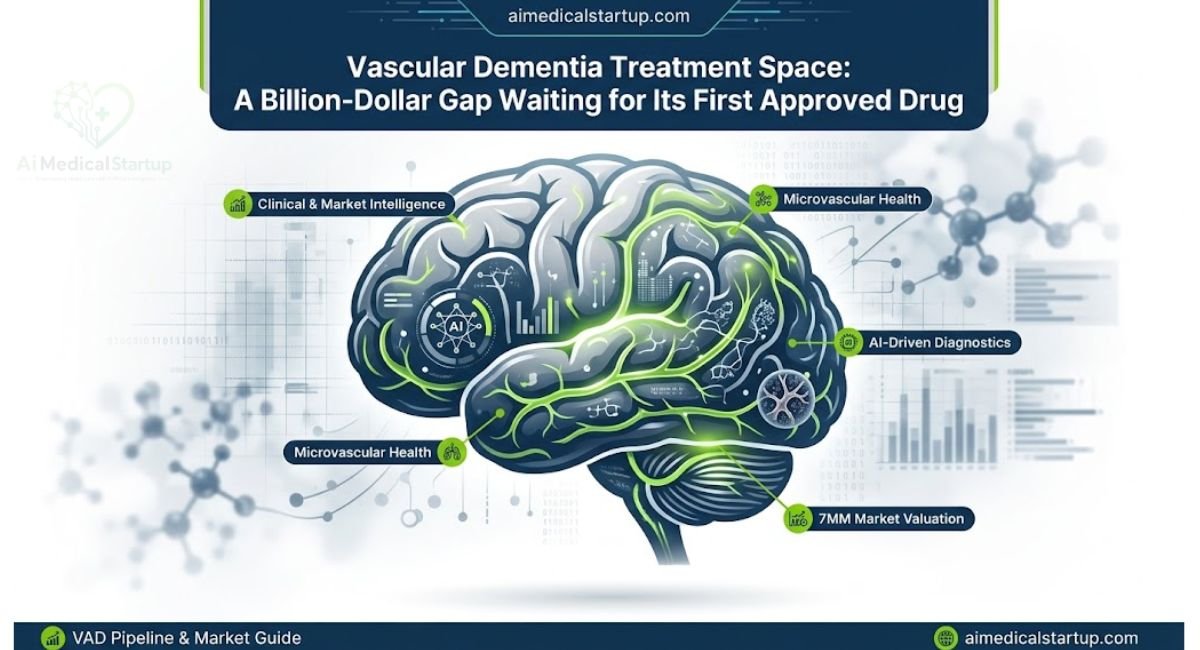
Vascular Dementia Treatment Space: A Billion-Dollar Gap Waiting for Its First Approved Drug
You might be surprised to learn that vascular dementia stands as the second most common form of dementia worldwide, right behind Alzheimer’s disease. Despite this immense prevalence, no regulatory body has ever approved a targeted drug specifically for it.
The condition strikes when compromised blood flow starves delicate brain tissues of crucial oxygen and nutrients. Across the 7MM (7 Major Markets), diagnosed prevalent cases reached nearly 3 million in 2025 and continue climbing steadily. Utilizing advanced AI in healthcare models allows researchers to analyze these epidemiological shifts with unprecedented precision.
Progressive white matter degradation and impaired blood–brain barrier integrity drive this cognitive decline. Patients frequently experience severe executive dysfunction, sudden apathy and depression, along with motor deficits like unstable gait.
A Silent Epidemic: The Heavy Human Toll of Vascular Dementia
Living with this disease creates a staggering emotional and financial strain on families and healthcare systems across North America and Europe. Because symptoms often manifest as a stepwise cognitive decline following discrete cerebrovascular events, timing becomes unpredictable. Primary care physicians routinely struggle to diagnose the condition early. Uncontrolled cerebrovascular risk factors like long-standing hypertension, diabetes, and high cholesterol silently damage subcortical vessels over many years. Without validated blood biomarkers, doctors often mistake early stages for normal aging or pure Alzheimer’s disease. This frequent misdiagnosis delays critical preventative care and leaves caregivers navigating intense behavioral changes without clear medical guidance.
Market Overview & Clinical Indicators
| Key Market Indicator | Estimated Metric Value | Clinical & Commercial Impact |
|---|---|---|
| 7MM Diagnosed Prevalence | 3.0 Million Cases (2025) | Growing population requiring long-term care management. |
| Post-Stroke Dementia Rate | ~30% in Stroke Survivors | High conversion rate highlights urgent need for early interventions. |
| Approved Specific Drugs | 0 FDA / EMA Approved | Creates a multi-billion dollar unmet medical need globally. |
| 7MM Market Valuation | $1.3 Billion (2025 Projection) | Market expansion driven by diagnostic tools and pipeline therapies. |
Growing population requiring long-term care management.
High conversion rate highlights urgent need for early interventions.
Creates a multi-billion dollar unmet medical need globally.
Market expansion driven by diagnostic tools and pipeline therapies.
Treating the Vessels, Not the Disease: Where Today’s Care Falls Short
Current standard care focuses entirely on managing systemic cardiovascular risks rather than repairing damaged neurological pathways. Doctors routinely implement aggressive blood pressure control, prescribe statins to lower lipids, and deploy antiplatelet (Aspirin, Clopidogrel, Cilostazol) or anticoagulants (Warfarin, DOACs) for secondary stroke prevention. While these measures help prevent new strokes, they do not reverse existing subcortical brain damage or halt neurodegeneration. Utilizing advanced AI in healthcare insights, clinicians strive to move beyond off-label pharmacological management to target underlying pathology.
Current Treatment Modalities for Vascular Dementia
An interactive guide categorizing frontline microvascular interventions and off-label neuro-symptomatic therapies.
Treatment Distribution Chart for Vascular Dementia
A comparative breakdown showing real-world adoption rates between First-Line Cardiovascular Risk Management strategies and Off-Label Symptomatic Therapies.
Prescribing habits vary significantly between regions. Physicians in the United States and continental Europe often prescribe symptomatic Alzheimer’s medications like cholinesterase inhibitors (Donepezil, Galantamine, Rivastigmine) and the N-methyl-D-aspartate (NMDA) receptor antagonist known as memantine. Conversely, official NICE guidelines in the United Kingdom restrict these drugs unless a patient receives a formal mixed dementia diagnosis. Meanwhile, natural remedies like Ginkgo biloba represent a large market share in countries like Germany. Modern disease-modifying anti-amyloid antibodies remain unapproved for pure vascular pathology, highlighting the total lack of true disease-specific therapeutic options. Addressing these clinical variations explains Why Clinicians Resist Healthcare AI adoption when diagnostic criteria lack global consensus.
Beyond Off-Label: The Pipeline Rewriting the Vascular Dementia Playbook
Biopharmaceutical companies are shifting away from traditional amyloid-focused strategies. Modern clinical research targets underlying mechanisms like microvascular inflammation, endothelial dysfunction, epigenetic modification, and metabolic disruption. Novel drug candidates aim to preserve vascular structure and protect delicate neural networks. Advanced clinical programs exploring vascular modulation and cardiometabolic pathways give clinicians hope for genuine disease-modifying choices. Accelerating these breakthroughs relies on advanced AI in Drug Discovery platform modeling.
Key Emerging Drug Candidates in Clinical Development
| Drug Candidate | Sponsor / Developer | Target Mechanism of Action | Clinical Trial Status |
|---|---|---|---|
| Apabetalone (Resverlogix) | Resverlogix Corp | BET protein inhibitor / Epigenetic modulation | Post-Phase III secondary cognitive analysis |
| BAC (Charsire Biotechnology) | Charsire Biotechnology | Multi-Glycan Complex / Anti-inflammatory dermal | Completed Phase II trial |
| PNA1 / PNA5 (ProNeurogen) | ProNeurogen Inc | Angiotensin–Mas receptor pathway activation | Early-stage clinical development |
| Rifaximin SSD (Bausch Health) | Bausch Health | Microbiome alteration via gut–brain axis | Active Phase Ib/IIa and Phase I/II RIDE trial |
BET protein inhibitor / Epigenetic modulation
Multi-Glycan Complex / Anti-inflammatory dermal
Angiotensin–Mas receptor pathway activation
Microbiome alteration via gut–brain axis
Other early-stage therapeutic programs continue to expand this pipeline. Novel approaches include ACP-01 (Hemostemix), an autologous angiogenic cell therapy, and SNP318 (SciNeuro), an oral Lp-PLA2 inhibitor designed to reduce vascular wall inflammation. Furthermore, research into gut health shows that modulating short-chain fatty acids (SCFAs) can reduce systemic inflammation and support cerebral vessel health. The clinical shift toward targeting systemic vascular health marks an exciting new era for neurological research.
Resverlogix’s Apabetalone
Apabetalone (Resverlogix) is a novel oral small molecule that functions as a selective BET protein inhibitor to regulate gene expression linked to cardiovascular inflammation. During the major BETonMACE Phase III clinical study involving high-risk diabetic patients, secondary cognitive tests showed significant improvements in mental processing speed. The drug holds FDA Breakthrough Therapy designation for cardiovascular indications, making it a promising candidate for dedicated late-stage clinical trials targeting subcortical vascular cognitive decline.
Charsire Biotechnology’s BAC
Developed by Taiwanese firm Charsire Biotechnology, BAC (Charsire Biotechnology) is a topical formulation containing a patented botanical Multi-Glycan Complex derived from soybean extract. Designed for twice-daily application to the skin of the neck, scalp, and nose, the compound aims to promote microvascular repair and calm localized neuroinflammation. Although a randomized Phase II trial demonstrated an excellent safety profile without severe adverse events, it struggled to show statistically significant improvements in primary cognitive endpoints.
What’s Next for Vascular Dementia Treatment?
The global market for vascular dementia care represents a multi-billion dollar unmet medical need. According to market projections, the commercial market across major territories will expand at a steady Compound Annual Growth Rate (CAGR) over the coming decade. Growth will be driven by improved diagnostic technologies, earlier screening in primary care, and the arrival of disease-modifying therapies. The United States remains the largest market driver, while European and Asian health systems adapt to rapidly aging demographics. Utilizing advanced AI in healthcare platforms helps institutions model these long-term epidemiological curves with high precision.
To succeed in this evolving space, emerging candidates must pass rigorous Phase I / Phase II / Phase III clinical trials and demonstrate tangible real-world benefits. Regulatory agencies like the FDA / EMA / MHRA / PMDA demand clear evidence of improved daily functioning alongside cognitive safety. The first biopharmaceutical enterprise to secure formal guideline inclusion and reimbursement for a dedicated vascular dementia therapy will gain a massive competitive advantage while transforming patient care globally.
Final Takeaway
Addressing the expanding vascular dementia treatment market requires moving beyond off-label symptom management toward true disease-modifying therapies. As novel candidates targeting epigenetic control, vascular inflammation, and metabolic health progress through clinical trials, biopharmaceutical innovators have a unique opportunity to close this long-standing healthcare gap. Delivering targeted treatments will relieve immense pressure on families, healthcare systems, and caregivers worldwide.
FAQs about Vascular Dementia Treatment
Explore expert answers regarding vascular dementia treatment challenges, off-label medications, and emerging clinical trial pipelines. Click on any question below to expand detailed clinical insights.
Vascular dementia stems from diverse vascular lesions ranging from large cerebral strokes to microscopic small vessel disease. This structural variation makes standardizing clinical trial endpoints difficult compared to classic amyloid-focused studies.
Off-label options like donepezil or memantine temporarily boost neurotransmitter activity in surviving neurons. They offer modest, short-term symptomatic relief for memory and attention without repairing damaged blood vessels or stopping underlying neurodegeneration.
Advanced AI for doctors platforms assist clinicians by analyzing complex neuroimaging data, detecting subtle white matter degradation, and predicting disease progression across the 7MM (7 Major Markets).
Emerging therapies focus on BET protein inhibitors like apabetalone, multi-glycan dermal complexes, and microbiome modulators targeting the gut–brain axis to reduce vascular inflammation. Integrating these approaches with modern AI in healthcare workflows enhances patient stratification.
References & Clinical Sources
To maintain absolute clinical integrity and ensure compliance with evidence-based medical literature, this guide relies on data compiled from official global health organizations, registered clinical trials, and national healthcare evaluation bodies.
-
01
World Health Organization (WHO). World Health Organization Global Status Report on the public health response to dementia.
-
02
Resverlogix Corp. BETonMACE Clinical Trial NCT02586155 Outcomes and Cognitive Sub-Analysis.
-
03
Charsire Biotechnology Corp. Charsire Phase II Study NCT02886494 Efficacy and Dermal Safety Study of BAC.
-
04
National Institute for Health and Care Excellence (NICE). NICE Dementia Assessment & Management Guidelines: assessment, management and support for people living with dementia.


Dr. Kanza Sarfraz, M.B.B.S., is a medical doctor and graduate of Allama Iqbal Medical College, Lahore. She brings nearly seven years of clinical experience across tertiary-care hospitals, medical headquarters, and healthcare facilities in both the public and private sectors. Her clinical experience provides a practical perspective on healthcare delivery, emerging medical technologies, and the evolving role of artificial intelligence in medicine.