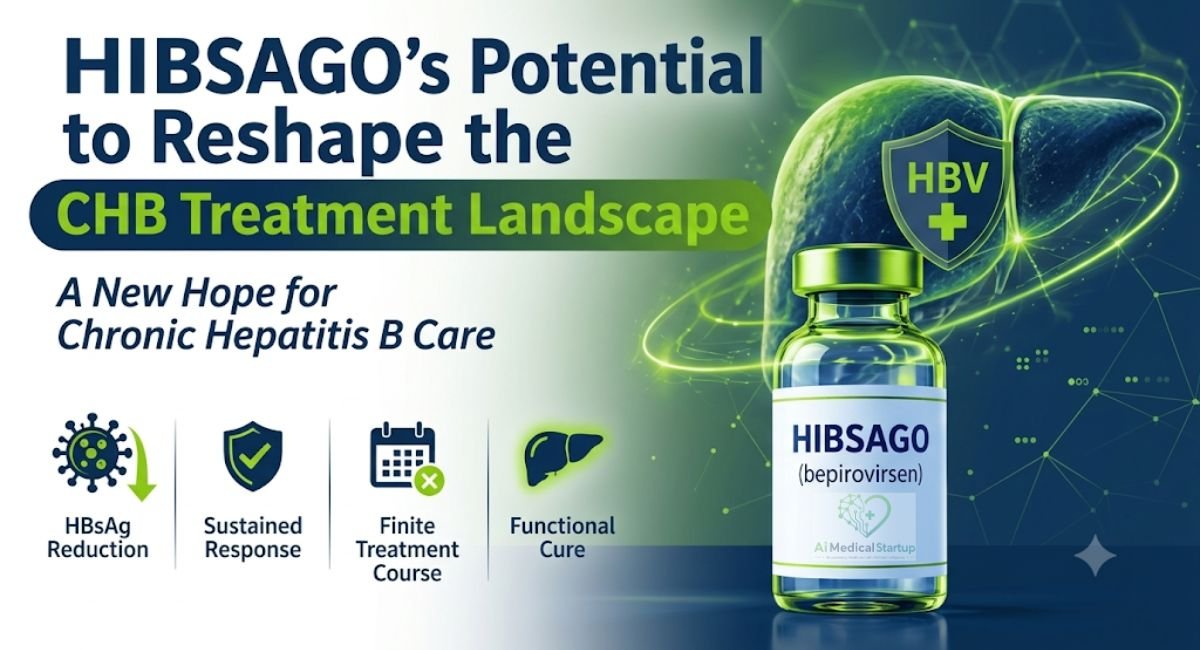
HIBSAGO FDA Approval: New Hope for Chronic Hepatitis B Cure

HIBSAGO’s Potential to Reshape the CHB Treatment Landscape
How GSK and Ionis Pharmaceuticals’ first FDA-approved antisense treatment could change chronic hepatitis B care and accelerate the search for a functional cure.
Chronic hepatitis B remains a major global health challenge despite decades of antiviral development. The World Health Organization estimates that 254 million people were living with hepatitis B in 2022. Although medicines can suppress viral replication, many patients still require long-term treatment to prevent liver damage and serious complications.
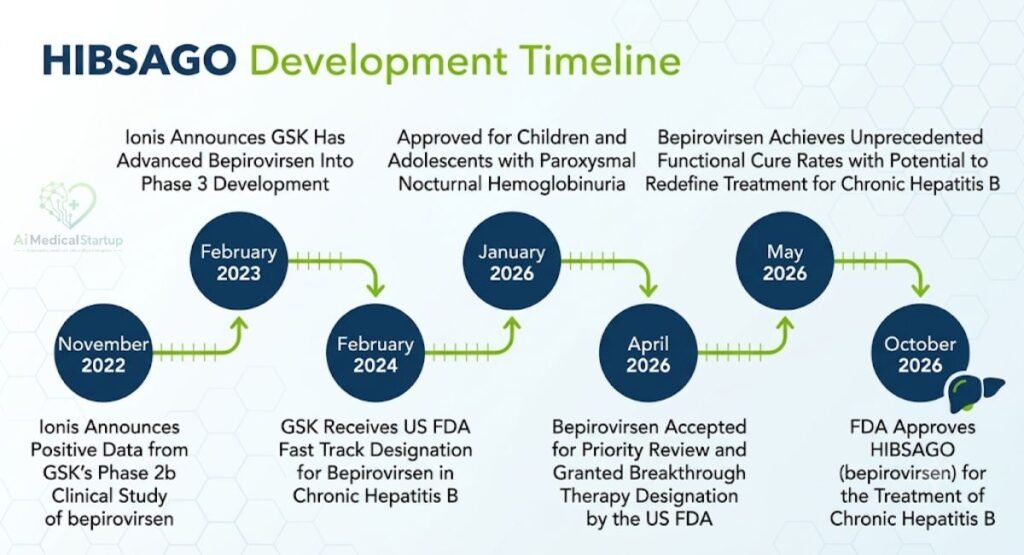
However, a new development could change this picture. On October 20, 2026, the US Food and Drug Administration (FDA) approved HIBSAGO (bepirovirsen), the first approved antisense oligonucleotide for chronic hepatitis B. Developed through collaboration between GSK and Ionis Pharmaceuticals, this treatment offers selected adults a possibility of achieving a functional cure after a finite treatment course.
The approval represents an important change in the chronic hepatitis B treatment landscape. Instead of focusing exclusively on lifelong viral suppression, researchers can now pursue sustained responses after treatment stops. Nevertheless, HIBSAGO has eligibility restrictions and safety considerations. Its approval also raises an important question: could this treatment open the door to more effective hepatitis B functional-cure therapies?
GSK/Ionis’ HIBSAGO: How the First FDA-Approved Antisense Drug for Chronic Hepatitis B Could Change the Treatment Arena
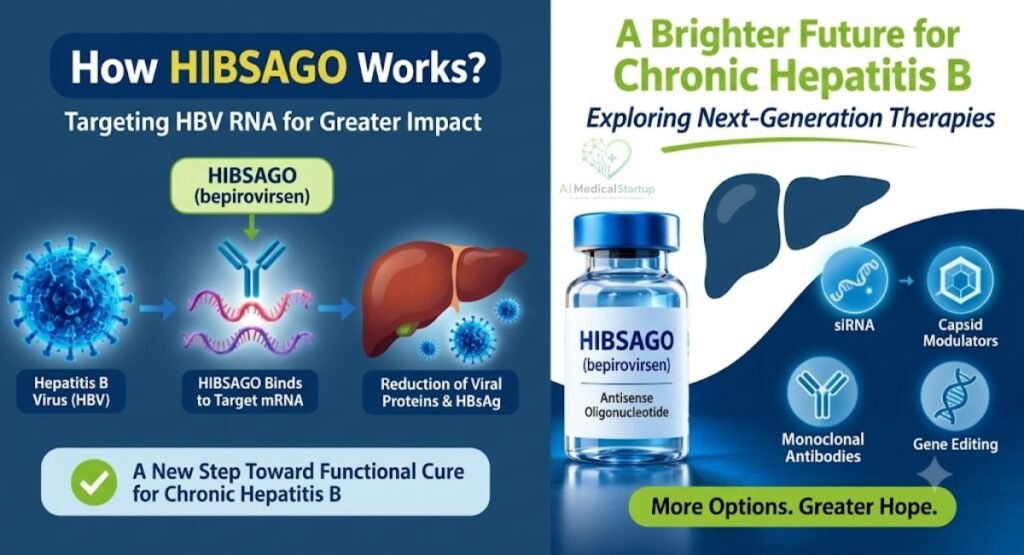
For decades, GSK and Ionis Pharmaceuticals have explored ways to target disease-related genetic instructions using antisense technology. Their collaboration brought Bepirovirsen, marketed as HIBSAGO, into clinical development. The treatment uses an antisense oligonucleotide (ASO) that targets HBV messenger RNA (mRNA). By reducing viral transcripts, it lowers the production of important viral proteins, including Hepatitis B surface antigen (HBsAg).
Unlike conventional antivirals, which mainly inhibit the viral polymerase, HIBSAGO acts further upstream. It interferes with the genetic messages that help Hepatitis B virus (HBV) produce viral components. The FDA granted its approval on October 20, 2026, for a restricted group of adults without cirrhosis. The treatment lasts up to 24 weeks and must accompany existing nucleos(t)ide analogue therapy. Its US approval is established, while the EMA accepted its marketing application for review on March 27, 2026.
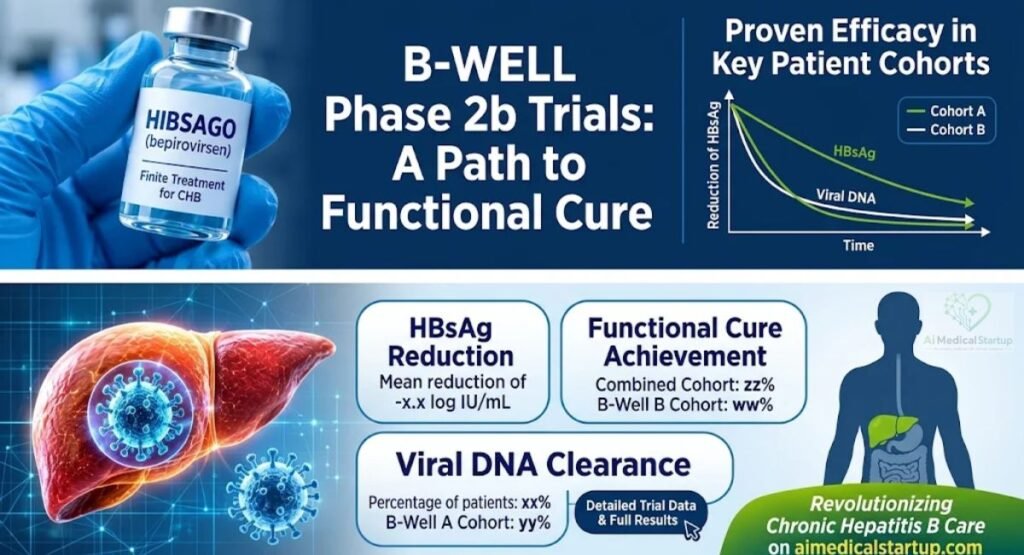
How HIBSAGO Could Change the Chronic Hepatitis B Treatment Landscape
The significance of HIBSAGO becomes clearer when you compare it with existing chronic hepatitis B treatment. Medicines such as Entecavir and Tenofovir belong to the Nucleos(t)ide analogues (NAs) class. They inhibit HBV reverse transcriptase and prevent viral DNA replication. However, they rarely eliminate the viral reservoir inside infected liver cells. Consequently, many patients need long-term antiviral treatment to maintain HBV DNA suppression and reduce the risk of liver complications.
HIBSAGO introduces another therapeutic mechanism by targeting viral RNA and reducing HBsAg production. This approach may help selected patients achieve a functional cure for hepatitis B after stopping treatment. The pivotal B-Well 1 and B-Well 2 trials demonstrated significantly higher response rates than placebo. However, the results do not mean that every patient can stop antiviral medication. Eligibility, safety monitoring and individual treatment response remain essential parts of clinical decision-making.
| Treatment feature | Conventional NAs | HIBSAGO |
|---|---|---|
| Examples | Entecavir, Tenofovir | Bepirovirsen |
| Mechanism | Inhibits HBV polymerase | Targets HBV mRNA |
| Administration | Oral medication | Subcutaneous injection |
| Treatment duration | Often long-term | Maximum 24 weeks |
| Main objective | Viral suppression | HBsAg reduction and potential functional cure |
| Treatment combination | Standard antiviral therapy | Must accompany NrtI therapy |
From Lifelong Suppression to Sustained Off-treatment Response
The most important change involves the treatment endpoint itself. A sustained off-treatment response means that patients maintain undetectable HBV DNA and lose detectable HBsAg after completing treatment. In the Phase III trials, 20% of participants in B-Well 1 and 19% in B-Well 2 achieved functional cure at Week 72, compared with zero participants receiving placebo. Among patients whose baseline HBsAg was 1,000 IU/mL or lower, response rates reached 25% and 28%, respectively. The FDA also reported that 24% of treated patients qualified to discontinue their existing antiviral medicine.
Achieved in B-Well 1 and B-Well 2 Phase III trials vs. 0% with placebo.
Observed in patients with baseline HBsAg of 1,000 IU/mL or lower.
Reported by the FDA as qualified to stop existing antiviral therapy.
Maintained undetectable HBV DNA and loss of detectable HBsAg post-treatment.
Will HIBSAGO Open the Door for Other Functional-Cure Therapies?
HIBSAGO's approval gives researchers a clinically validated example of a finite-course treatment that can produce functional cure in selected patients. However, the wider hepatitis B therapeutic pipeline is exploring several other mechanisms. Companies are investigating RNA interference, capsid assembly inhibition, immune stimulation and direct targeting of viral genetic material. These approaches could complement antisense treatment or potentially address patients who do not respond to bepirovirsen.
Importantly, the next stage of hepatitis B drug development will probably involve combinations rather than a single mechanism. Reducing HBsAg may weaken viral immune evasion, while immune-modulating treatments could help restore HBV-specific immune responses. Meanwhile, gene-editing platforms aim to address persistent cccDNA. Nevertheless, each candidate must demonstrate its own safety, effectiveness and durability through properly controlled chronic hepatitis B clinical trials.
Four Approaches to Watch
The future of hepatitis B functional cure therapies depends on how effectively researchers target different parts of the viral life cycle. Four strategies deserve particular attention: siRNA, capsid assembly modulators, monoclonal antibodies and gene editing. Each has a different biological target, development challenge and potential role in combination treatment. Their clinical maturity also varies considerably, so promising laboratory findings should not be confused with proven patient benefits.
siRNA
Small interfering RNA (siRNA) uses RNA interference to silence HBV transcripts and reduce viral protein production. This strategy resembles antisense treatment but uses a different molecular mechanism. Arrowhead Pharmaceuticals developed daplusiran, also known as JNJ-3989, which GSK is evaluating alongside tomligisiran in the Phase IIb B-UNITED trial. The study investigates sequential treatment with these RNA-targeted agents followed by bepirovirsen. Meanwhile, Arbutus Biopharma is developing Imdusiran (AB-729), a GalNAc-conjugated siRNA designed to deliver RNA interference therapy to liver cells. Its Phase II studies have reported functional cures in some patients receiving combination regimens.
Capsid Assembly Modulators
Another approach targets the viral capsid, a protein structure that protects HBV genetic material during replication. Capsid assembly modulators interfere with the formation or function of these structures, potentially disrupting viral replication at an earlier stage. Aligos Therapeutics is developing Pevifoscorvir sodium (ALG-000184) as an oral candidate for chronic hepatitis B. Its Phase II B-SUPREME study continued after an interim review in April 2026, with the independent monitoring board recommending additional enrollment rather than stopping for futility. However, definitive efficacy results remain necessary before its potential to achieve functional cure can be established.
Monoclonal Antibodies and Combinations
Monoclonal antibodies offer another way to target viral antigens and potentially interfere with HBV entry or antigen activity. Vir Biotechnology investigated Tobevibart, an HBsAg-targeting antibody, alongside Elebsiran, an siRNA candidate, in the MARCH Phase II study. Some participants achieved sustained HBsAg loss after treatment ended. However, functional-cure rates remained limited, particularly across the overall study population. Vir subsequently decided not to advance this combination into Phase III development for CHB without a global development partner. Other experimental approaches include therapeutic vaccines such as BRII-179 and immune checkpoint strategies involving Nivolumab. Researchers are also investigating immune stimulators such as Selgantolimod, a TLR8 agonist studied in combination approaches involving Gilead Sciences. These approaches remain investigational and should not be confused with approved hepatitis B treatments.
Gene Editing and Gene Targeting
Gene editing could address one of the most persistent obstacles to a complete HBV cure: the viral genetic reservoir inside liver cells. Precision BioSciences is developing PBGENE-HBV, an experimental therapy using its ARCUS nuclease platform to target cccDNA directly. In November 2026, the company reported new Phase I ELIMINATE-B findings, including undetectable pregenomic RNA in all six evaluable patients receiving the selected 0.4 mg/kg dose. Liver biopsies also showed approximately 1-log and 1.5-log reductions in cccDNA in two patients at that dose. These early findings support further investigation, but they do not yet establish a clinical cure. The company plans to advance the programme into Phase II during 2027.
| Therapeutic approach | Candidate | Developer | Development position |
|---|---|---|---|
| Antisense oligonucleotide | Bepirovirsen | GSK / Ionis | FDA-approved |
| siRNA | Daplusiran / Tomligisiran | GSK / Arrowhead | Phase IIb |
| siRNA | Imdusiran | Arbutus | Phase II development |
| Capsid modulator | ALG-000184 | Aligos | Phase II |
| Antibody combination | Tobevibart / Elebsiran | Vir Biotechnology | Phase II CHB programme |
| Gene editing | PBGENE-HBV | Precision BioSciences | Phase I; advancing to Phase II |
The Unmet Needs HIBSAGO Leaves Open
Although HIBSAGO changes the hepatitis B treatment landscape, several patient groups still need better options. People with cirrhosis, high HBsAg levels or unsuppressed HBV DNA may fall outside its approved indication. Patients who fail to achieve functional cure may also need continued antiviral treatment. Children and adolescents remain outside the current US approval. These gaps highlight the need for treatments that work across different disease stages and patient populations.
Another major challenge involves eliminating or permanently silencing the HBV viral reservoir. Functional cure does not necessarily remove cccDNA or integrated viral DNA. Consequently, researchers must develop treatments that deliver sustained HBsAg loss while maintaining undetectable HBV DNA. Better biomarkers, accessible diagnostics and long-term off-treatment durability data will also matter. Additionally, clinicians must continue monitoring liver cancer risk even after functional cure because previous liver damage may not disappear immediately. Coinfection with hepatitis delta creates another clinical challenge, and the FDA does not recommend HIBSAGO in patients with HDV coinfection.
Conclusion: A New Direction for CHB Care
HIBSAGO’s Potential to Reshape the CHB Treatment Landscape rests on an important clinical development: selected patients can now pursue functional cure through a finite treatment approach rather than relying exclusively on indefinite antiviral suppression. Its Phase III results and FDA approval establish a new option for eligible adults. However, serious safety warnings, restricted eligibility and incomplete viral eradication mean that careful patient selection remains essential.
Looking ahead, next-generation hepatitis B therapies could extend these advances through RNA interference, capsid inhibition, monoclonal antibodies and gene editing. Candidates such as imdusiran, pevifoscorvir and PBGENE-HBV demonstrate how researchers are approaching different aspects of HBV persistence. The ultimate goal is not simply to suppress viral replication but to achieve durable immune control and prevent serious liver complications. HIBSAGO is an important step towards that goal, but the wider search for a reliable and broadly accessible functional cure continues.
Important Prescribing Detail
The FDA label requires patients to continue their existing NrtI therapy for at least 24 additional weeks after completing HIBSAGO. Clinicians may then consider stopping the NrtI only if the patient meets specified HBeAg, HBsAg, HBV DNA and ALT criteria. Monitoring must continue for at least one year after antiviral discontinuation.
Medical Review & Note
Medical note: This article is educational and does not replace individual prescribing guidance or specialist assessment.
Reviewed by Dr. Kanza, Healthcare Expert.



Dr. Kanza Sarfraz, M.B.B.S., is a medical doctor and graduate of Allama Iqbal Medical College, Lahore. She brings nearly seven years of clinical experience across tertiary-care hospitals, medical headquarters, and healthcare facilities in both the public and private sectors. Her clinical experience provides a practical perspective on healthcare delivery, emerging medical technologies, and the evolving role of artificial intelligence in medicine.