CNS Drug Delivery

Beyond the BLOOD-BRAIN BARRIER: Advancing CNS THERAPEUTICS
The brain has an extraordinary defense system, but that protection creates a frustrating problem for modern medicine. Many promising treatments cannot reach their intended targets because the BBB restricts their entry into brain tissue. Consequently, researchers are developing new CNS DRUG DEVELOPMENT STRATEGIES to improve therapeutic delivery without compromising NEUROLOGICAL SAFETY.
Today, advances in BBB DRUG DELIVERY TECHNOLOGIES, MOLECULAR ENGINEERING and TARGETED TRANSPORT are changing this landscape. From transferrin receptor shuttles to FOCUSED ULTRASOUND, scientists are exploring ways to deliver complex medicines into the CENTRAL NERVOUS SYSTEM. These developments could reshape treatments for ALZHEIMER’S DISEASE, brain tumors and other NEUROLOGICAL DISORDERS.
More Than a Wall: How the BBB Keeps the Brain Stable and Safe
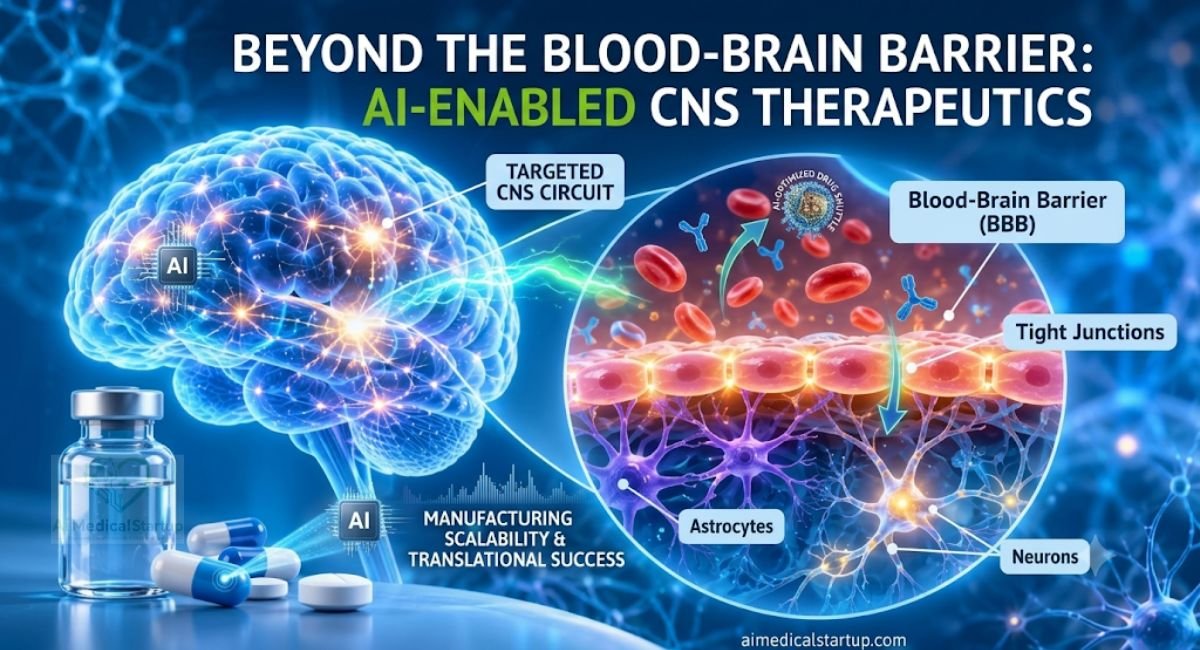
The brain requires an unusually stable chemical environment to maintain normal electrical activity. The blood-brain barrier regulates exchanges between circulating blood and the CENTRAL NERVOUS SYSTEM (CNS), protecting delicate neural tissue from harmful substances. Rather than functioning as a simple physical wall, it operates as a dynamic biological interface that controls nutrient delivery, waste removal and immune activity. This regulation supports CNS HOMEOSTASIS and normal neuronal communication.
At its center lies the NEUROVASCULAR UNIT, a coordinated network involving BRAIN MICROVASCULAR ENDOTHELIAL CELLS, PERICYTES, ASTROCYTES and NEURONS. The endothelial cells contain specialized TIGHT JUNCTION PROTEINS, including CLAUDIN-5, OCCLUDIN and ZONULA OCCLUDENS-1 (ZO-1). Meanwhile, the BASEMENT MEMBRANE and ASTROCYTE END-FEET provide additional structural and biochemical support. Together, these components preserve BBB INTEGRITY and regulate BBB PERMEABILITY.

When the Gate Cracks: BBB Breakdown in Brain Disease
Although the barrier normally protects neural tissue, its structure and transport activity can change during disease. Blood-brain barrier disruption may involve weakened junctions, altered transporter expression or abnormal vascular signaling. These changes can encourage NEURO-INFLAMMATION, expose neurons to circulating proteins and interfere with normal waste clearance. Importantly, BBB DYSFUNCTION may contribute to disease progression rather than simply appear as a consequence of neurological injury.
The effects differ across conditions because each disorder affects the NEUROVASCULAR SYSTEM through distinct mechanisms. Changes in BRAIN ENDOTHELIAL CELLS, MICROGLIA and immune signaling can influence disease severity. Researchers increasingly use BBB PERMEABILITY IMAGING to investigate these alterations and understand how they affect treatment response. The following conditions illustrate why barrier biology matters in modern neurological medicine.
Alzheimer’s disease
In ALZHEIMER’S DISEASE, damage to small cerebral vessels may appear before substantial cognitive decline. Reduced amyloid-beta clearance through the LRP1 TRANSPORTER and increased signaling through the RAGE RECEPTOR can contribute to amyloid accumulation. The APOE4 RISK ALLELE has also been associated with early BBB abnormalities. Reduced GLUT1 GLUCOSE TRANSPORTER activity may further compromise the energy supply required by neurons.
Parkinson’s disease
PARKINSON’S DISEASE involves more than the progressive loss of dopamine-producing neurons. Research suggests that altered BBB INTEGRITY, neurovascular inflammation and reduced transporter activity may contribute to disease progression. Misfolded alpha-synuclein may interact with vascular and immune pathways, potentially worsening neuronal injury. Changes in P-GLYCOPROTEIN (P-GP) activity also raise questions about how effectively certain therapeutic compounds reach affected brain regions.
Multiple sclerosis
MULTIPLE SCLEROSIS provides a clear example of how barrier dysfunction contributes to neurological damage. Activated immune cells cross the BBB and attack myelin, disrupting communication between neurons. MRI scans can reveal active inflammation through gadolinium-enhancing lesions, which indicate increased vascular permeability. Several DISEASE-MODIFYING TREATMENTS reduce immune-cell migration or activity, helping limit inflammatory injury within the central nervous system.
Epilepsy
The relationship between EPILEPSY and BBB DYSFUNCTION works in both directions. Repeated seizures can damage endothelial junctions, while increased barrier permeability may encourage further abnormal neuronal activity. One proposed mechanism involves albumin-triggered signaling in ASTROCYTES, which can alter neuronal excitability. Additionally, elevated efflux transporters, particularly P-GLYCOPROTEIN, may reduce brain exposure to certain antiseizure medicines and contribute to treatment resistance.
Glioblastoma
GLIOBLASTOMA presents a particularly difficult drug-delivery problem because its vascular environment is highly uneven. Tumor growth can damage blood vessels and create a partially disrupted BLOOD-TUMOR BARRIER. However, infiltrating cancer cells may remain behind relatively intact vascular regions. Consequently, chemotherapy can reach some tumor areas while missing others. This uneven distribution helps explain why improving drug penetration remains a major research priority.
Stroke
During an ischemic STROKE, reduced blood flow deprives brain tissue of oxygen and glucose. Subsequent ischemia and reperfusion can damage endothelial cells and weaken vascular junctions. Increased permeability allows fluid and blood components to enter surrounding tissue, contributing to BRAIN EDEMA. Severe vascular injury can also increase the risk of HEMORRHAGIC TRANSFORMATION, making BBB integrity important when clinicians evaluate acute stroke treatments.
Traumatic brain injury (TBI)
A TRAUMATIC BRAIN INJURY (TBI) can damage cerebral blood vessels through direct mechanical forces and secondary inflammatory processes. This injury may cause immediate or delayed barrier leakage, allowing circulating proteins and immune mediators to enter brain tissue. Persistent neuro-inflammation can interfere with neuronal function and recovery. Researchers are investigating whether long-term BBB abnormalities contribute to cognitive difficulties and neurodegenerative changes after severe head trauma.
The Billion-Dollar Roadblock: Why the BBB Frustrates Drug Developers
Developing effective neurological medicines requires more than identifying a promising molecular target. A treatment must also achieve sufficient BRAIN PENETRATION to reach the cells responsible for disease. Unfortunately, many MONOCLONAL ANTIBODIES, PEPTIDES and THERAPEUTIC PROTEINS struggle to cross the BBB because of their size and chemical properties. Even when a drug enters endothelial cells, EFFLUX TRANSPORTERS may remove it before meaningful concentrations reach brain tissue.
The problem extends to modern GENETIC MEDICINES. ANTISENSE OLIGONUCLEOTIDES (ASOs) and SMALL INTERFERING RNA (siRNA) molecules often require specialized DELIVERY METHODS because their large, negatively charged structures restrict passive entry. Similarly, systemic ADENO-ASSOCIATED VIRUS (AAV) vectors face significant DISTRIBUTION CHALLENGES. Increasing doses may cause PERIPHERAL TOXICITY, while enzymatic breakdown and limited tissue penetration further complicate development.
Key Determinants of BBB Penetration
One important consideration is that BBB PENETRATION depends on more than MOLECULAR WEIGHT. MOLECULAR CHARGE, LIPID SOLUBILITY, PROTEIN BINDING and TRANSPORTER RECOGNITION all influence drug distribution. Small lipophilic molecules may cross through PASSIVE DIFFUSION, but this route does not guarantee effective BRAIN EXPOSURE. Likewise, P-GLYCOPROTEIN (P-GP) and BREAST CANCER RESISTANCE PROTEIN (BCRP) can actively remove susceptible compounds from endothelial cells.

Why the Old Playbook Falls Short: The Limits of Conventional CNS Delivery
For decades, researchers have attempted to improve brain drug delivery through chemical modification and alternative administration routes. One approach uses PRODRUG ENGINEERING to improve absorption or exploit existing transport pathways. LEVODOPA, for example, uses AMINO ACID TRANSPORT MECHANISMS to enter the brain. However, this strategy does not work for every therapeutic molecule and may require extensive chemical optimization.
Other methods bypass the barrier rather than transport medicines through it. INTRATHECAL DRUG DELIVERY introduces therapeutics into CEREBROSPINAL FLUID, while INTRACEREBROVENTRICULAR ADMINISTRATION places them directly into the brain’s ventricular system. CONVECTION-ENHANCED DELIVERY uses controlled pressure to distribute medicines through selected brain regions. Although these methods can improve local exposure, invasive procedures and limited tissue distribution remain important challenges.
Increasing systemic doses presents another problem because higher blood concentrations do not necessarily produce proportionally higher brain concentrations. Meanwhile, osmotic BBB DISRUPTION using MANNITOL ADMINISTRATION can temporarily increase permeability but may also expose neural tissue to unwanted substances. Such limitations explain why researchers are exploring more selective BRAIN-TARGETING DRUG DELIVERY PLATFORMS.
Big Pharma Is Betting on the Brain: Deals, Trials and Firsts
The commercial landscape changed significantly when the FDA APPROVED TIVIDENOFUSP ALFA (AVLAYAH) in March 2026. Developed by Denali Therapeutics, this treatment received accelerated approval for neurological manifestations of Hunter syndrome in eligible pediatric patients. Its design uses TRANSFERRIN RECEPTOR (TFR) targeting to transport an enzyme across the BBB. The approval represents an important clinical milestone for BBB SHUTTLE TECHNOLOGY and receptor-directed delivery.
The FDA reported that 44 children with available measurements experienced an average 91% reduction in CEREBROSPINAL FLUID HEPARAN SULFATE at Week 24. However, accelerated approval relied on this surrogate endpoint, so confirmatory evidence of clinical benefit remains necessary. This distinction matters: successful delivery and BIOMARKER IMPROVEMENT do not automatically establish long-term neurological benefit.
Another important development involves Roche Brainshuttle and its investigational medicine Trontinemab. This engineered antibody combines amyloid targeting with transferrin receptor-mediated transport to improve brain exposure. As of November 2026, Roche lists multiple Phase III CLINICAL TRIALS, including TRONTIER 1 and TRONTIER 2, evaluating the medicine in early symptomatic Alzheimer’s disease. These trials are investigating clinical outcomes, safety and amyloid changes rather than establishing an approved treatment.
| Development | Organization | Significance |
|---|---|---|
| AVLAYAH (tividenofusp alfa-eknm) | Denali Therapeutics | FDA-APPROVED TFR-TARGETING enzyme therapy for eligible Hunter syndrome patients |
| Trontinemab | Roche | Investigational Brainshuttle antibody in Phase III Alzheimer’s trials |
| Focused ultrasound | Multiple research groups | Investigational method for temporary and localized BBB opening |
Another promising approach uses FOCUSED ULTRASOUND (FUS) with microbubble agents to temporarily increase local BBB permeability. A multicentre Phase 1/2 study published in The Lancet Oncology in 2025 investigated this technique alongside temozolomide in high-grade glioma. The findings supported feasibility and further investigation, but they do not establish FOCUSED ULTRASOUND as a proven survival-improving treatment.
The Next Frontier: Where BBB Research Goes From Here
The next generation of BBB DRUG DELIVERY TECHNOLOGIES aims to improve precision while reducing systemic exposure. RECEPTOR-MEDIATED TRANSCYTOSIS uses naturally occurring transport pathways to move therapeutic cargo across endothelial cells. Researchers are investigating different receptors and optimizing shuttle binding affinity to improve delivery. Future brain-penetrant biologics may include enzymes, antibodies and GENETIC MEDICINES. NANOPARTICLE-BASED DRUG DELIVERY and advanced GENE THERAPY DELIVERY could expand these possibilities further.
Meanwhile, ARTIFICIAL INTELLIGENCE IN DRUG DISCOVERY is opening new opportunities for MOLECULAR DESIGN. MACHINE LEARNING MODELS support BBB PERMEABILITY PREDICTION, while GENERATIVE AI can help identify promising shuttle molecules and optimize their properties. Roche’s collaboration with Manifold Bio illustrates growing interest in in vivo discovery and AI-enabled protein engineering. However, computational predictions still require experimental validation before clinical application.
Imaging technologies will also become increasingly important. MRI PERMEABILITY IMAGING can help researchers evaluate barrier integrity, while PET TRANSPORTER IMAGING may reveal changes in transport activity. Blood-based measurements such as PLASMA P-TAU BIOMARKERS offer additional information about neurological disease. Together, these tools could support better patient selection and more reliable assessment of treatment response.
Another promising development involves human-based experimental models. Human iPSC-DERIVED BBB MODELS, organ-on-chip platforms and brain organoids allow researchers to investigate barrier biology under more physiologically relevant conditions. These systems may improve TRANSLATIONAL RESEARCH by identifying promising candidates before expensive clinical trials. Nevertheless, differences between laboratory models and living human brains remain important limitations.
PERSONALIZED APPROACHES could further improve treatment selection. BBB function varies with age, genetics and disease progression, meaning identical delivery strategies may not work equally well for every patient. Researchers are therefore investigating individualized dosing, optimized subcutaneous administration and combination approaches. Long-term IMMUNOGENICITY, manufacturing scalability and treatment accessibility will also influence whether emerging technologies become practical clinical solutions.
FAQs about BLOOD BRAIN BARRIER
The BLOOD-BRAIN BARRIER is a specialized VASCULAR INTERFACE that protects the brain while regulating the movement of nutrients, molecules and IMMUNE COMPONENTS. It maintains a stable environment for normal NEUROLOGICAL ACTIVITY. However, its protective properties also restrict many medicines from reaching brain tissue.
Yes. Some small molecules cross through PASSIVE DIFFUSION, while others use specialized TRANSPORT SYSTEMS. Modern CNS THERAPEUTICS increasingly explore RECEPTOR-MEDIATED TRANSPORT, NANOPARTICLES and temporary BARRIER MODULATION. However, successful BRAIN PENETRATION depends on the drug’s chemical properties and DELIVERY MECHANISM.
No single technology works for every therapeutic molecule. BBB SHUTTLE TECHNOLOGY, FOCUSED ULTRASOUND and engineered DELIVERY VEHICLES offer different advantages. Their clinical value depends on safety, TARGET ENGAGEMENT, THERAPEUTIC EFFECTIVENESS and the condition being treated.
The BBB can recover from certain forms of injury when the underlying cause resolves. ENDOTHELIAL CELLS and supporting vascular components can restore some barrier functions. However, persistent NEURO-INFLAMMATION, vascular damage and chronic NEUROLOGICAL DISEASE may prevent complete recovery.
FOCUSED ULTRASOUND is being investigated in CLINICAL STUDIES for several neurological conditions, including GLIOBLASTOMA. Although early research supports its feasibility, its use for general BBB-MEDIATED DRUG DELIVERY remains INVESTIGATIONAL.
Yes. It influences how therapeutic MONOCLONAL ANTIBODIES and other medicines reach brain tissue. Researchers are developing transport technologies that may improve drug exposure while carefully monitoring complications such as AMYLOID-RELATED IMAGING ABNORMALITIES (ARIA).
AI may help identify brain-penetrant compounds, predict MOLECULAR INTERACTIONS and optimize drug-delivery systems. Combined with advanced laboratory models and clinical imaging, these technologies could make future PERSONALIZED CNS MEDICINE more precise.
References and Further Reading
The following scientific and regulatory resources provide additional evidence for the developments discussed in this article.
| Source | Research or Information |
|---|---|
| NIH – Cells of the BLOOD-BRAIN BARRIER | NEUROVASCULAR UNIT and BBB structure |
| BLOOD-BRAIN BARRIER: From Physiology to Disease and Back | BBB physiology and NEUROLOGICAL DISORDERS |
| FDA – AVLAYAH Approval | Regulatory approval and CLINICAL EVIDENCE |
| Genentech – Trontinemab | Brain shuttle technology and CLINICAL TRIALS |
| The Lancet Oncology – FOCUSED ULTRASOUND TRIAL | FOCUSED ULTRASOUND and glioma drug delivery |
| BBB Transporters: A Translational Consideration | Transport mechanisms in CNS drug development |
FINAL PERSPECTIVE: The blood-brain barrier is no longer viewed solely as an obstacle to neurological medicine. Advances in MOLECULAR ENGINEERING, targeted transport and imaging are turning it into an increasingly addressable therapeutic target. Although significant challenges remain, these developments could expand the possibilities of CNS DRUG DEVELOPMENT across the USA, UK and EUROPE.
MEDICAL DISCLAIMER: This article is intended for educational purposes and does not replace professional medical advice. Investigational therapies should not be considered established treatments unless they receive appropriate regulatory authorization.



Dr. Kanza Sarfraz, M.B.B.S., is a medical doctor and graduate of Allama Iqbal Medical College, Lahore. She brings nearly seven years of clinical experience across tertiary-care hospitals, medical headquarters, and healthcare facilities in both the public and private sectors. Her clinical experience provides a practical perspective on healthcare delivery, emerging medical technologies, and the evolving role of artificial intelligence in medicine.