overhead-in-boston-medtech-ceos-talks

Overheard in Boston: Medtech CEOs Conference Oct 2026

Healthcare Leadership & Innovation

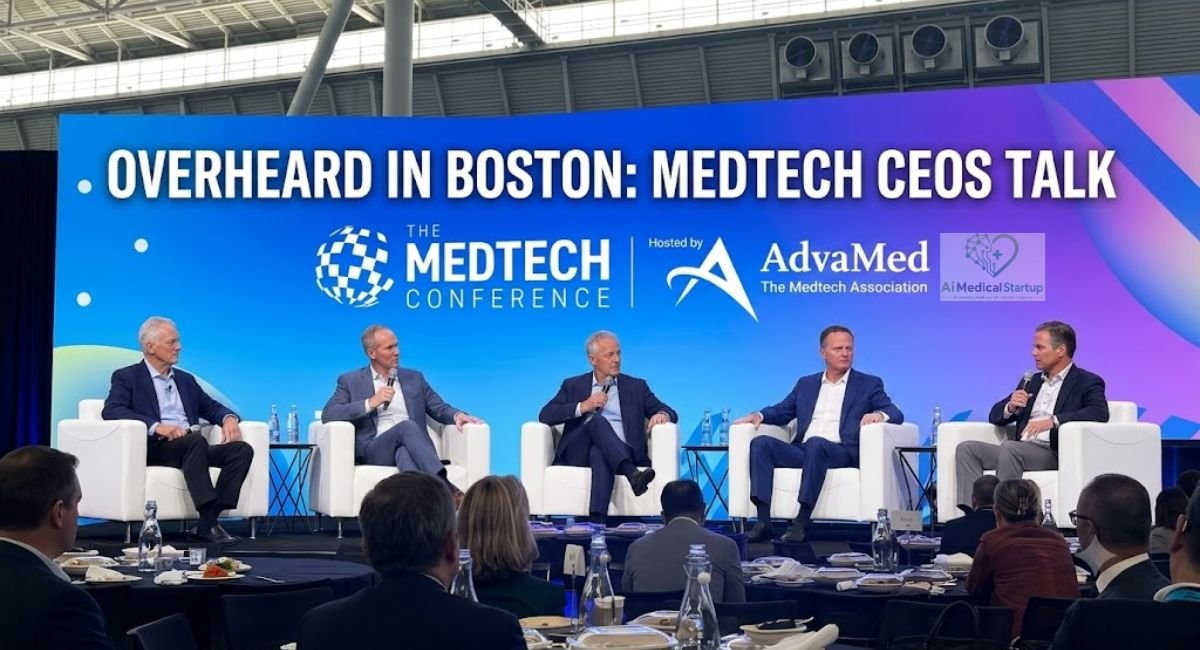
Overheard in Boston: Medtech CEOs talk rising costs, turbulent markets, cyberattacks

The MedTech Conference 2026, organized by AdvaMed, brought industry leaders to Boston from October 18–21 to discuss the pressures reshaping modern healthcare. On October 19, executives shared perspectives on rising healthcare costs, economic uncertainty, cybersecurity risks and the need for practical innovation. Their discussions highlighted how medical device companies must balance clinical performance with affordability and operational resilience. These MedTech industry trends 2026 matter to hospitals, clinicians and patients across the USA, UK and EU.

The medical device industry challenges extend beyond product development. Healthcare inflation, supply-chain expenses and turbulent financial markets can complicate investment decisions, while digital disruption threatens business continuity. Meanwhile, medical technology innovation must deliver measurable benefits without adding unnecessary work for clinicians. At the MedTech Conference 2026, the speakers explored these connected pressures through practical leadership lessons. Their insights also raised important questions about healthcare affordability and access, patient safety and sustainable growth.

Medtronic CEO Geoff Martha on keeping procedures simple:

For MEDTRONIC CEO GEOFF MARTHA, SIMPLICITY is essential when introducing new TECHNOLOGY into demanding CLINICAL SETTINGS. A device might improve MEDICAL DEVICE CLINICAL OUTCOMES, but extra procedural steps can burden already stretched teams. HEALTHCARE WORKFLOW EFFICIENCY therefore deserves as much attention as TECHNICAL PERFORMANCE. Manufacturers should consider training needs, ease of use and integration with existing equipment. These factors influence HEALTHCARE TECHNOLOGY ADOPTION and help determine whether promising innovations become routine CLINICAL TOOLS or remain difficult to implement.

The lesson extends across hospitals and outpatient facilities. MEDICAL DEVICE MANUFACTURERS should test products in realistic CLINICAL ENVIRONMENTS and measure whether they save time, reduce errors or improve care. Effective MEDICAL DEVICE OPERATIONAL EFFICIENCY requires collaboration with clinicians from the design stage. This approach supports responsible MEDICAL TECHNOLOGY ADOPTION while reducing HEALTHCARE WORKFLOW DISRUPTION. In a crowded HEALTHCARE INNOVATION ECOSYSTEM, practical usability can distinguish a genuinely useful technology from one that creates additional work.

geoff-martha-ceo-of-medtronics

Boston Scientific CEO Mike Mahoney on navigating the shift to outpatient care:

BOSTON SCIENTIFIC CEO MIKE MAHONEY discussed the movement of selected procedures from hospitals to AMBULATORY SURGERY CENTERS (ASCs). These facilities can offer convenient treatment and help hospitals reserve resources for more complex cases. However, OUTPATIENT HEALTHCARE PROCEDURES require careful patient selection, appropriate monitoring and reliable emergency arrangements. Outpatient CARDIAC PROCEDURES also demand strong CLINICAL EVIDENCE because complications may require rapid escalation to hospital care. Cost savings matter, but they cannot replace rigorous PATIENT SAFETY STANDARDS or HIGH-QUALITY CLINICAL OUTCOMES.

One important development is PULSED FIELD ABLATION (PFA), a technique used to treat certain CARDIAC ARRHYTHMIAS, including ATRIAL FIBRILLATION. Its use in outpatient settings depends on the specific procedure, device authorization, patient risk and facility capabilities. PULSED FIELD ABLATION PROCEDURES therefore illustrate why CLINICAL EVIDENCE FOR OUTPATIENT PROCEDURES must guide decisions about where care takes place. Similarly, PACEMAKER REPLACEMENT PROCEDURES require individualized assessment rather than automatic transfer to an ASC. The wider goal is HEALTHCARE COST REDUCTION without compromising safety, quality or access.

boston-scientific-ceo-mike-mahoney

Stryker Chief Operating Officer and incoming CEO Spencer Stiles on navigating turbulent times:

STRYKER COO SPENCER STILES addressed leadership during disruption, drawing on the company’s cyber incident reported on March 11, 2026. Stryker disclosed a global disruption to its internal Microsoft environment that affected order processing, manufacturing and shipping. The company initially reported no indication of ransomware or malware. It also stated that its products remained safe to use. The incident demonstrates how MEDICAL DEVICE CYBERSECURITY INCIDENTS can interrupt essential BUSINESS FUNCTIONS even when manufacturers do not report direct compromise of their devices.

The STRYKER CYBERATTACK MARCH 11, 2026 also highlights the importance of tested recovery plans and CYBERSECURITY INCIDENT RESPONSE. Manufacturers need ALTERNATIVE COMMUNICATION CHANNELS, clear responsibilities and reliable methods for prioritizing urgent orders. TRANSPARENT CRISIS COMMUNICATION helps hospitals prepare for possible delays and protect PATIENT CARE CONTINUITY. Strong MEDICAL DEVICE CYBERSECURITY must therefore cover internal systems as well as connected technologies. For the wider industry, RESILIENT MEDICAL DEVICE SUPPLY CHAINS and coordinated recovery procedures are essential parts of OPERATIONAL RISK MANAGEMENT.

stryker-coo-and-incoming-ceo-spencer-stiles

Insulet CEO Ashley McEvoy on leading through a tough market:

INSULET CEO ASHLEY MCEVOY emphasized leadership, organizational focus and the conditions that allow people to innovate. During periods of HEALTHCARE ECONOMIC UNCERTAINTY, MEDICAL TECHNOLOGY BUSINESSES must decide which projects deserve investment and how to maintain momentum without wasting resources. Strong HEALTHCARE LEADERSHIP STRATEGIES can help teams learn from setbacks, share expertise and remain focused on patient needs. This balance becomes especially important when companies face changing customer expectations, workforce pressures and COMPETITION FOR INVESTMENT.

Effective MEDICAL DEVICE INDUSTRY LEADERSHIP also means connecting innovation with measurable value. Companies need to evaluate clinical benefits, manufacturing capacity, distribution and long-term affordability before expanding a product. Combining innovation and OPERATIONAL EFFICIENCY can support sustainable MEDICAL DEVICE INDUSTRY GROWTH without sacrificing quality. For MEDICAL TECHNOLOGY BUSINESS STRATEGY, the challenge is to preserve the entrepreneurial thinking that drives new ideas while building the systems needed to deliver them consistently.

insulet-ceo-ashley-mcevoy

Mass General Brigham CEO Dr. Anne Klibanski on hospital costs:

MASS GENERAL BRIGHAM CEO DR. ANNE KLIBANSKI highlighted the financial pressures confronting hospitals, including HEALTHCARE LABOR COSTS, pharmaceutical spending and supply expenses. Rising prices affect staffing decisions, equipment purchases and the ability to maintain services. In the United States, MEDICARE AND MEDICAID FUNDING adds another layer of complexity because reimbursement rules and coverage changes can affect hospital finances. MEDICAID COVERAGE LOSSES may also increase pressure on providers when some patients lose insurance and become part of UNINSURED PATIENT POPULATIONS. These challenges make cost management inseparable from access to care.

Klibanski also discussed the scale of IMPLANT SPENDING, reporting approximately 200,000 devices under monitoring and annual IMPLANT EXPENDITURE exceeding $420 million. These figures underline the financial importance of CARDIAC AND THORACIC IMPLANTS and other implanted technologies, although their exact scope should be confirmed before publication. Rising HOSPITAL IMPLANT EXPENDITURE and MEDICAL DEVICE SUPPLY EXPENSES make procurement decisions increasingly important. Hospitals can assess total ownership costs, clinical performance and supplier reliability to manage HOSPITAL OPERATING COSTS while protecting quality. Across healthcare systems, the goal remains SUSTAINABLE CARE rather than simply choosing the cheapest device.

mass-general-brigham-ceo-dr-anne-klibanski

FAQs about At AdvaMed’s The MedTech Conference

The MEDTECH CONFERENCE 2026 was an industry gathering organized by ADVAMED, bringing together MEDICAL TECHNOLOGY LEADERS to discuss INNOVATION, business challenges and HEALTHCARE DELIVERY. The event took place in Boston from October 18–21, 2026. Its discussions addressed SUPPLY-CHAIN DISRUPTION, CYBERSECURITY, RISING COSTS and opportunities for innovation.

Rising MEDICAL COSTS affect manufacturers through materials, labor, logistics and PRODUCT DEVELOPMENT EXPENSES. Hospitals also face higher purchasing and staffing bills. Combined with HEALTHCARE MARKET VOLATILITY, these pressures can delay investment and make procurement more difficult. Companies must demonstrate CLINICAL VALUE while helping providers manage budgets.

AMBULATORY SURGERY CENTERS can deliver selected procedures outside traditional hospitals, potentially improving convenience and resource use. However, the right setting depends on PATIENT RISK, CLINICAL EVIDENCE, staffing and emergency support. PATIENT SAFETY IN OUTPATIENT CARE must remain the priority when providers evaluate new procedures.

The incident shows that HEALTHCARE CYBERATTACKS can disrupt manufacturing, shipping and customer services. Companies need effective recovery plans, secure systems and clear communication with hospitals. Strong CYBERSECURITY PLANNING helps protect operations and supports PATIENT CARE CONTINUITY when unexpected disruption occurs.

The same pressures affect HEALTHCARE PROVIDERS across the UK and EU, although funding and regulatory systems differ from those in the UNITED STATES. The NHS and EUROPEAN HEALTH SYSTEMS must weigh affordability, CLINICAL EVIDENCE and access when evaluating NEW TECHNOLOGIES. Across these markets, SUSTAINABLE INNOVATION depends on RELIABLE SUPPLY CHAINS, appropriate regulation and demonstrable benefits for patients.

GLP-1 Drugs Are Moving Beyond Weight Loss

GLOBAL GLP-1 MARKET INSIGHTS GLP-1 Drugs Are Moving Beyond Weight Loss—But How Big Can the…

Vascular Dementia Treatment

Clinical & Market Intelligence Vascular Dementia Treatment Space: A Billion-Dollar Gap Waiting…

siRNA vs. Antisense Oligonucleotides: Commercial Potential & Market Outlook 2026

NEXT-GEN RNA THERAPEUTICS siRNA vs. Antisense Oligonucleotides: Which RNA Technology Has Greater…
Dr. Kanza Sarfraz

Dr. Kanza Sarfraz, M.B.B.S., is a medical doctor and graduate of Allama Iqbal Medical College, Lahore. She brings nearly seven years of clinical experience across tertiary-care hospitals, medical headquarters, and healthcare facilities in both the public and private sectors. Her clinical experience provides a practical perspective on healthcare delivery, emerging medical technologies, and the evolving role of artificial intelligence in medicine.

View All Post

Leave a Reply

Your email address will not be published. Required fields are marked *