Best AI Tools in Radiology: Top Solutions for Medical Imaging in 2026
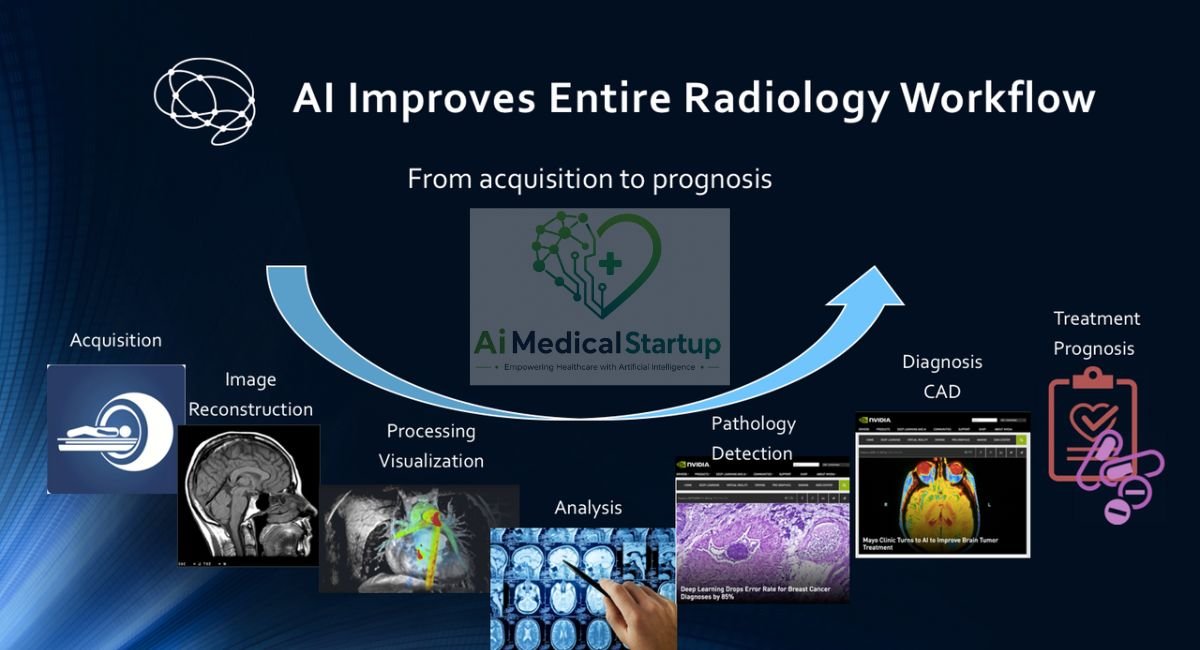
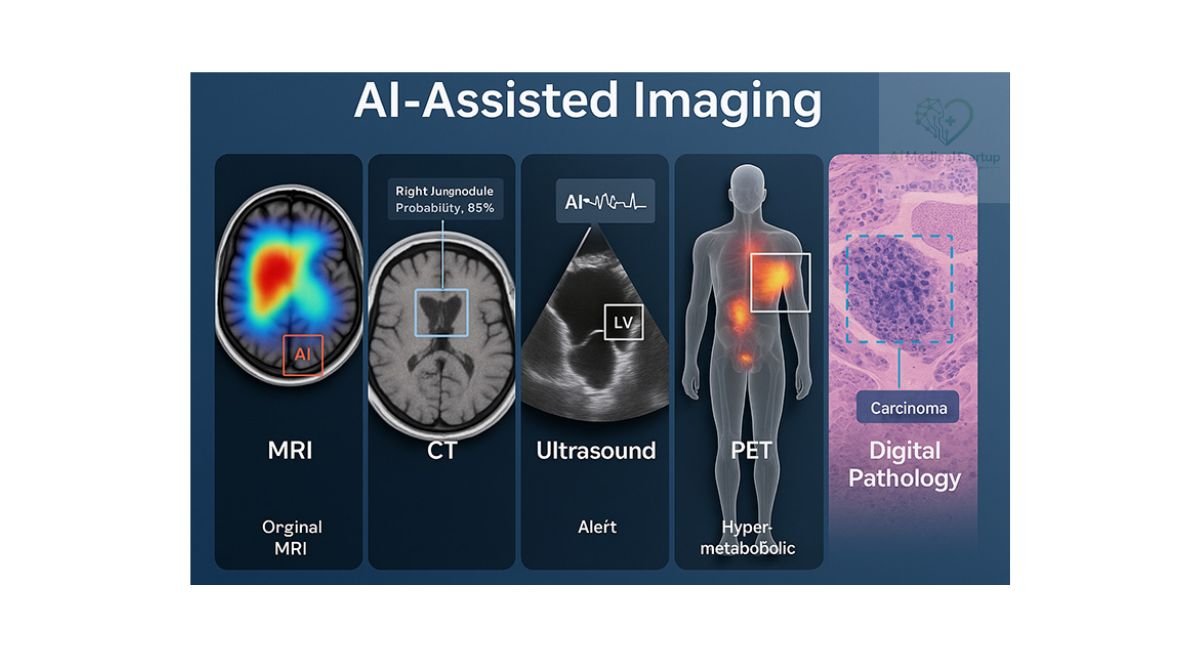
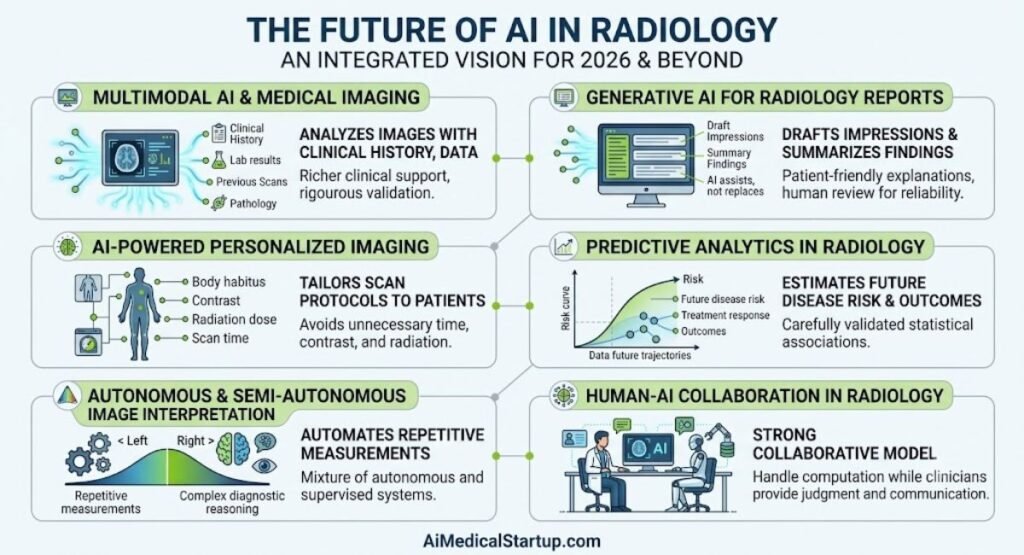
Radiology is changing quickly as technology moves from research labs into everyday clinical practice. In 2026, AI in radiology is helping healthcare teams analyze images, prioritize urgent cases, automate measurements, and support faster clinical decisions. From X-rays and CT scans to MRI and mammography, medical imaging AI is becoming an important part of modern diagnostic workflows.
With numerous platforms available, identifying the right AI tools requires evaluating clinical evidence, regulatory approvals, and workflow integration. This guide explores leading radiology AI solutions, their applications, benefits, limitations, and real-world uses to help optimize modern radiology practices and healthcare organizations.
40%Faster Triage for Critical Cases
99%+Diagnostic Accuracy Support
24/7Automated Image Analysis
What Are AI Tools in Radiology?
Radiology AI utilizes machine learning, deep learning, and computer vision to analyze medical images. These specialized tools process X-rays, CT scans, and MRIs to uncover complex patterns, streamline clinical decision-making, and reduce turnaround times.
Triage & Prioritization
Flags urgent critical findings like stroke, intracranial hemorrhage, or pneumothorax for immediate review.
Detection & Classification
Identifies hard-to-spot fractures, suspicious nodules, and tissue anomalies across imaging modalities.
Automated Measurements
Performs precise quantitative analysis, such as lesion volume tracking and Cobb angle measurement.
How Medical Imaging AI Integrates into Workflows
1
Imaging & TransmissionScan enters PACS/RIS digital infrastructure from the modality device.
2
AI Pattern ProcessingAlgorithms analyze images for predefined pathologies and measurements.
3
Clinical Decision SupportAnnotated insights are presented to the radiologist to aid final diagnosis.
AI vs. Traditional Radiology Software
While traditional infrastructure stores and displays images, AI adds intelligent clinical analysis—transforming static viewing environments into dynamic decision-support systems.
Infrastructure Foundation
Traditional Radiology Software
Core systems like PACS and DICOM standards focus on storing, transmitting, displaying, and documenting medical imaging files reliably across clinical networks.
Image storage, viewing & archival (PACS)
Standardized data transmission (DICOM)
Manual reporting & workflow management
Intelligent Layer
AI-Powered Radiology Solutions
Advanced algorithms analyze image content directly to generate probability scores, auto-segmentations, detection markers, and urgent worklist triage alerts.
Automated pathology detection & scoring
Instant triage alerts for critical conditions
Seamless integration over existing PACS/RIS
Machine Learning & Deep Learning
Multilayered neural networks process massive volumes of complex imaging data to detect visual patterns, automate measurements, and support diagnostic speed.
Critical Factor: Scanner types, image quality, and patient demographics alter model performance. Rigorous clinical validation is mandatory.
Generative AI & LLMs
Natural Language Processing (NLP) models organize clinical findings, summarize patient histories, and draft structured radiology reports rapidly.
4.8% → 1%
Clinical error rate drops significantly when radiologists review and edit AI-generated report impressions (FDA study data).
Prioritize critical cases for urgent radiologist triage
What AI Cannot Do
Evaluate rare pathologies, artifacts, or unexpected anatomy
Replace holistic clinical reasoning across patient history & labs
Provide final diagnoses without clinician oversight
What Are the Best AI Tools in Radiology in 2026?
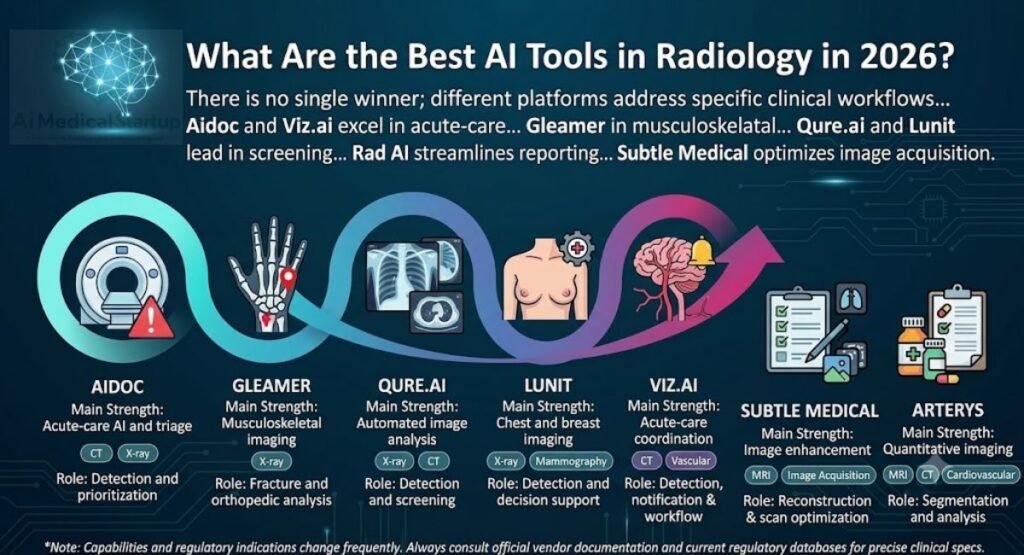
There is no single winner among radiology AI tools; different platforms address specific clinical workflows. Aidoc and Viz.ai excel in acute-care triage, Gleamer specializes in musculoskeletal analysis, Qure.ai and Lunit lead in screening, Rad AI streamlines reporting, and Subtle Medical optimizes image acquisition.
*Note: Capabilities and regulatory indications change frequently. Always consult official vendor documentation and current regulatory databases for precise clinical specs.
Top Use Cases of AI in Radiology
AI applications cover every stage of modern imaging. While value depends on specific clinical bottlenecks, these represent the most impactful deployments across modern radiology workflows.
Stroke & Hemorrhage
Rapidly analyzes CT scans to flag urgent neurovascular cases, drastically shortening time-to-treatment.
Patient Prioritization & Triage
Instantly evaluates incoming studies to bump time-sensitive abnormalities to the top of the emergency worklist.
Reporting & Documentation
Uses Generative AI to draft structured impressions and organize findings, pending radiologist review.
Cancer Screening (Lesions)
Highlights suspicious lesions in mammography and lung CTs to support early detection and biopsy decisions.
Chest Disease Detection
Provides high-volume screening for pneumothorax, effusion, and nodules to assist second-reader workflows.
Segmentation & Measurements
Automates volumetric and anatomical calculations to reduce manual variance in orthopedic and oncology imaging.
Fracture & Trauma
Acts as a secondary computer-vision check to detect subtle bone fractures in common X-ray exams.
Brain Tumor Analysis
Supports MRI segmentation and tumor volume measurement for comprehensive glioma/meningioma research.
Radiation Dose Optimization
Enhances image reconstruction algorithms to balance lower radiation exposure with high diagnostic quality.
AI Applications in Radiology by Imaging Modality
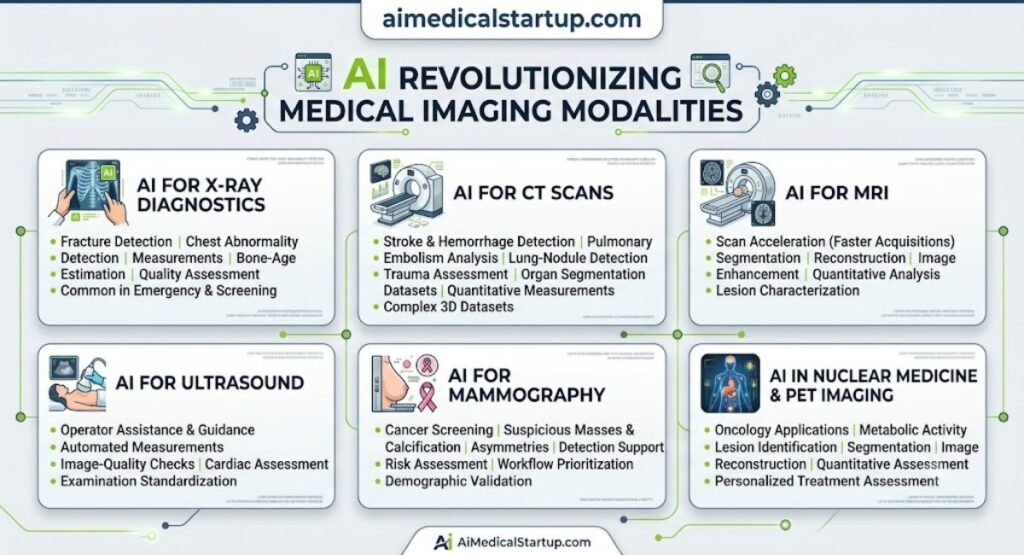
AI behaves differently across imaging modalities. X-ray produces relatively standardized two-dimensional images, CT creates volumetric datasets, MRI provides rich soft-tissue information, and ultrasound depends heavily on operator technique.
For this reason, the best AI tools for medical imaging must be evaluated within their specific modality. A highly effective X-ray algorithm does not automatically translate to an excellent MRI solution due to different data structures, clinical workflows, and validation requirements.
Imaging Modality
Common AI Applications
Main Opportunity
X-ray
Fracture and chest analysis
High-volume detection
CT
Stroke, trauma, nodules, organ analysis
Rapid 3D assessment
MRI
Reconstruction, segmentation, tumor analysis
Quality and efficiency
Ultrasound
Measurements and image guidance
Operator support
Mammography
Lesion detection and screening
Breast cancer support
PET / Nuclear Medicine
Segmentation and quantification
Oncology & precision imaging
AI for X-Ray Diagnostics: What Can It Detect?
X-ray examinations are fast, cost-effective, and represent high clinical volume. Rather than broad image interpretation, modern AI systems are specialized for validated detection tasks—ranging from acute fracture identification to automated osteo-articular measurements.
Key Diagnostic Focus Areas
Detection readiness & clinical emphasis across primary X-ray tasks
95%
Quality Check
88%
Fracture/Trauma
82%
Chest Pathology
75%
Bone Age Estimation
X-Ray AI Operation Process
Sequential integration pipeline from acquisition to report
Step 1
Image Acquisition & QCDetects motion, exposure, and positioning flaws
Where AI X-ray applications generate the highest clinical value
Emergency Department
Rapid triage for pneumothorax, acute fractures, and dislocations.
Outpatient Imaging Centers
High-volume chest abnormality screening and second-reader review.
Orthopedic Clinics
Automated Cobb angle, hallux valgus, alignment, and leg-length calculations.
Pediatric Radiology
Hand/wrist skeletal maturity estimation via Greulich & Pyle atlas indexing.
How to Choose the Best AI Tool for Radiology
Selecting radiology AI software starts with identifying specific clinical bottlenecks. Evaluate tools beyond research claims by focusing on regulatory clearance, real-world integration, data security, and total cost of ownership.
01
Clinical Use Case
What exact diagnostic or operational problem does the AI solve?
02
Regulatory Status
Is the product FDA-cleared or CE-marked for your target clinical market?
03
Clinical Evidence
Are performance claims supported by peer-reviewed, multi-center validation?
04
Diagnostic Accuracy
What are the algorithm's sensitivity, specificity, AUC, and false-positive rates?
05
PACS & RIS Integration
Does it embed natively into DICOM viewers without breaking existing workflows?
06
Data Security
How are PHI, patient records, and image transfers encrypted and protected?
07
Total Cost of Ownership
What are the upfront licensing, compute, and long-term maintenance costs?
08
Support & Monitoring
What clinician training, SLA performance, and model drift monitoring are provided?
AI in Radiology FAQs
Explore practical answers regarding medical imaging AI adoption, safety, accuracy, cost, and regulatory standards.
There is no single best tool for every radiologist. The right choice depends on the clinical problem, imaging modality, workflow, regulatory status, evidence, and budget. Specialized platforms excel in specific fields (e.g., RapidAI or Viz.ai for stroke centers, Gleamer for musculoskeletal X-ray, and Rad AI for reporting).
Adoption is divided across detection, triage, reporting, image enhancement, measurement, and screening. Enterprise platforms like Aidoc and other niche solutions serve distinct clinical purposes, with market share varying by country, hospital system, and specialty.
Current clinical AI acts as an augmentation tool rather than a replacement. Radiologists provide broader clinical reasoning, interpret findings in context, communicate with care teams, compare prior examinations, and maintain legal responsibility for final interpretations.
Accuracy varies significantly depending on the algorithm, target condition, imaging modality, and patient population. Clinicians should evaluate sensitivity, specificity, AUC, false-positive rates, and external clinical validation rather than relying solely on headline numbers.
The FDA maintains an AI-enabled medical-device list featuring numerous authorized radiology software products, mostly classified under automated image-processing and triage categories. Organizations should always verify specific intended uses and device authorizations.
Pricing varies widely with customized enterprise contracts. Costs can encompass licensing, per-study fees, integration, cloud infrastructure, training, and maintenance, making a total cost of ownership (TCO) evaluation essential.
Some algorithms flag suspicious abnormalities (such as lung nodules on chest X-rays) associated with cancer. However, flagging an anomaly is not a standalone diagnosis; definitive confirmation requires clinical assessment, follow-up imaging, or pathology.
In CT scans, AI supports stroke detection, hemorrhage identification, and pulmonary analysis. In MRI, it assists with scan acceleration, reconstruction, image enhancement, and quantitative measurements based on specific device clearances.
AI is safe when backed by robust clinical evidence, regulatory authorization, cybersecurity safeguards, and proper human oversight. Poor workflow integration or overreliance on automated results can introduce clinical risks.
Disadvantages include false positives/negatives, algorithmic bias, privacy vulnerabilities, high implementation costs, and automation bias. Continuous post-market monitoring is required as patient populations and workflows evolve.
Key Takeaway: Best AI Tools in Radiology
The top-performing radiology AI systems are defined by clinical utility, seamless workflow integration, and validated regulatory status rather than feature count alone.
Category-Based Value
Platforms specialize across distinct modalities—ranging from acute triage (Aidoc, Viz.ai, RapidAI) to musculoskeletal detection (Gleamer), reporting assistance (Rad AI), and screening (Qure.ai, Lunit). Comparing them by function is more practical than finding a universal winner.
Strategic Procurement
Treat AI as an end-to-end clinical technology rather than basic software. Verify intended uses, review clinical evidence, test workflow latency, ensure strict data privacy, and maintain ongoing performance monitoring.
Human-Centered Care
AI is designed to augment human expertise—not replace it. Carefully integrated systems reduce repetitive computational friction, helping qualified clinicians focus their expertise on high-priority patient care.
Dr. Kanza Sarfraz, M.B.B.S., is a medical doctor and graduate of Allama Iqbal Medical College, Lahore. She brings nearly seven years of clinical experience across tertiary-care hospitals, medical headquarters, and healthcare facilities in both the public and private sectors. Her clinical experience provides a practical perspective on healthcare delivery, emerging medical technologies, and the evolving role of artificial intelligence in medicine.
Healthcare is entering a new era where AI platforms in healthcare can turn complex information into practical insights. From medical imaging and clinical documentation to precision medicine and healthcare analytics, these technologies are changing how clinicians and health systems work.
In 2026, leading healthcare AI platforms are moving beyond experimentation and becoming part of everyday clinical and research workflows. Their growing role reflects a broader shift toward faster, more personalized, and data-driven care. This guide explores the Top 10 AI Platforms in Healthcare 2026, highlighting the technologies, capabilities, and real-world applications shaping modern healthcare across the USA, UK, and EU.
What Are AI Platforms in Healthcare?
At their core, AI platforms in healthcare bring artificial intelligence, data infrastructure, analytics, and clinical applications into one environment. Instead of offering one isolated function, a platform may support clinical data, medical images, research datasets, machine learning models, and healthcare applications. This makes it easier for organizations to build, deploy, and manage multiple AI capabilities.
The difference becomes clearer with an example. A single diagnostic application might analyze an X-ray, while a broader platform can connect imaging with records, workflows, alerts, and analytics. In other words, healthcare AI platforms act more like an operating layer for AI in healthcare, helping providers turn raw information into useful clinical or operational insights.
How AI Platforms Are Transforming Healthcare
The biggest change is happening inside everyday clinical work. Artificial intelligence in healthcare can assist with medical imaging, documentation, disease detection, research, and decision support. FDA research recognizes applications ranging from image processing and early disease detection to diagnosis, prognosis, risk assessment, and personalized diagnostics.
Meanwhile, clinical AI is moving beyond isolated demonstrations. Systems can support radiology triage, pathology analysis, genomic interpretation, population health, and documentation. For example, NHS England has issued specific guidance for AI-enabled ambient scribing, showing how generative AI in healthcare is entering practical documentation workflows rather than remaining a laboratory curiosity.
What to Look for in a Healthcare AI Platform
Choosing an AI healthcare solution requires more than comparing impressive demonstrations. You should examine clinical validation, data quality, security, interoperability, scalability, usability, governance, and integration with existing systems. A technically sophisticated platform can still fail if clinicians cannot use it naturally or if it creates another disconnected workflow.
For organizations across the USA, UK, and EU, regulation also deserves serious attention. HIPAA, GDPR, medical-device requirements, and emerging AI rules can influence deployment. FDA guidance increasingly emphasizes lifecycle management, transparency, bias, monitoring, and safety for AI-enabled devices.
Top 10 AI Platforms in Healthcare
The following ranking looks at platforms with meaningful healthcare applications and different roles across the ecosystem. Some focus on clinical workflows, while others provide data infrastructure, imaging intelligence, precision medicine, or research capabilities. Therefore, “best” depends heavily on what problem your organization needs to solve.
A hospital looking for workflow automation may choose differently from a pharmaceutical company studying real-world data. Likewise, a radiology department needs a different technology stack from a health system building a large healthcare data platform. The ranking therefore considers breadth, practical value, maturity, innovation, and healthcare relevance.
10. Butterfly Network
Portable imaging becomes especially powerful when AI can travel with the clinician. Butterfly Network combines handheld ultrasound hardware with software and AI features that support image capture, anatomy identification, and clinical workflows. Its approach makes ultrasound AI useful in settings where conventional imaging equipment may be impractical or unavailable.
Its value extends into point-of-care healthcare, where speed and portability can influence clinical decisions. Butterfly has also continued expanding AI capabilities, including a 2026 FDA clearance related to a gestational-age ultrasound tool. This combination of semiconductor imaging and software makes Butterfly particularly interesting for decentralized care.
Headquarters: Massachusetts, USA Founder: Jonathan Rothberg Ph.D. Year founded: 2011
Jonathan Rothberg, Ph.D., is Butterfly Network’s Founder, and serves as an Independent Director on Butterfly’s Board of Directors, and as Chair of the Board’s Nominating & Corporate Governance Committee and a member of the Technology Committee. He served as Interim Chief Executive Officer from December 2022-April 2023 and Chairman of Butterfly’s Board of Directors from February 2021-April 2023. Before that, he served as legacy Butterfly’s Chairman from March 2014 to February 2021; Chief Executive Officer from March 2014 to April 2020; and as President from March 2014 to April 2014.
9. Caption AI
Caption AI focuses on making ultrasound easier to perform consistently, particularly for clinicians who may not have extensive imaging expertise. Its technology uses real-time guidance to help users acquire diagnostic-quality images, bringing AI diagnostics closer to the point of care and potentially widening access to ultrasound-based assessment.
Its importance lies in reducing the technical barrier around ultrasound acquisition. Rather than asking every clinician to become an expert sonographer, AI can provide guidance during the examination. Through Caption Health and the broader GE HealthCare ecosystem, this technology illustrates how specialized AI can fit into a larger medical-imaging strategy.
8. PathAI
Pathology generates information that can be difficult to interpret at scale, particularly as digital slides become increasingly detailed. PathAI applies AI to digital pathology, supporting image analysis, diagnostic workflows, and research. Its technology is especially relevant to oncology, where subtle cellular patterns can influence diagnosis, treatment, and research.
The platform also reaches beyond diagnosis. PathAI supports life-sciences applications where pathology data can contribute to biomarker development and drug research. Its AISight Dx platform continues to evolve, with a 2026 update focused on workflow efficiency, usability, storage, and reliability. This shows why digital pathology is becoming an important branch of medical AI.
7. Merative
Healthcare organizations often struggle with the sheer volume of information surrounding patients and populations. Merative addresses that problem through healthcare data, analytics, and decision-support capabilities. Its heritage includes assets from IBM Watson Health, giving it a strong connection to enterprise healthcare analytics and large-scale information management.
Unlike a platform designed mainly for one frontline task, Merative can support broader organizational needs. Its relevance includes population health, clinical decision support, research, and healthcare intelligence. That makes it particularly useful for organizations trying to connect analytics with operational decisions rather than treating AI as a standalone clinical gadget.
6. Truveta
The value of AI depends heavily on the quality of the information behind it. Truveta focuses on real-world clinical data, giving researchers and organizations a way to study healthcare as it actually happens. Its data environment includes de-identified electronic health records and other information that can support research and real-world evidence.
That approach creates opportunities across medical research, population health, and therapy development. In August 2026, Truveta described work using large language models to extract outcomes from unstructured clinical notes, showing how AI can unlock information buried inside ordinary documentation. The platform’s strength is therefore data depth rather than bedside automation.
5. Tempus
Precision medicine becomes more useful when clinical information and molecular information can be examined together. Tempus has built its platform around this idea, combining AI with genomic, clinical, and other multimodal information. Its strongest area remains precision medicine, particularly cancer care, where treatment decisions can depend heavily on molecular characteristics.
Tempus has continued expanding its AI capabilities in 2026. Its PRISM2 multimodal pathology foundation model demonstrated applications involving cancer diagnosis, biomarkers, and patient-outcome prediction. Its platform also supports clinical trial matching and oncology workflows, making Tempus a strong example of data-driven medicine moving closer to everyday care.
4. Aidoc
Radiology illustrates one of AI’s clearest healthcare applications because medical images contain patterns that algorithms can analyze at tremendous speed. Aidoc provides an enterprise clinical AI platform that can orchestrate multiple algorithms and integrate their insights into clinical workflows. Its aiOS platform uses scan information, metadata, and image analysis to determine which studies should receive AI processing.
That orchestration matters because hospitals rarely need just one algorithm. They need technology that works across departments, connects with existing systems, and presents useful information at the right moment. Aidoc therefore represents a broader radiology AI model, where AI-powered diagnostics become part of the health system rather than another disconnected application.
3. Google Cloud Healthcare
Large healthcare organizations need more than individual AI models. They need infrastructure capable of storing, integrating, and processing complex information. Google Cloud Healthcare addresses this layer through services such as the Google Healthcare API, which supports healthcare data storage, access, integration, and machine-learning applications.
Its strength lies in scale and flexibility. The platform supports standards including FHIR and DICOM, helping connect existing healthcare systems with cloud applications. Google Cloud can therefore serve developers, researchers, health systems, and life-sciences organizations building AI applications on top of large datasets.
2. AWS HealthLake
Healthcare data is often fragmented across departments, applications, and older systems. AWS HealthLake tackles this problem by providing a managed environment for storing, analyzing, and sharing healthcare information using FHIR. AWS describes HealthLake as an AI-ready FHIR persistence layer that can support advanced analytics, machine learning, and generative AI.
Its 2026 development also shows how quickly healthcare data infrastructure is evolving. AWS introduced resource matching in preview to identify and link duplicate patient, provider, and organization records, helping create cleaner longitudinal records. For organizations building healthcare AI infrastructure, that data foundation can be as important as the AI model itself.
1. Microsoft Dragon Copilot
Clinical documentation remains one of healthcare’s most persistent administrative headaches. Microsoft Dragon Copilot targets that problem through conversational and ambient AI capabilities designed to support clinicians with documentation and workflow tasks. Its significance comes from bringing generative AI closer to the daily interaction between healthcare professionals and patients.
The wider shift is already visible in healthcare policy. NHS England has issued implementation guidance for ambient AI scribing products used for documentation and workflow support. Dragon Copilot therefore represents an important direction for AI-powered clinical workflows, where technology handles repetitive documentation while clinicians remain responsible for patient-facing decisions.
Comparison of the Top 10 Healthcare AI Platforms
A useful comparison shows that these platforms do not compete in exactly the same category. Butterfly Network, Caption AI, and Aidoc concentrate heavily on clinical imaging, while Truveta and Tempus emphasize data-driven research and precision medicine. Google Cloud and AWS provide broader infrastructure, whereas Microsoft Dragon Copilot targets the clinician’s daily workflow.
The comparison also reveals an important point: there is no universal winner. Healthcare providers need different capabilities from pharmaceutical companies or researchers. A hospital may prioritize workflow integration and imaging, while a biotechnology company may value molecular data and drug-development tools. The right choice depends on the organization’s clinical, technical, and regulatory priorities.
Platform
Primary Focus
Major AI Use
Strongest Fit
Butterfly Network
Ultrasound
Image guidance
Point-of-care care
Caption AI
Ultrasound
Image acquisition
Clinical imaging
PathAI
Pathology
Image analysis
Oncology and research
Merative
Healthcare analytics
Decision support
Enterprise healthcare
Truveta
Real-world data
Research analytics
Population health
Tempus
Precision medicine
Genomics and AI
Oncology
Aidoc
Medical imaging
Triage and analysis
Health systems
Google Cloud Healthcare
Data infrastructure
AI and analytics
Large-scale platforms
AWS HealthLake
Healthcare data
FHIR and AI
Data infrastructure
Microsoft Dragon Copilot
Documentation
Generative AI
Clinicians
Benefits of Using AI Platforms in Healthcare
The strongest benefit is not simply automation. Well-designed AI-powered healthcare systems can help professionals find information faster, reduce repetitive work, identify patterns, and coordinate care. When AI fits naturally into existing systems, it can improve clinical efficiency without forcing clinicians to learn an entirely separate digital environment.
The second benefit is scale. A single expert can only review so much information, but software can analyze enormous datasets consistently. This can support faster clinical insights, medical research, population health, and personalized treatment. The FDA notes that AI can contribute to diagnosis, prognosis, risk assessment, and personalized diagnostics, although performance and safety still require careful evaluation.
Challenges and Risks of Healthcare AI Platforms
Every powerful technology creates a new set of questions. AI algorithms can inherit bias from their training data, struggle with unusual cases, or perform differently when deployed in a new hospital. Poor data quality can also produce confident but misleading results. These problems become especially serious when an algorithm influences diagnosis, treatment, or patient prioritization.
Implementation creates another challenge. Hospitals must connect AI with existing healthcare technology, EHR systems, imaging systems, identity controls, and security processes. They also need staff training, governance, monitoring, and clear accountability. NHS England stresses robust clinical validation and warns that poorly designed algorithms can worsen inequality or discrimination.
Are Healthcare AI Platforms Safe and Reliable?
Safety cannot be determined by a marketing label. A platform becomes trustworthy through evidence, appropriate validation, transparent performance information, monitoring, and responsible human oversight. The FDA’s current AI work emphasizes lifecycle evaluation because performance can change after deployment, especially when data, clinical environments, or models evolve.
A useful principle is simple: AI should strengthen the human-AI team, not remove professional responsibility. For US organizations, FDA authorization may apply to particular AI-enabled medical devices rather than an entire company’s product portfolio. The FDA maintains a public AI-enabled medical-device list, which is useful when checking specific products.
The Future of AI Platforms in Healthcare
The next stage will be less about isolated chatbots and more about connected intelligence. Generative AI in healthcare, multimodal models, ambient documentation, agentic systems, predictive analytics, and AI-assisted research are likely to become increasingly intertwined. Instead of one model performing one task, platforms may coordinate several AI capabilities around a patient’s clinical journey.
Regulation will evolve alongside that technology. In August 2026, the FDA opened discussion around regulatory approaches for generative-AI-enabled medical devices, including risk assessment, premarket evaluation, postmarket monitoring, foundation models, and agentic AI. The future, therefore, will reward platforms that combine innovation with safety, transparency, interoperability, and measurable clinical value.
Frequently Asked Questions About Healthcare AI Platforms
What is the best AI platform in healthcare?
There is no single best platform for every organization. Microsoft Dragon Copilot is particularly relevant to clinical documentation, while AWS HealthLake and Google Cloud Healthcare focus strongly on infrastructure. Aidoc is more specialized in clinical imaging, and Tempus has a major position in precision medicine. The best option depends on your use case.
What are AI platforms used for in healthcare?
Healthcare platforms support clinical decision support, medical imaging, documentation, research, population health, data analytics, precision medicine, and workflow automation. Some systems analyze images, while others organize healthcare data or generate clinical documentation. Their common purpose is to help healthcare organizations turn complex information into useful actions.
What is the most advanced healthcare AI platform?
“Advanced” depends on what you measure. Some platforms lead in imaging, others in data infrastructure or generative AI. Healthcare AI platforms such as Aidoc, Google Cloud Healthcare, AWS HealthLake, Tempus, and Microsoft Dragon Copilot demonstrate different forms of technical maturity, making direct comparisons difficult without defining the intended use.
Which companies are leading healthcare AI?
The market includes technology companies, specialist medical-AI companies, cloud providers, and data companies. The organizations covered here include Butterfly Network, PathAI, Tempus, Aidoc, Google Cloud, AWS, and Microsoft. Their approaches differ considerably, ranging from imaging and pathology to cloud infrastructure and clinical documentation.
How does AI improve patient care?
AI can help clinicians identify patterns, prioritize urgent cases, organize information, and reduce repetitive administrative work. In medical imaging, for example, AI can support image analysis and triage. In documentation, ambient systems can reduce manual typing. The goal is better patient care, not simply more technology.
How is generative AI being used in healthcare?
Generative AI can summarize information, support documentation, interact with clinical data, assist research, and automate parts of administrative work. However, healthcare requires stronger safeguards than ordinary consumer applications. Outputs need appropriate review because fluent language does not automatically mean clinical accuracy.
Are healthcare AI platforms safe?
Some can be used safely when appropriately validated, monitored, integrated, and governed. Safety depends on the particular product and intended use. The FDA continues developing regulatory approaches for AI-enabled medical devices, while NHS England emphasizes clinical validation before implementation.
Are healthcare AI platforms FDA approved?
Not necessarily as complete platforms. FDA authorization usually applies to specific medical devices or software functions and their intended uses. The FDA maintains an AI-enabled medical-device list, but it states that the list is not comprehensive. Organizations should therefore verify the regulatory status of the specific product they plan to deploy.
How do healthcare AI platforms protect patient data?
Protection depends on architecture, access controls, encryption, governance, contractual arrangements, and applicable privacy laws. US organizations must consider requirements such as HIPAA, while European organizations must consider GDPR and other applicable rules. Technical compliance alone is not enough; organizations also need strong operational controls and responsible data practices.
What is the difference between healthcare AI and generative AI?
Healthcare AI is the broader category. It includes predictive models, imaging algorithms, clinical decision support, analytics, and machine learning. Generative AI is a particular type of AI that creates new content, such as text or other outputs. Therefore, generative AI is part of the wider healthcare AI landscape.
What should hospitals consider before adopting an AI platform?
Hospitals should examine clinical evidence, regulatory requirements, security, interoperability, workflow fit, cost, scalability, bias, monitoring, and staff training. They should also ask what happens when the AI is wrong. A platform that performs well in a demonstration may still create problems if it does not fit real clinical workflows.
What is the future of AI in healthcare?
The future will likely combine AI-powered workflows, multimodal models, clinical agents, predictive analytics, precision medicine, ambient documentation, and increasingly connected healthcare data. The winning systems will not necessarily be the flashiest. They will be the ones that deliver measurable value while remaining safe, understandable, interoperable, and useful to healthcare professionals.
Final Thoughts
The Top 10 AI Platforms in Healthcare 2026 show how quickly the industry is broadening beyond experimental algorithms. Today, AI can sit inside an ultrasound probe, examine pathology slides, analyze clinical datasets, support oncology decisions, manage FHIR data, prioritize medical images, or help clinicians document a consultation.
Yet the real opportunity is not to replace healthcare professionals with software. It is to remove friction from healthcare. When AI in healthcare is properly validated and thoughtfully integrated, it can give clinicians better information, reduce repetitive tasks, and create more time for patients. The next generation of healthcare AI will succeed when innovation and responsibility move together.
For readers in the USA, UK, and EU, that distinction matters. Regulatory expectations are becoming more sophisticated, and organizations increasingly need evidence rather than promises. FDA guidance and NHS recommendations both reinforce the importance of validation, transparency, monitoring, and human oversight. As healthcare enters a more AI-native era, the strongest platforms will be those that make advanced technology feel simple, dependable, and genuinely useful at the point of care.
Dr. Kanza Sarfraz, M.B.B.S., is a medical doctor and graduate of Allama Iqbal Medical College, Lahore. She brings nearly seven years of clinical experience across tertiary-care hospitals, medical headquarters, and healthcare facilities in both the public and private sectors. Her clinical experience provides a practical perspective on healthcare delivery, emerging medical technologies, and the evolving role of artificial intelligence in medicine.
AI for Doctors: How AI Transforming Modern Medical Practice
Medicine is changing faster than ever, and AI for doctors is becoming part of that transformation. From clinical documentation and medical imaging to research and patient communication, artificial intelligence is helping physicians handle tasks that once consumed valuable time.
Modern healthcare AI can analyze large amounts of information, identify patterns, summarize medical records, and support certain clinical decisions. At the same time, AI in medical practice raises important questions about accuracy, privacy, bias, and professional responsibility.
Doctors cannot simply accept an algorithm’s answer because it sounds convincing. They need to understand its limitations and maintain human oversight throughout the process. As clinical AI continues to develop, the real opportunity is not replacing physicians, but helping them work more efficiently while keeping patient safety, clinical judgment, and compassionate care at the center.
Enhancing clinical workflow with secure, real-time healthcare AI insights.
✓ Automated clinical documentation
✓ Advanced medical imaging analysis
✓ Guaranteed human oversight
What Is AI for Doctors?
AI for doctors refers to the use of artificial intelligence technologies to support clinical, research, communication, and administrative work performed by physicians. These systems can analyze data, recognize patterns, summarize information, generate text, classify images, predict risks, or automate repetitive processes using machine learning, natural language processing, computer vision, and generative AI. The WHO describes AI as algorithms integrated into systems that perform automated tasks based on data.
The term is broad because medical artificial intelligence is not a single product. An AI medical imaging system is vastly different from a general-purpose language model or a clinical prediction model. Some systems are regulated AI-enabled medical devices with a specific purpose (authorized by regulatory bodies like the FDA and UK’s MHRA), while others serve as general administrative productivity tools.
AI Category
Typical Role
Example in Practice
Generative AI
Creates or summarizes information
Drafting a clinical note
Natural Language Processing
Understands medical language
Extracting data from medical records
Computer Vision
Analyzes images
Supporting medical imaging
Predictive AI
Estimates future risk
Risk prediction modeling
Clinical AI
Supports defined clinical tasks
Clinical decision support
Workflow AI
Automates repetitive processes
Administrative workflows
AI-Enabled Medical Devices
Performs regulated medical functions
Imaging or diagnostic support
How Are Doctors Using AI in Everyday Practice?
The reality of doctors using AI is practical and workflow-focused. According to recent AMA data, physicians primarily use healthcare technology and healthcare AI for medical research summaries, communication, and clinical documentation.
This highlights how doctors leverage AI without relinquishing responsibility: AI acts as an assistant to save time, while the clinician verifies original evidence, maintains human oversight, and retains full medical accountability.
AI for Clinical Documentation
One of the most practical applications is clinical documentation. An AI medical scribe listens to patient consultations via approved platforms, converts speech to text, extracts key findings, and auto-formats notes directly for the electronic health record (EHR). The primary objective is clear: reduce administrative typing burdens and prevent physician burnout.
📚
AI for Medical Research & Information
AI for medical research helps doctors instantly summarize, organize, and analyze complex medical records, trial results, and clinical guidelines. Because generative AI can produce misleading outputs or inaccurate citations, clinicians treat healthcare AI as an information assistant—always maintaining human oversight and validating primary clinical sources.
💬
AI for Patient Communication
Physicians utilize approved AI tools to draft portal messages, simplify medical jargon, and provide instant translations. According to recent AMA data, automated portal drafts significantly streamline clinical communication. However, doctors carefully review all AI-generated content to match individual literacy levels, emotional nuances, and unique care plans.
🔬
AI in Medical Imaging & Diagnostics
Medical imaging relies heavily on computer vision to analyze tissue images, detect visual abnormalities, and assist in radiology, pathology, and cardiology. While FDA-authorized AI-enabled medical devices provide high-scale pattern recognition, they support specialist interpretation rather than replacing a true clinical diagnosis.
⚖️
AI for Clinical Decision Support
Clinical AI evaluates real-time vital signs, lab results, and patient history to calculate risk prediction scores and suggest differential diagnoses. By integrating seamlessly into the electronic health record (EHR), these tools reduce cognitive load while placing ultimate accountability on physician expertise.
“AI should enhance—not replace—physicians.”
— American Medical Association (AMA)
🧬
AI for Medical Research & Drug Discovery
Medical research generates massive volumes of data, from genomic information to trial results. AI for medical research helps process this complexity through pattern recognition and computational analytics. Furthermore, artificial intelligence models are transforming drug discovery by screening compounds and identifying biological targets, though computational promise requires rigorous clinical proof.
📑
Literature Reviews & Medical Evidence
Conducting literature reviews can be time-consuming. Healthcare AI accelerates initial workloads by extracting key concepts and summarizing studies. However, researchers must never confuse summaries with verified medical evidence. Maintaining human oversight ensures that study methodologies, limitations, and original data are accurately checked before academic or clinical application.
🧪
AI in Drug Discovery & Clinical Research
In clinical research, clinical AI facilitates patient identification, cohort selection, and trial data analysis. While AI accelerates computational workloads, the path from molecular prediction to regulatory approval still requires traditional laboratory validation, clinical trials, and strict FDA safety assessments.
🎯
AI for Predictive & Personalized Medicine
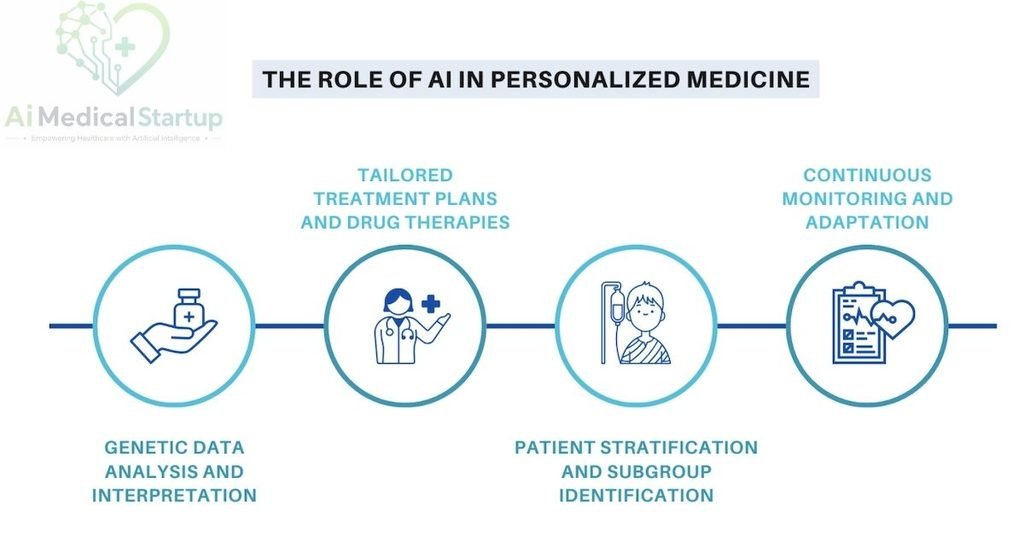
Predictive medicine uses data algorithms to evaluate future health risks, while personalized medicine combines genetic, molecular, and environmental profiles for precision medicine. Although healthcare AI enhances risk stratification, robust data quality and clinical judgment remain essential because statistical prediction is never absolute certainty.
📊
Predicting Patient Risks & Precision Medicine
Predictive AI models estimate patient deterioration, readmissions, and complication risks to optimize monitoring. By combining genomic data and complex biological metrics, AI drives personalized medicine and advances drug discovery. However, model calibration, equity, and human oversight are crucial to ensure statistical accuracy across diverse populations.
⚡
Administrative Tasks & Workflow Automation
Administrative overhead is a primary cause of clinician burnout. Recent AMA data reveals that 70% of physicians view healthcare AI as a solution to automate repetitive task workflows—including coding support, scheduling, and referral processing—allowing clinicians to focus on direct care.
🎙️
AI Medical Scribes & Clinical Documentation
Ambient AI medical scribes capture patient consultations in real-time to generate structured notes directly within the electronic health record (EHR). This technology drastically reduces keyboard time, eliminates administrative fatigue, and preserves doctor-patient interaction.
🛠️
Automating Repetitive Healthcare Technology
Effective healthcare technology automates document organization and message triage without causing alert fatigue. Successful AI integration fits existing clinical workflows while ensuring full physician control and safety.
Benefits of AI for Doctors
The benefits of AI for doctors become clearer when viewed as an assistant rather than an autonomous clinician. It reduces documentation burdens, organizes information, supports research, and automates administrative workflows.
Potential Benefit
How AI Can Contribute
Important Condition
Documentation efficiency
Drafts clinical notes
Doctor reviews the final note
Research support
Finds and summarizes information
Original evidence is verified
Imaging support
Highlights defined findings
Specialist interprets the result
Workflow efficiency
Automates repetitive tasks
Automation is monitored
Patient communication
Drafts messages and education
Doctor checks accuracy and tone
Risk assessment
Estimates patient risk
Model is clinically validated
Physician well-being
Reduces repetitive workload
Workflow actually improves
Risks and Challenges of Using AI in Medicine
The risks of AI in healthcare deserve equal attention. Issues stem from inaccurate outputs, algorithmic bias, cybersecurity threats, and data privacy failures. The WHO stresses that safety, ethics, and accountability must govern healthcare AI development.
What Skills Will Doctors Need in the AI Era?
Working alongside clinical AI requires robust AI literacy, critical evaluation, data privacy awareness, and strong clinical reasoning to maintain patient safety.
Skill
Why It Matters
AI literacy
Helps doctors understand AI capabilities
Critical evaluation
Helps identify unreliable outputs
Data awareness
Helps recognize data-quality problems
Privacy awareness
Protects sensitive information
Bias awareness
Supports equitable care
Clinical reasoning
Prevents inappropriate automation
Communication
Helps explain AI use to patients
Workflow design
Makes implementation practical
Continuous learning
Keeps skills current as AI changes
The Future of AI for Doctors: From Workflows to Augmented Care
The future of AI for doctors lies in seamless, multimodal workflow integration rather than isolated tools—combining medical records, medical imaging, laboratory data, and real-time clinical signals directly within the electronic health record (EHR). As regulatory bodies such as the FDA, WHO, and the EUROPEAN COMMISSION establish risk-based governance and security frameworks, healthcare AI will evolve into intelligent clinical assistants that automate clinical documentation and reduce administrative fatigue. Ultimately, this next generation of clinical AI enhances precision medicine and patient outcomes while keeping human oversight, clinical judgment, and doctor-patient trust firmly at the center of modern practice.
FAQs About AI for Doctors
Exploring practical questions and trusted insights regarding AI for doctors, clinical efficiency, and patient safety in modern medical practice.
AI for doctors means using artificial intelligence technologies to support medical and professional tasks. These include clinical documentation, research summaries, medical imaging analysis, patient communication, administrative automation, and clinical decision support. These systems are designed to assist physicians rather than replace professional judgment.
Physicians use healthcare AI for document organization, research reviews, portal communication drafting, translation, and workflow streamlining. According to recent AMA data, professional adoption has expanded significantly, with research summaries and documentation assistance leading adoption.
AI replacing doctors is not a realistic framework. While generative AI and machine learning can automate repetitive information tasks, human doctors provide indispensable physical examination, emotional connection, ethical reasoning, and legal accountability. Modern practice relies on collaborative augmentation rather than replacement.
AI tools can be safe and effective when rigorously validated, securely implemented, and governed properly. As outlined by the WHO and FDA compliance standards, clinicians must maintain strict human oversight, protect patient data, and verify outputs against trusted evidence.
Key benefits include reduced documentation overhead, faster evidence retrieval, and streamlined administrative workflows. Recent AMA surveys indicate that 70% of physicians view healthcare AI as an effective tool to combat clinician burnout while enhancing patient care capabilities.
Dr. Kanza Sarfraz, M.B.B.S., is a medical doctor and graduate of Allama Iqbal Medical College, Lahore. She brings nearly seven years of clinical experience across tertiary-care hospitals, medical headquarters, and healthcare facilities in both the public and private sectors. Her clinical experience provides a practical perspective on healthcare delivery, emerging medical technologies, and the evolving role of artificial intelligence in medicine.